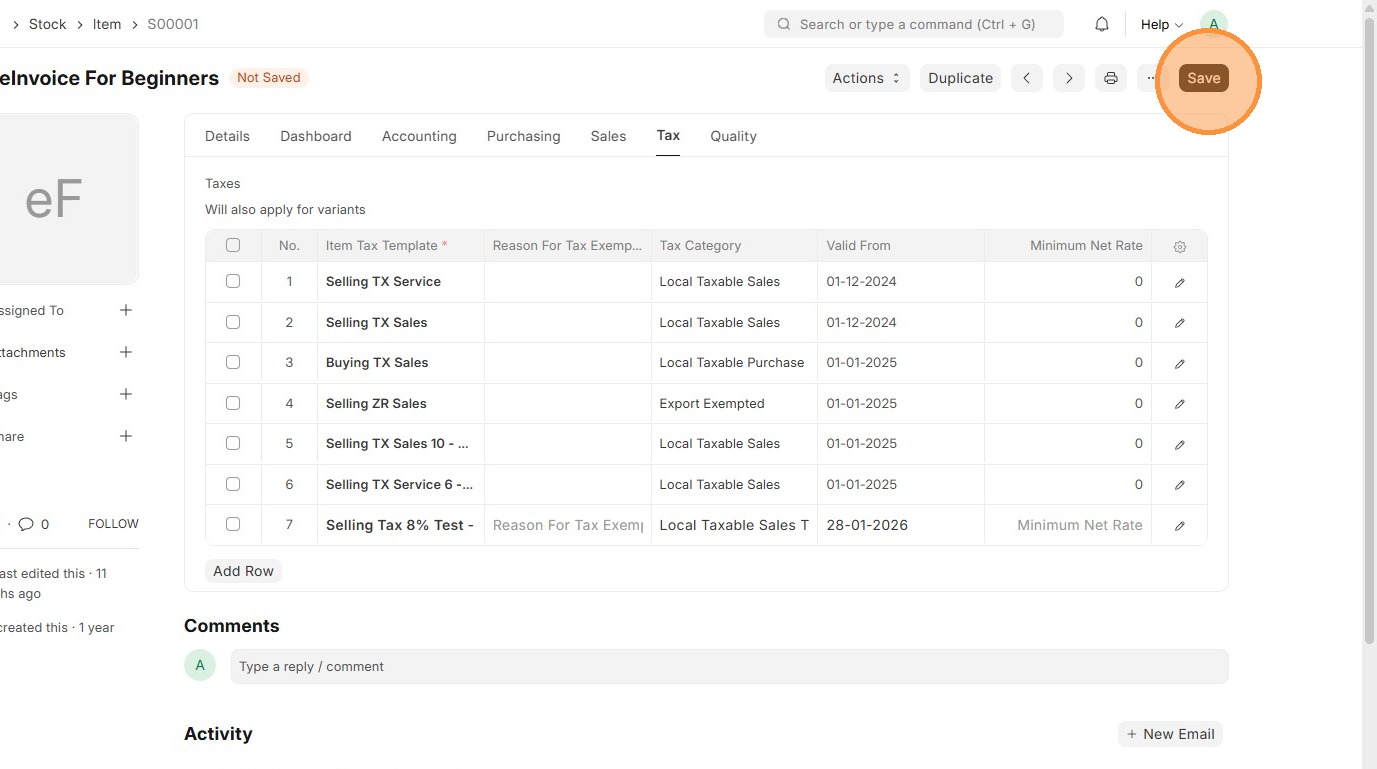
Setup and Master Data Maintenance
Chart of Accounts
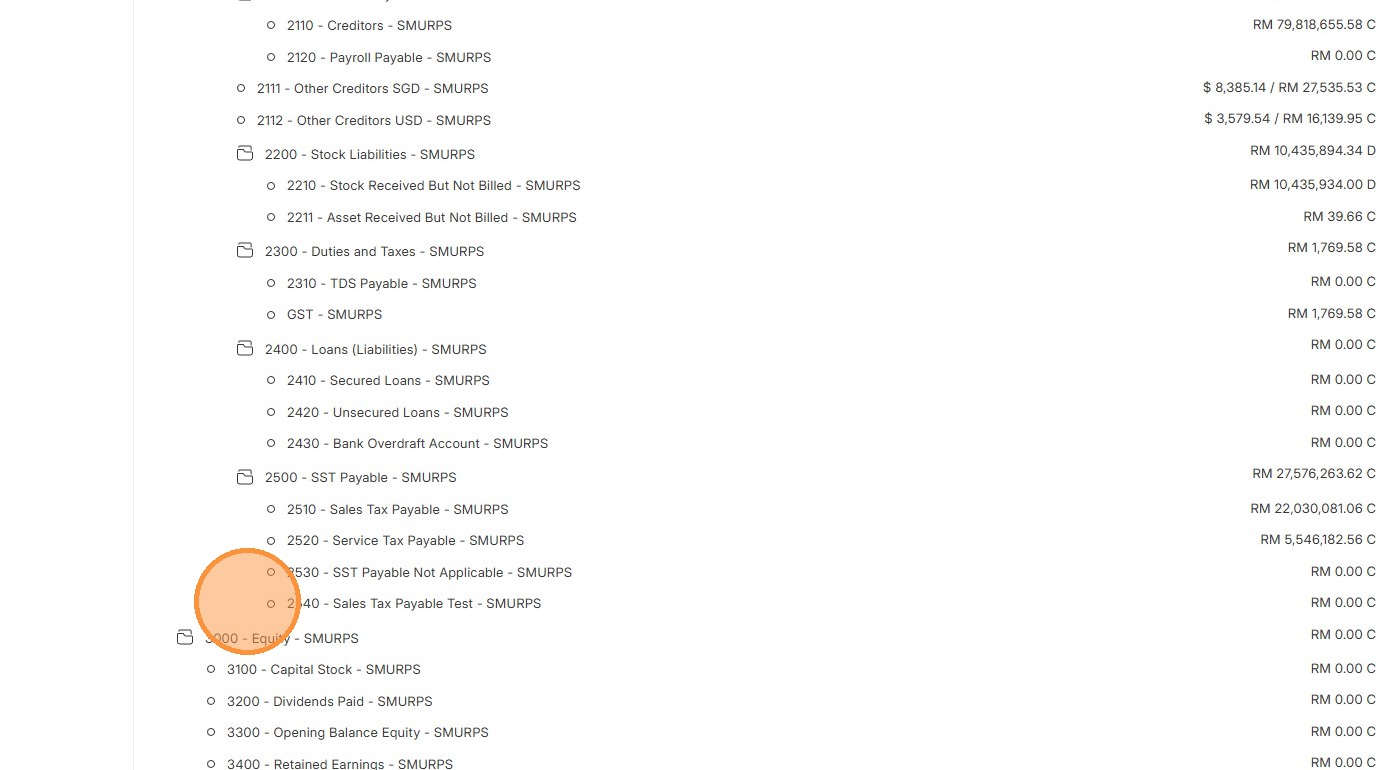
The Chart of Accounts is like the backbone of your accounting system. It’s a list of all the accounts where money in your business is tracked what you earn, what you spend, and what you own. Every sale, purchase, or expense gets recorded into these accounts, so at any time, you can review how much money you have, how much you owe, and how much you’ve earned.
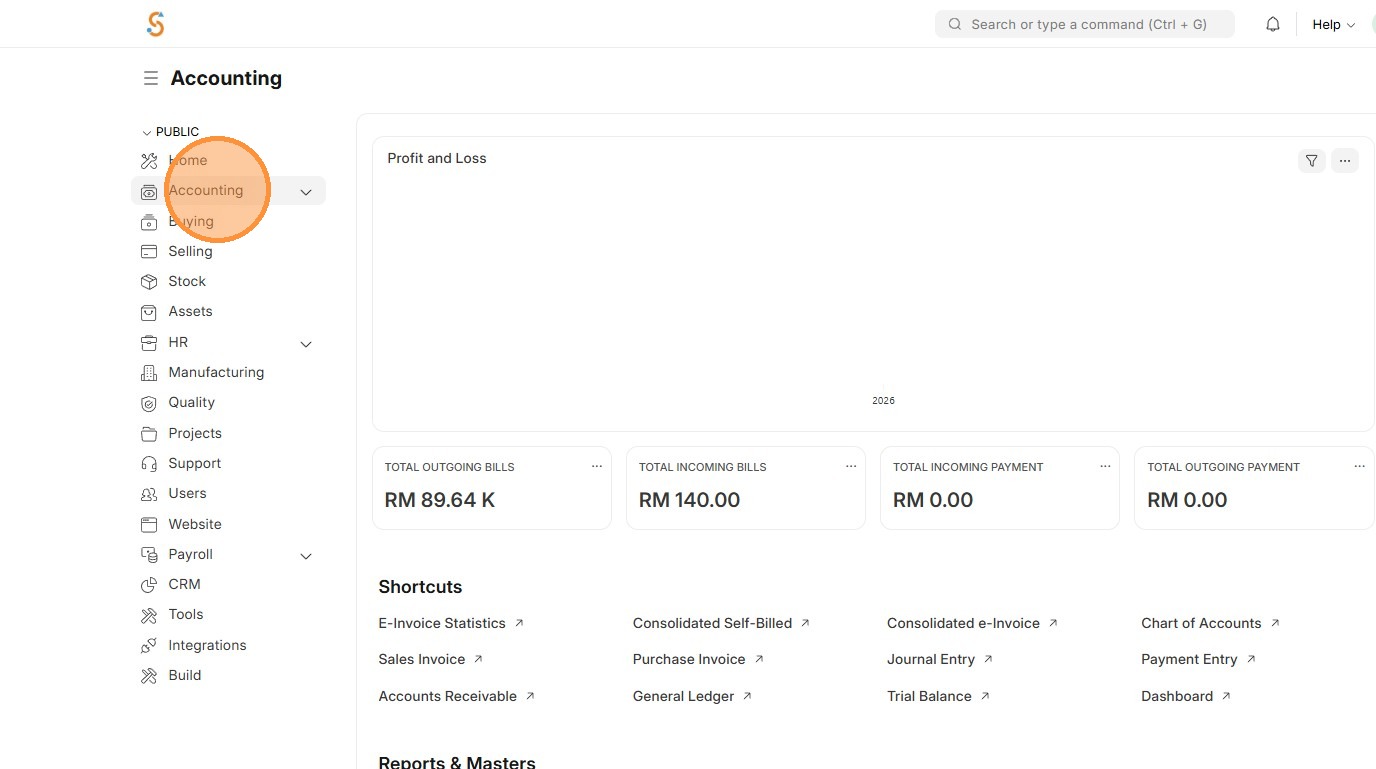
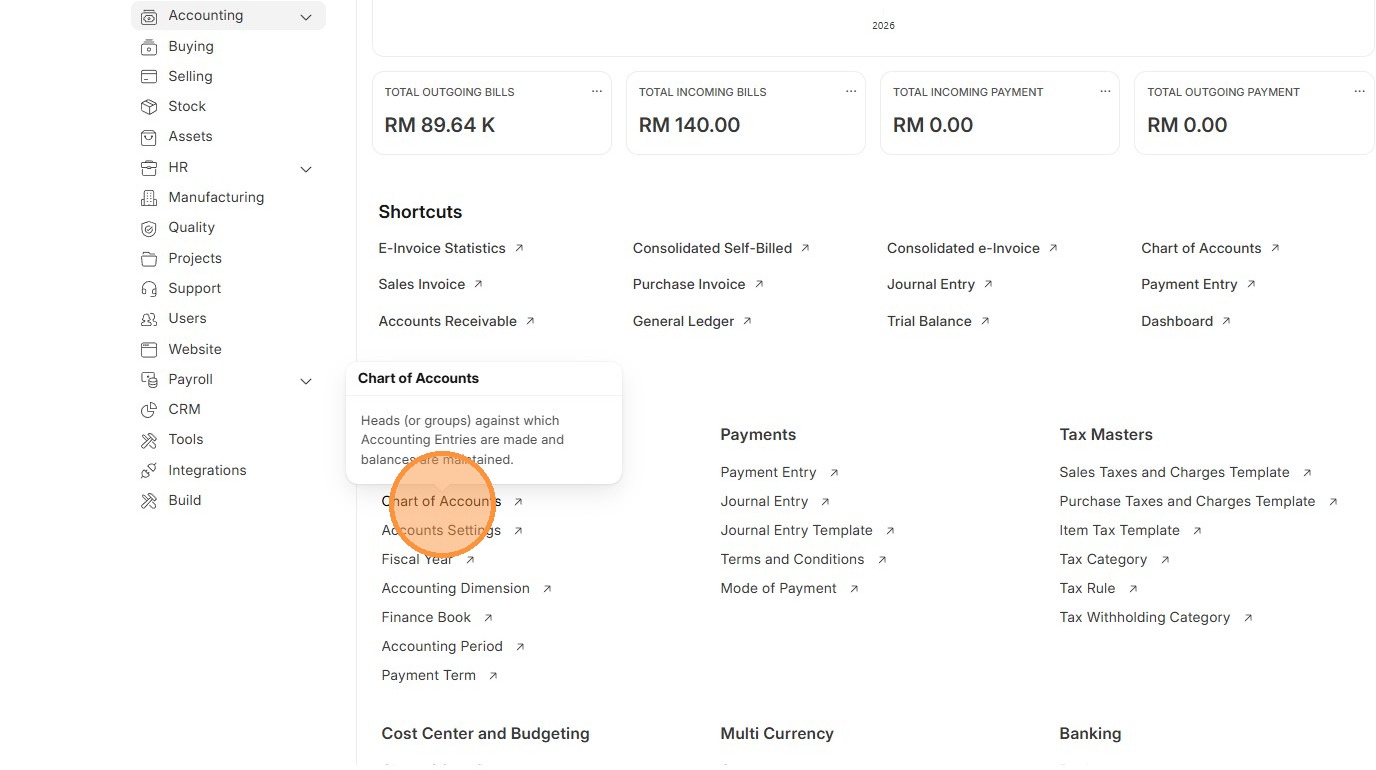
2. Click "Chart of Accounts"
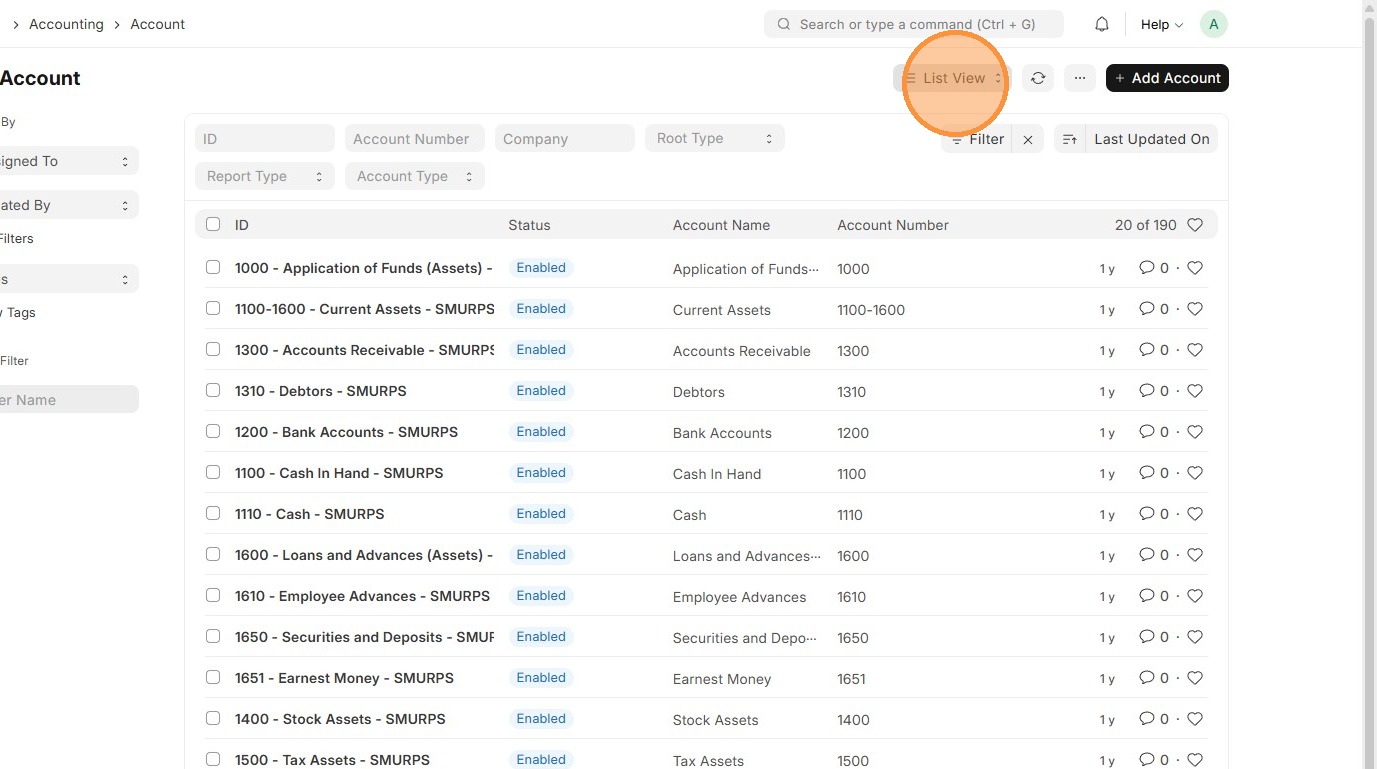
3. Click "List View"
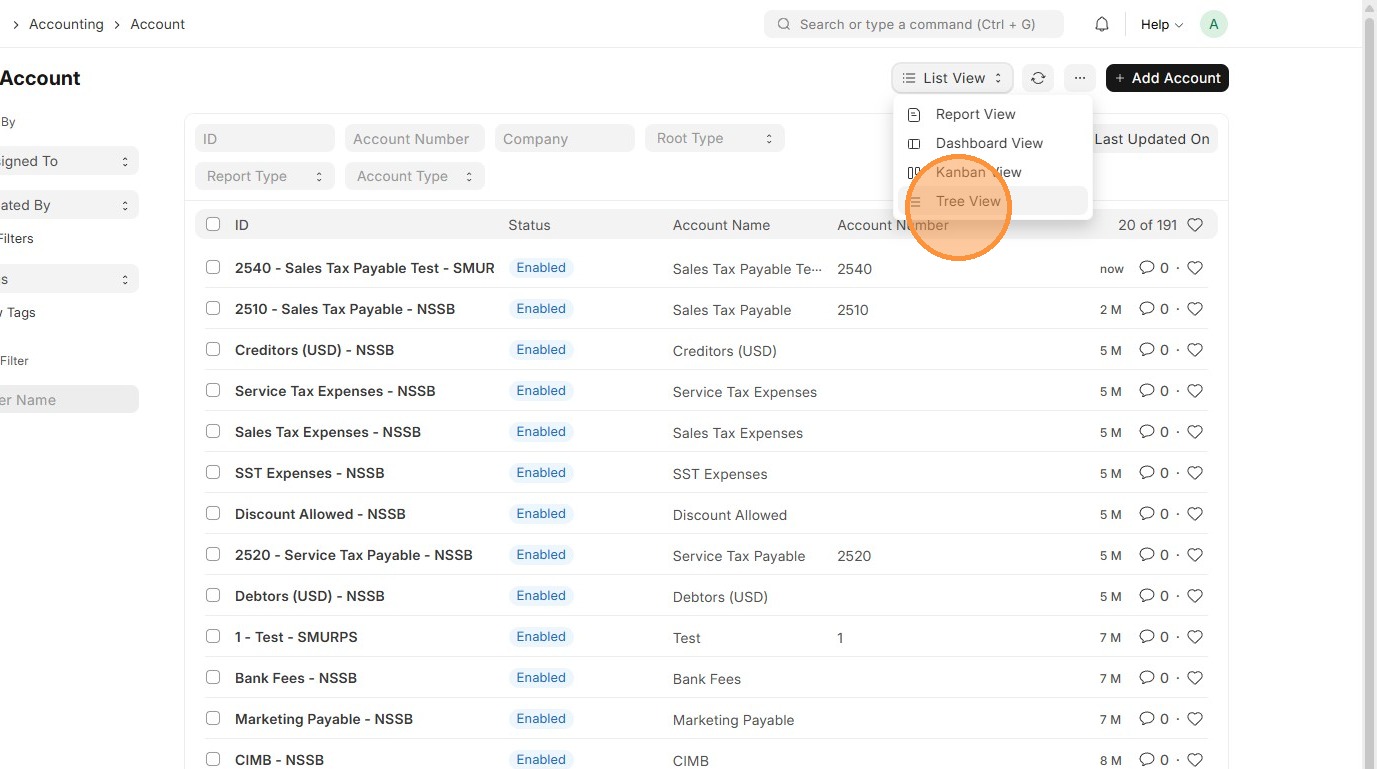
4. Click "Tree View"
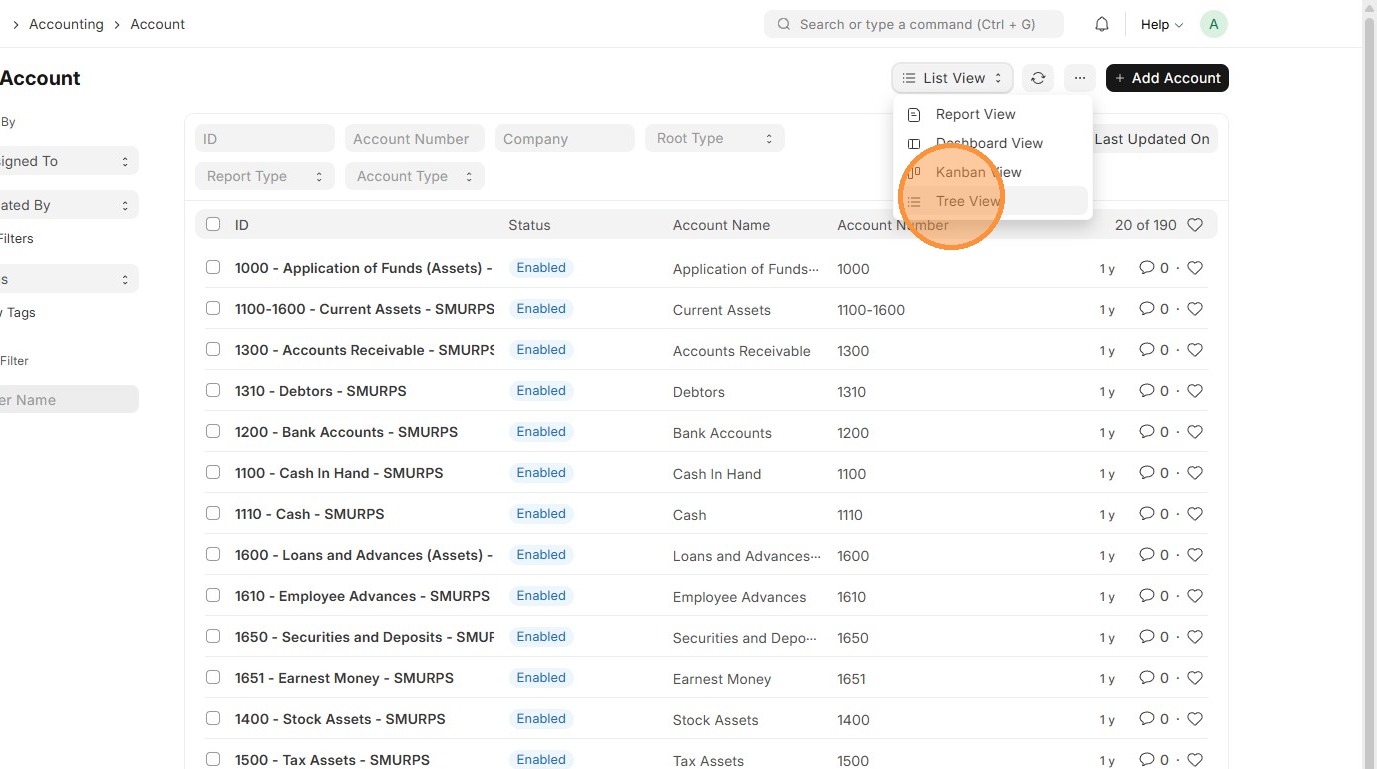
5. Click "Expand All"
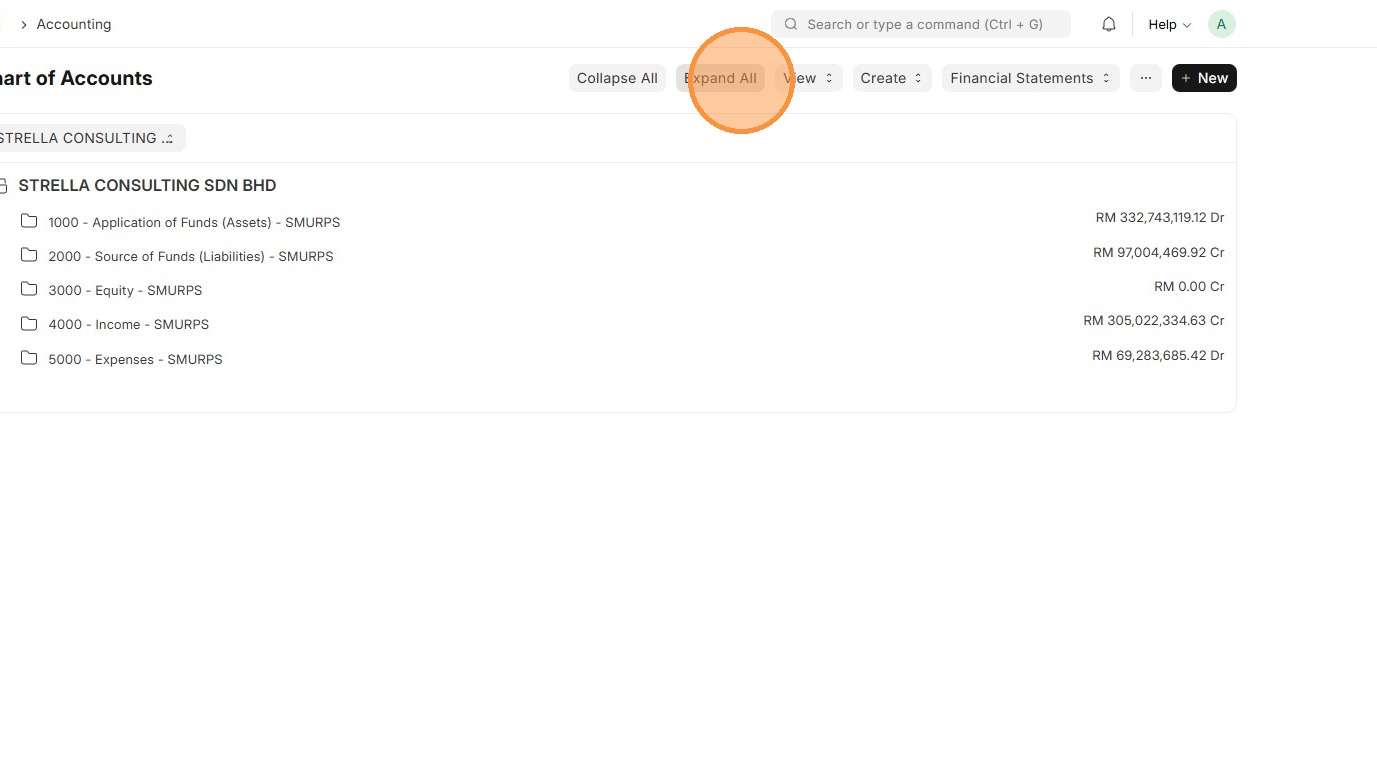
6. Review the Charts of Account structure before creating a new COA.
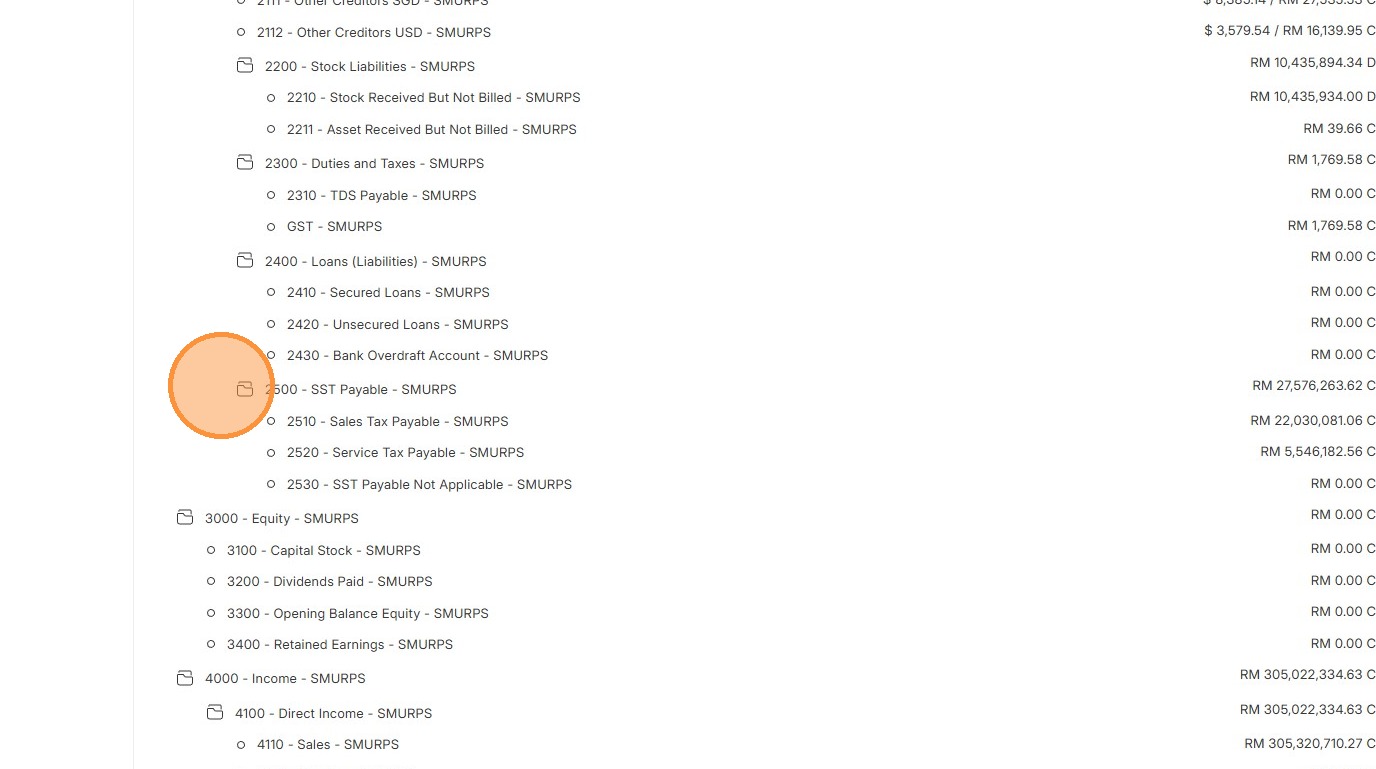
7. Click "Accounting"
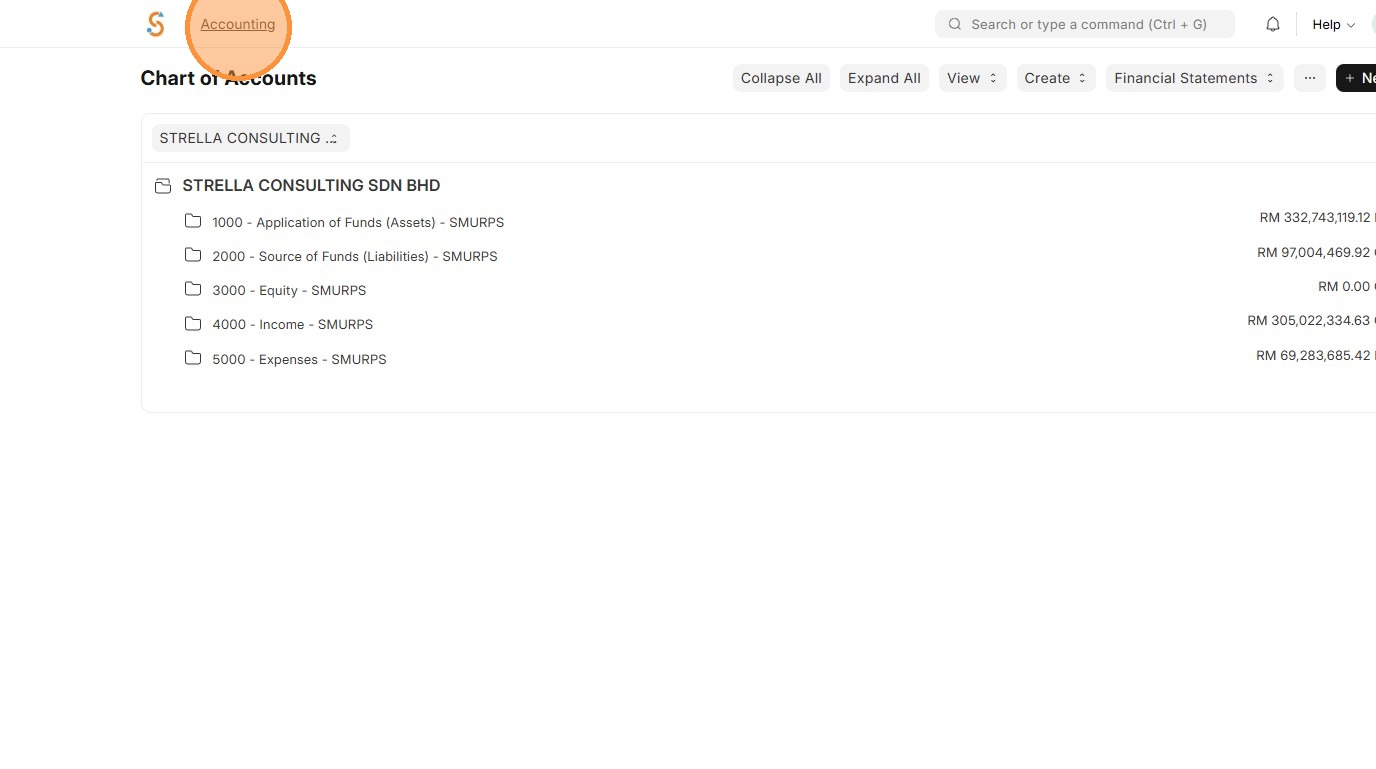
8. Click "Chart of Accounts"
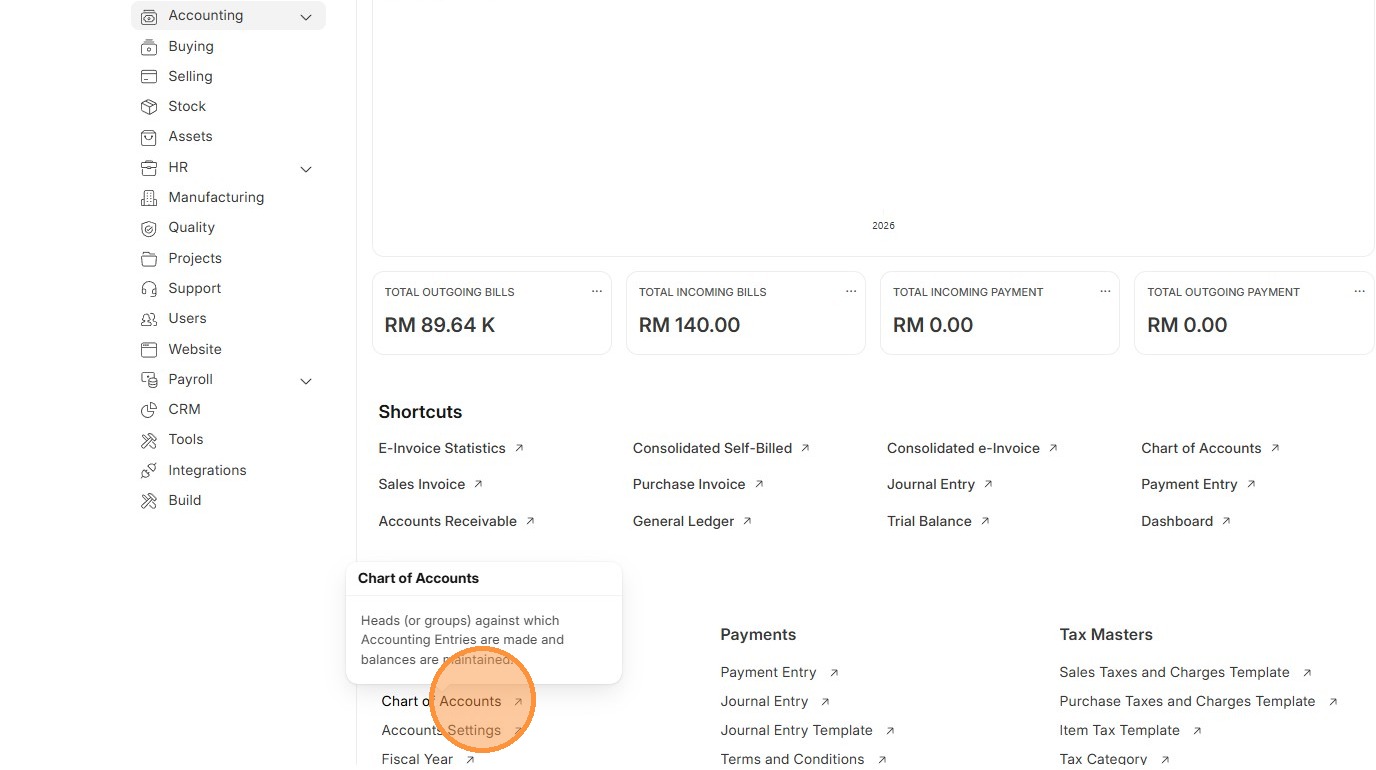
9. Click "Add Account"
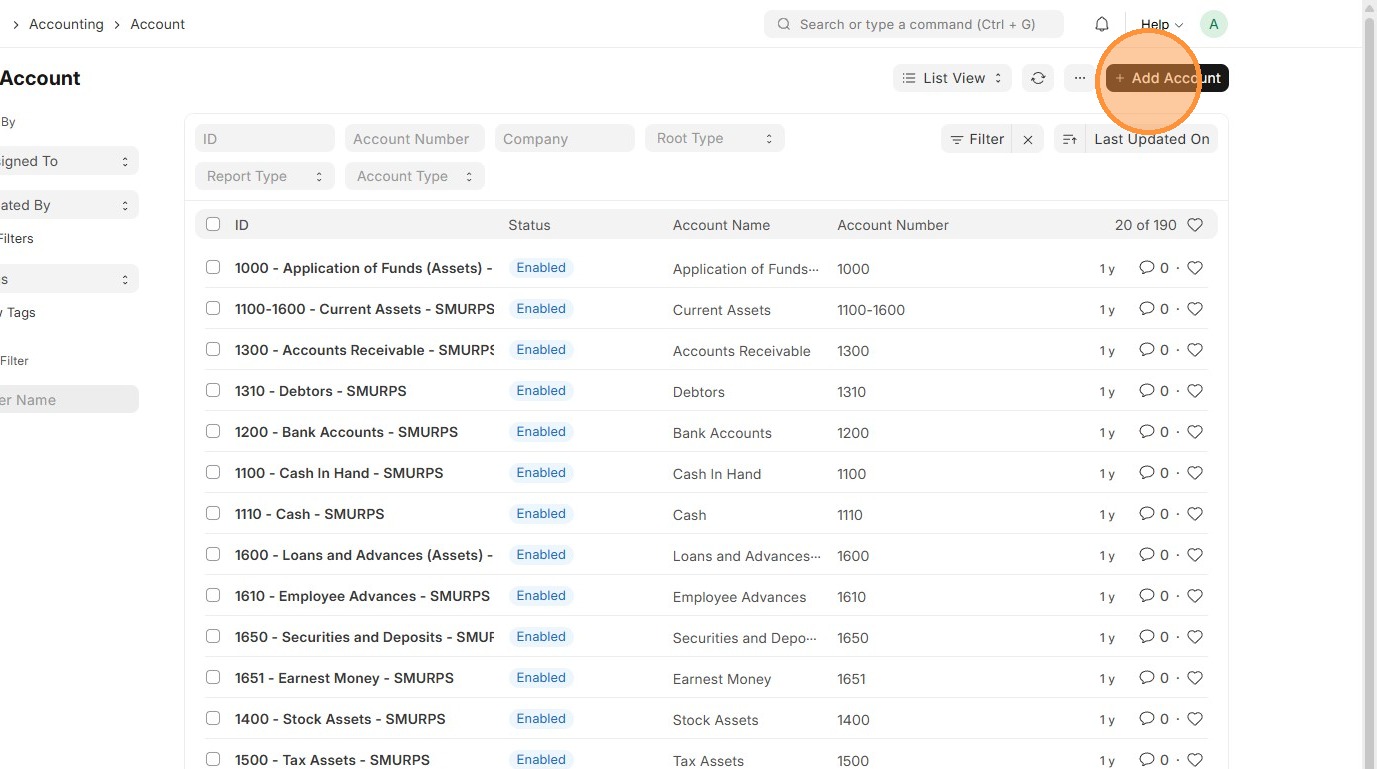
10. Enter "Account Name"
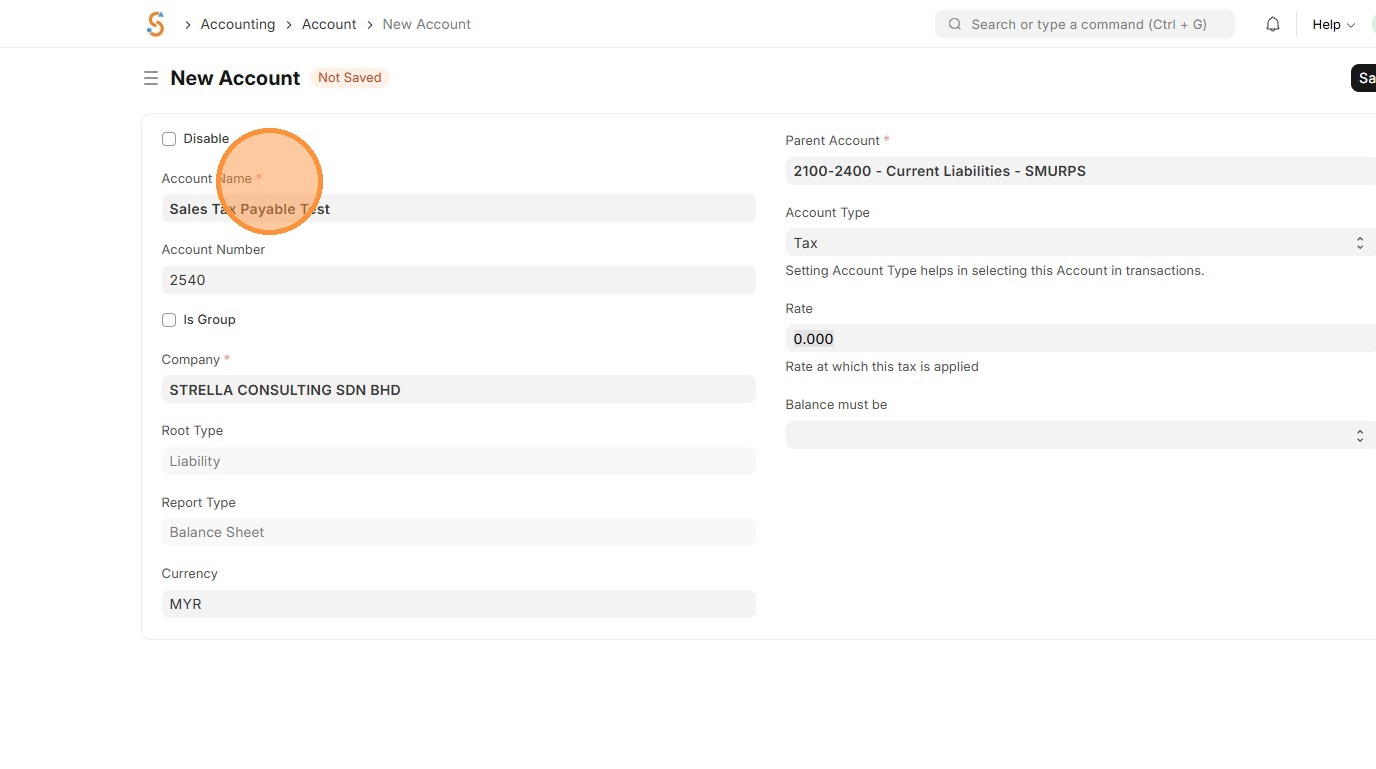
11. Enter "Account Number" and Tick 'Is Group' only if Account is Parent Group
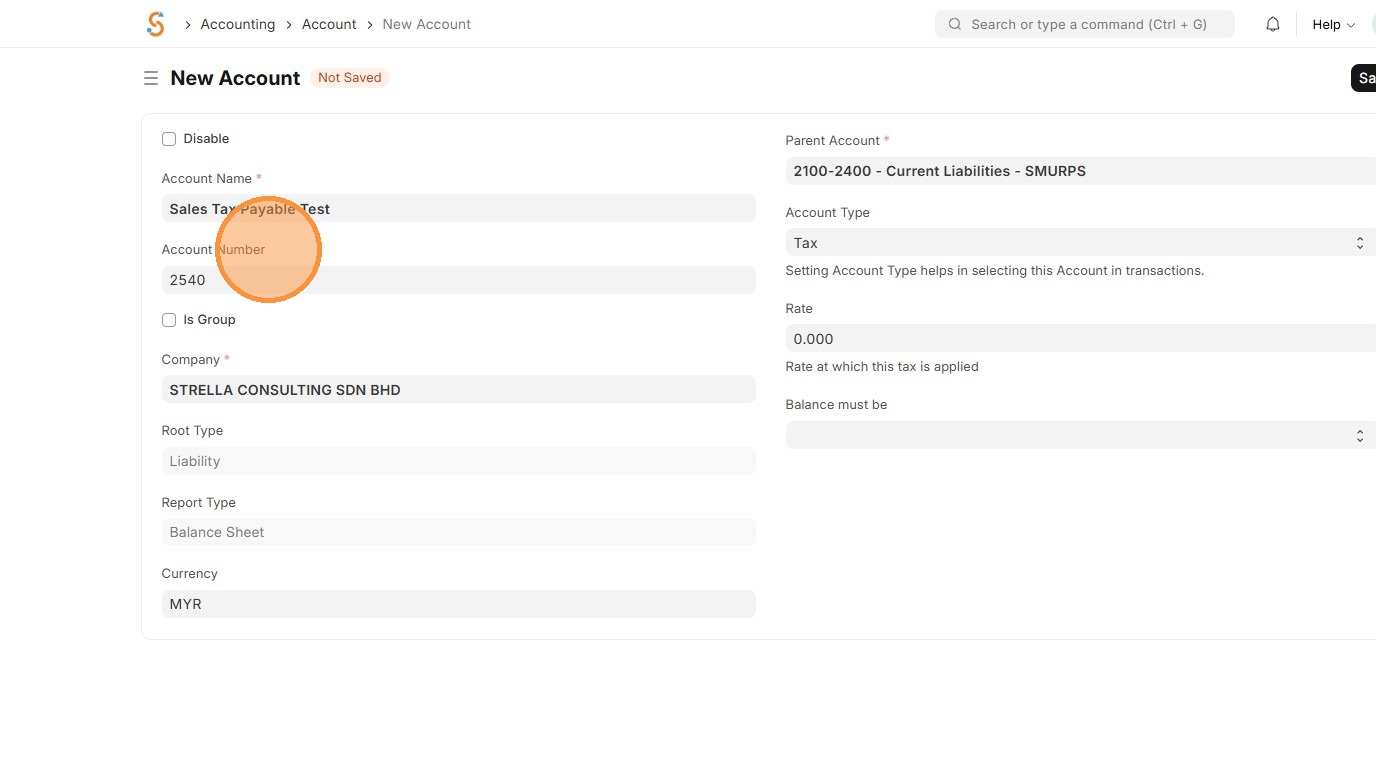
12. Review the Root Type, Report Type and Currency.
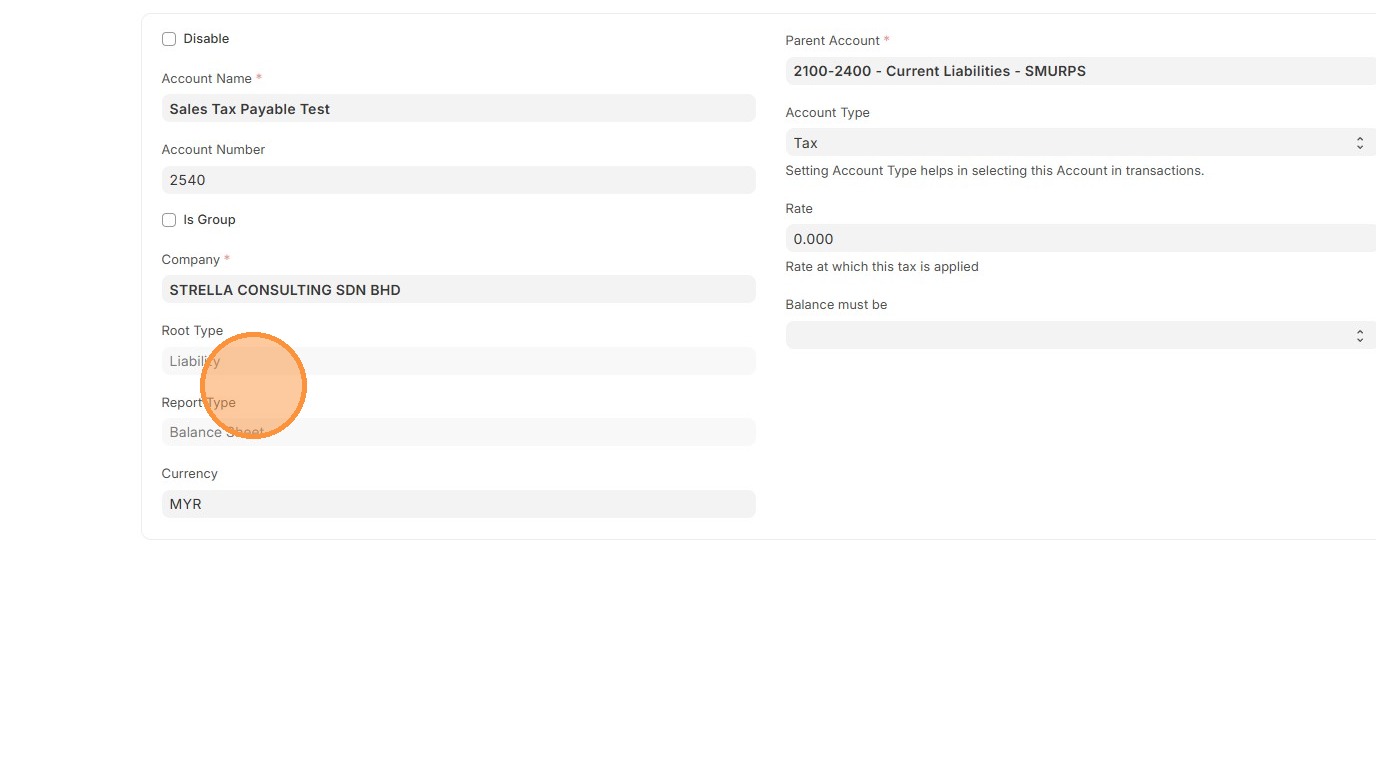
13. Select "Parent Account" and "Account Type" based on Account objective.
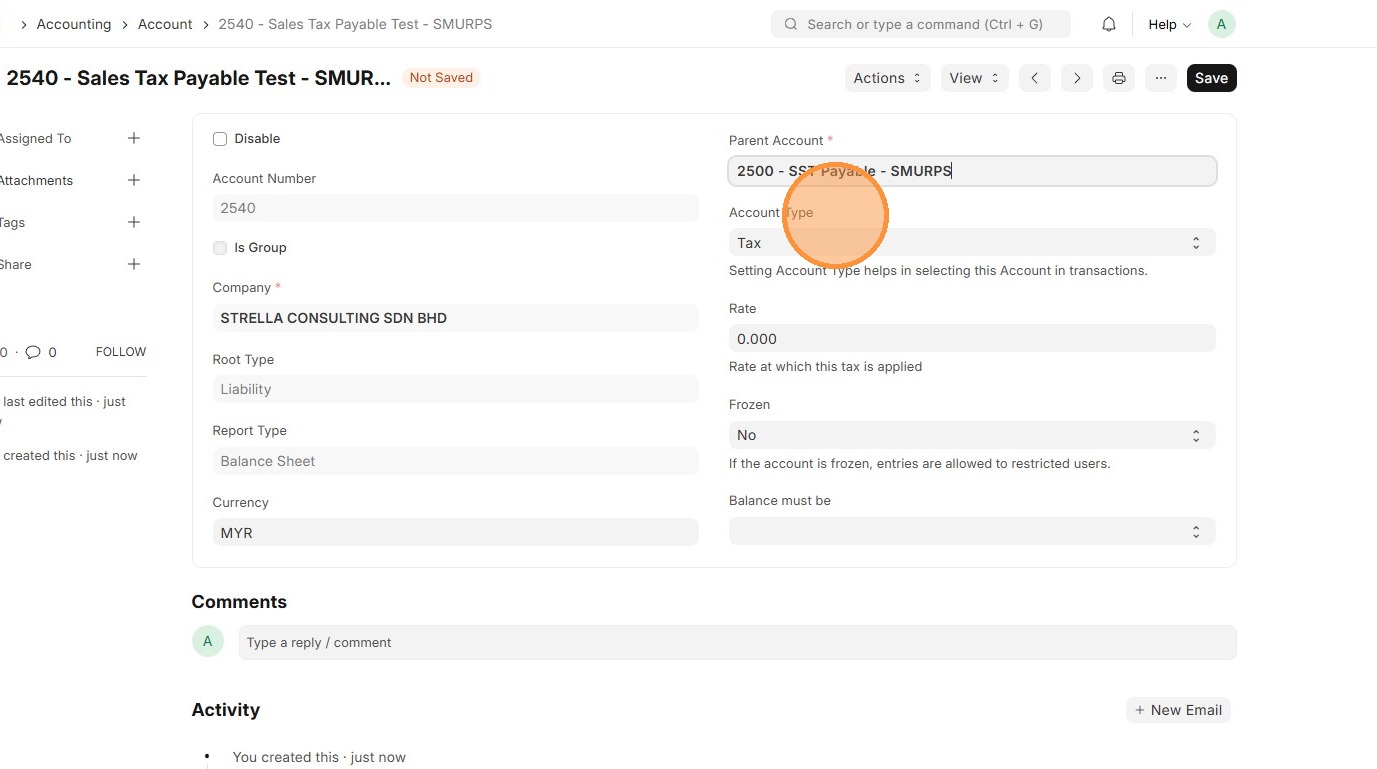
14. Click "Save"
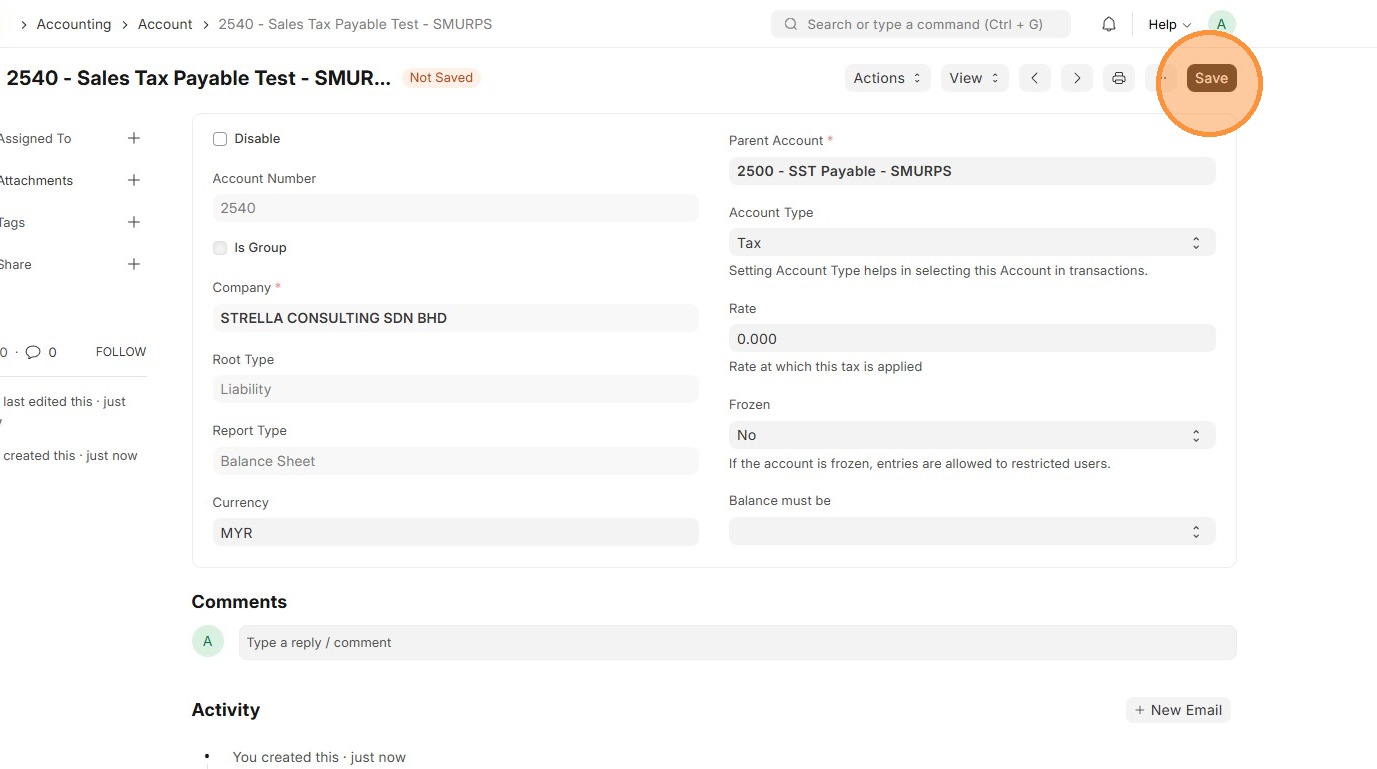
15. Review that Account ID is created.
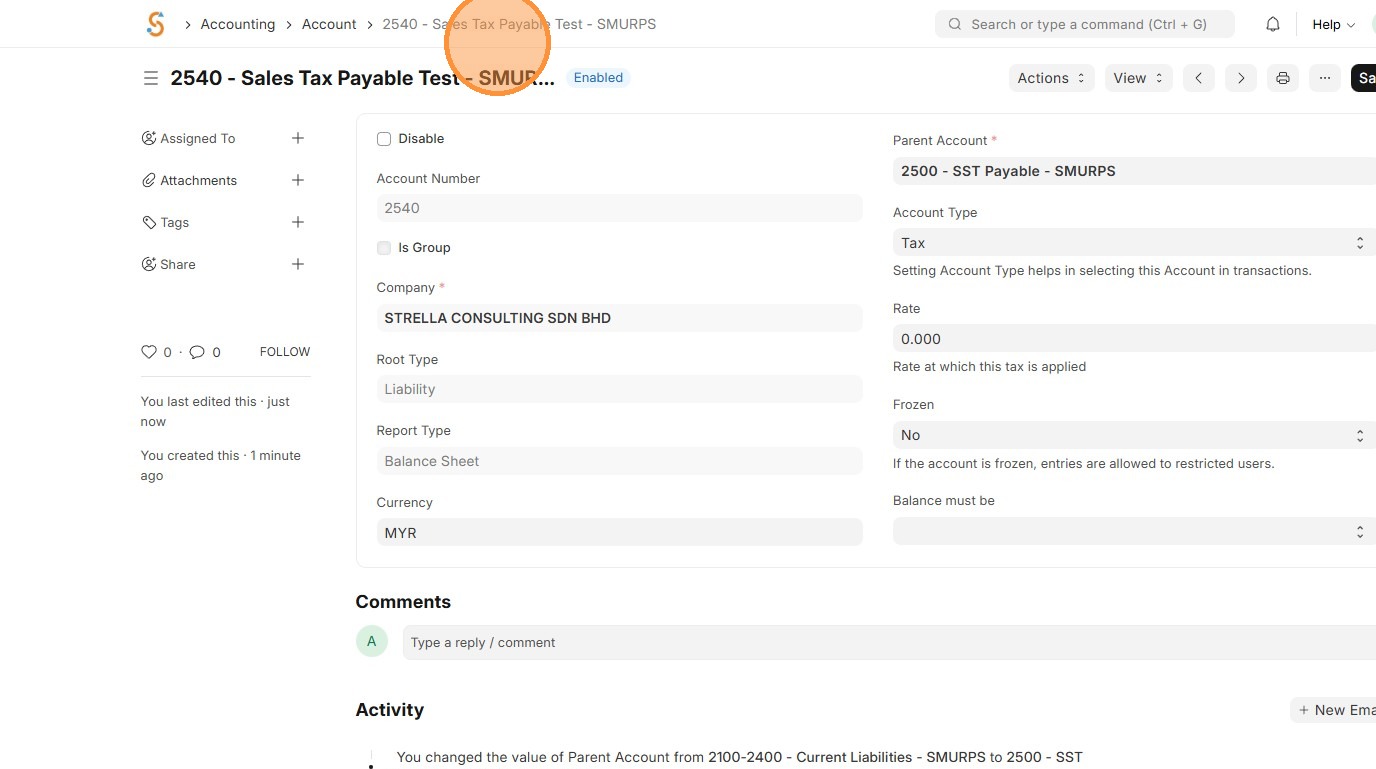
16. Click "Account"
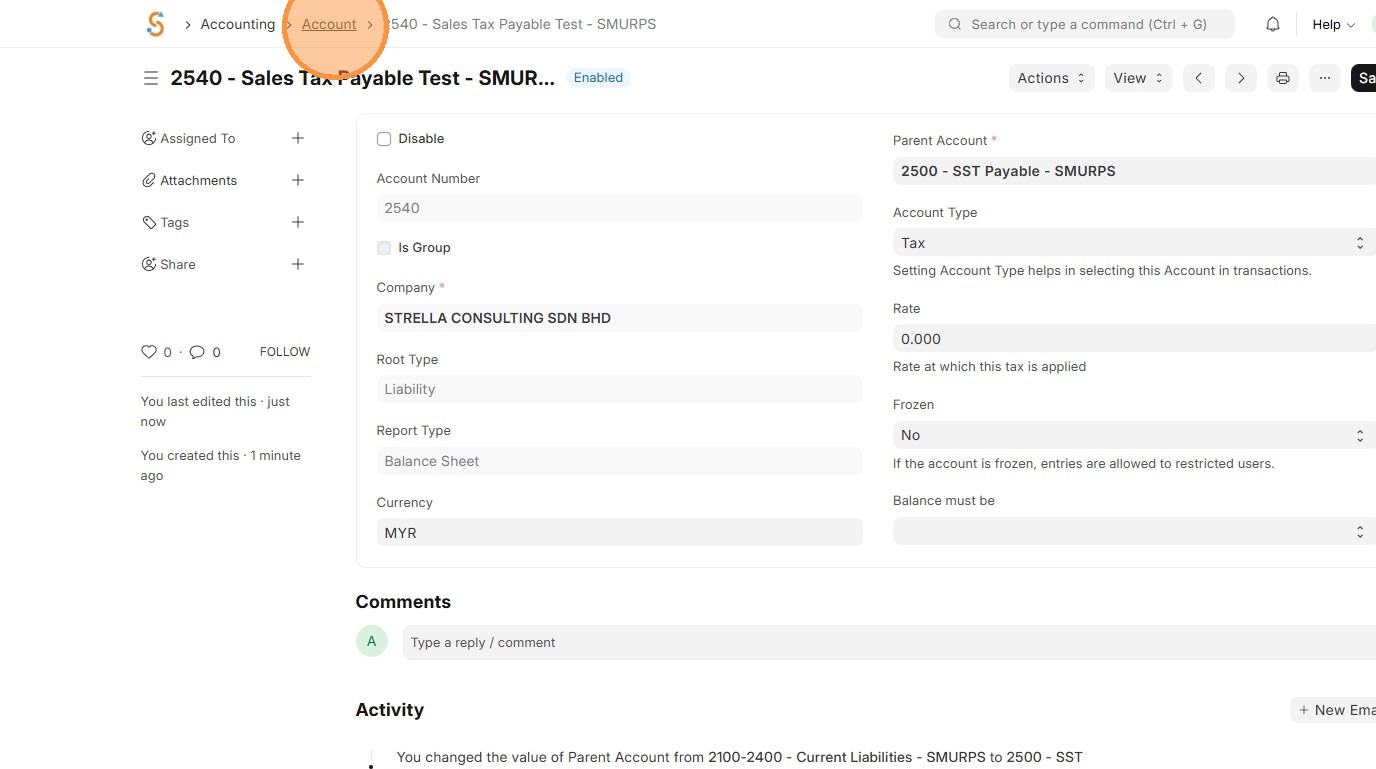
17. Click "List View"
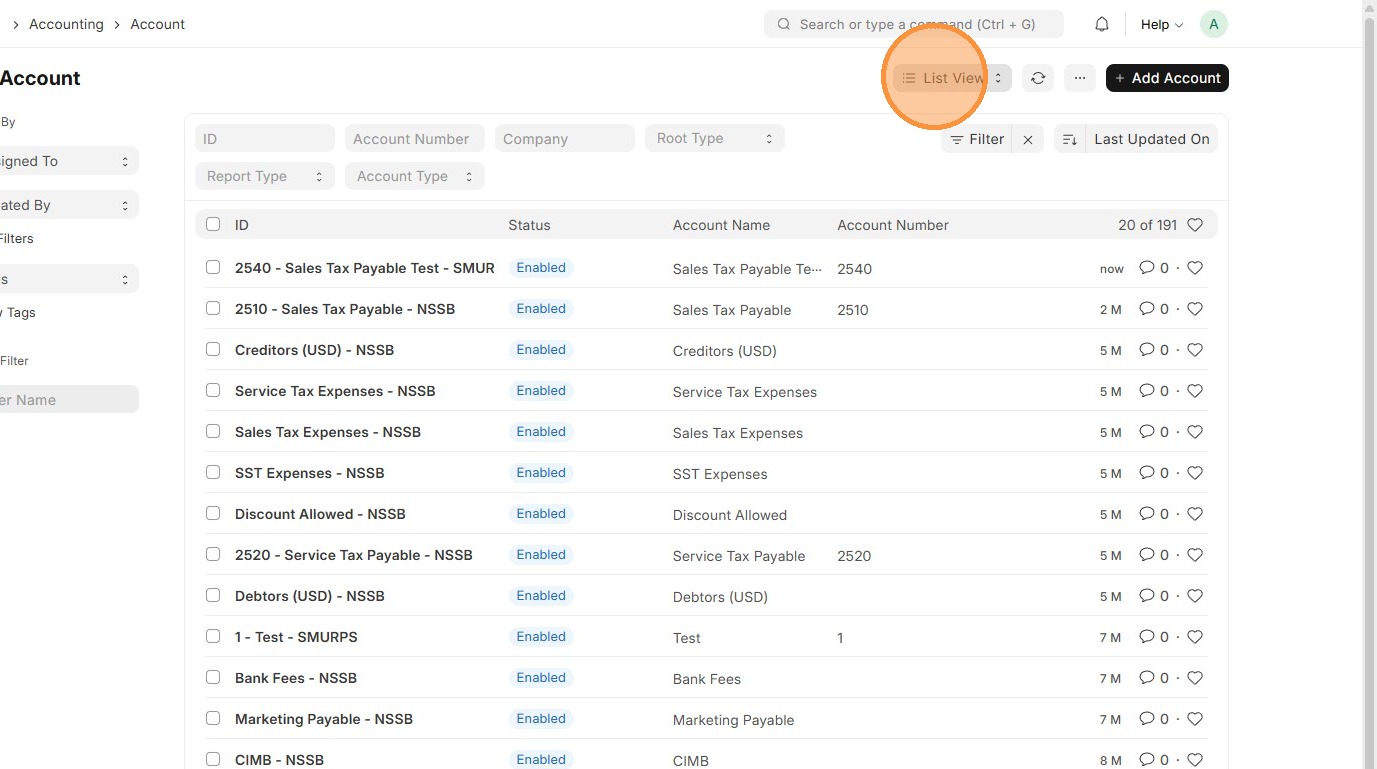
18. Click "Tree View"
19. Click "Expand All"
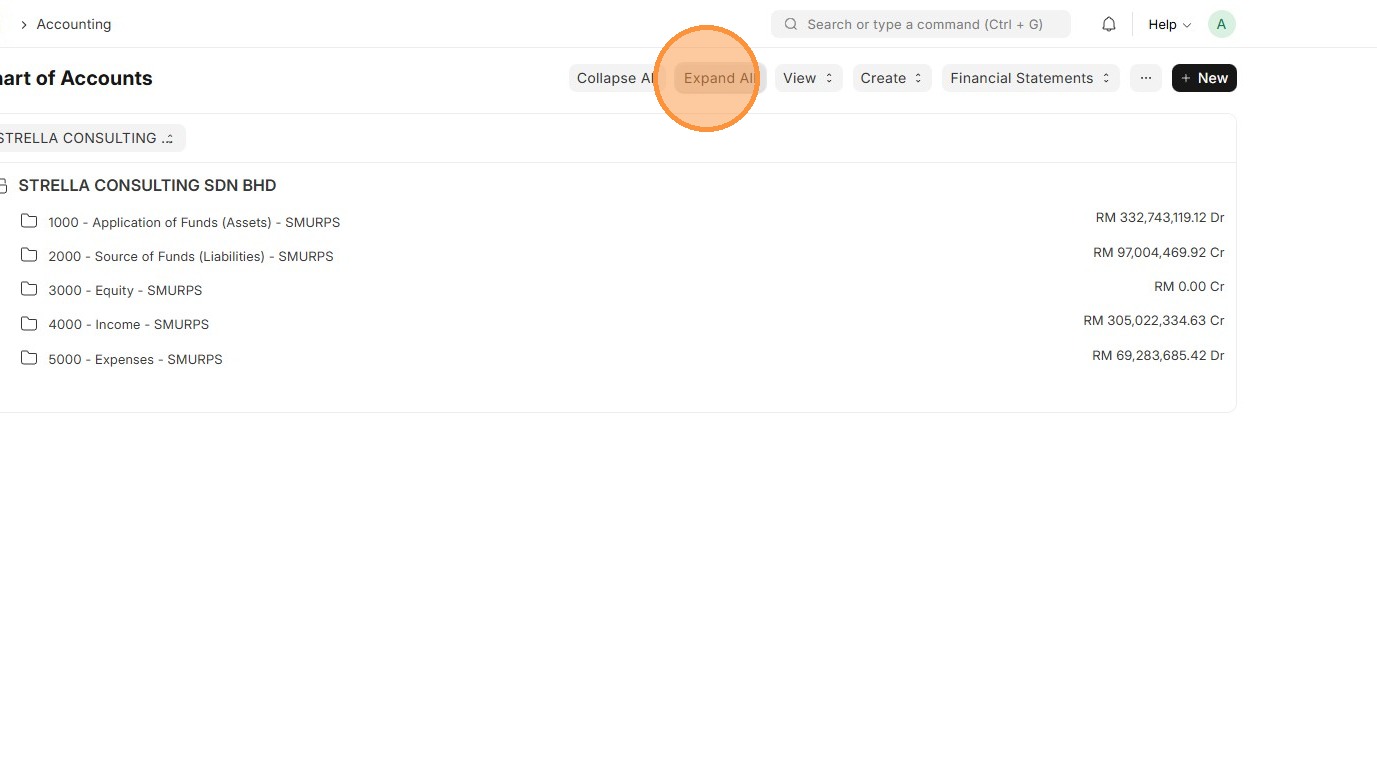
20. Verify that Account newly created is linked to correct Parent Account.
Tax Category
A Tax Category groups taxes like GST, VAT, or Exempt so the system knows which tax to apply automatically to items, customers, or suppliers. It also makes reporting and compliance easier by showing totals for each tax type..
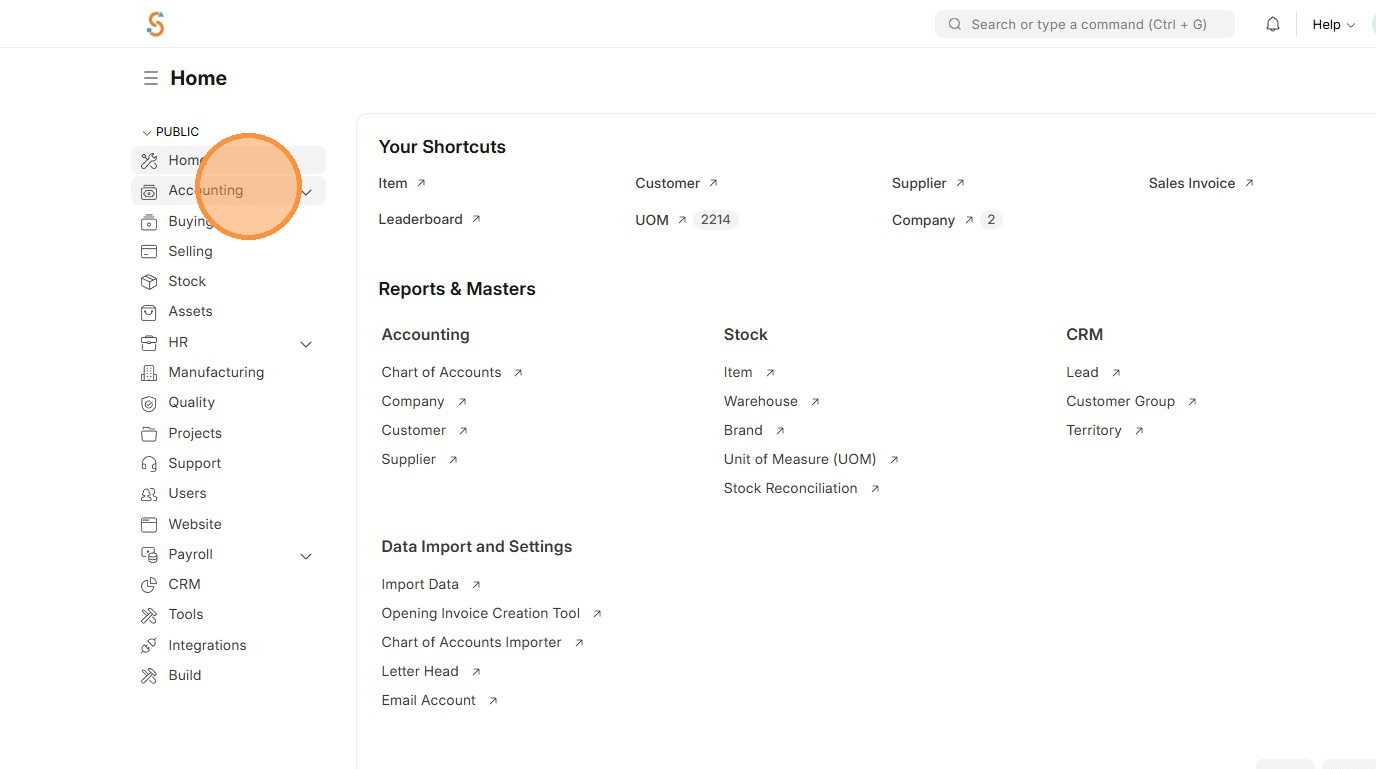
1. Click "Accounting"
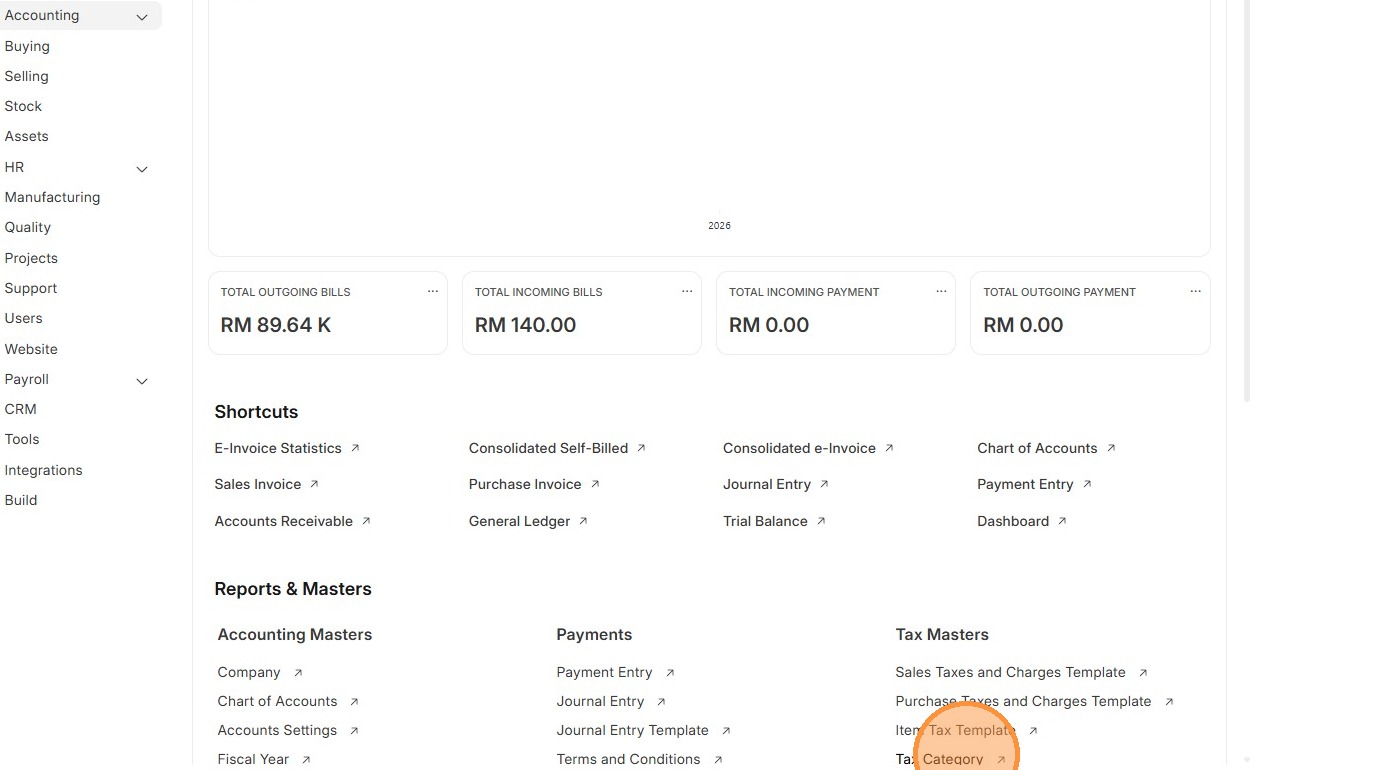
2. Click "Tax Category"
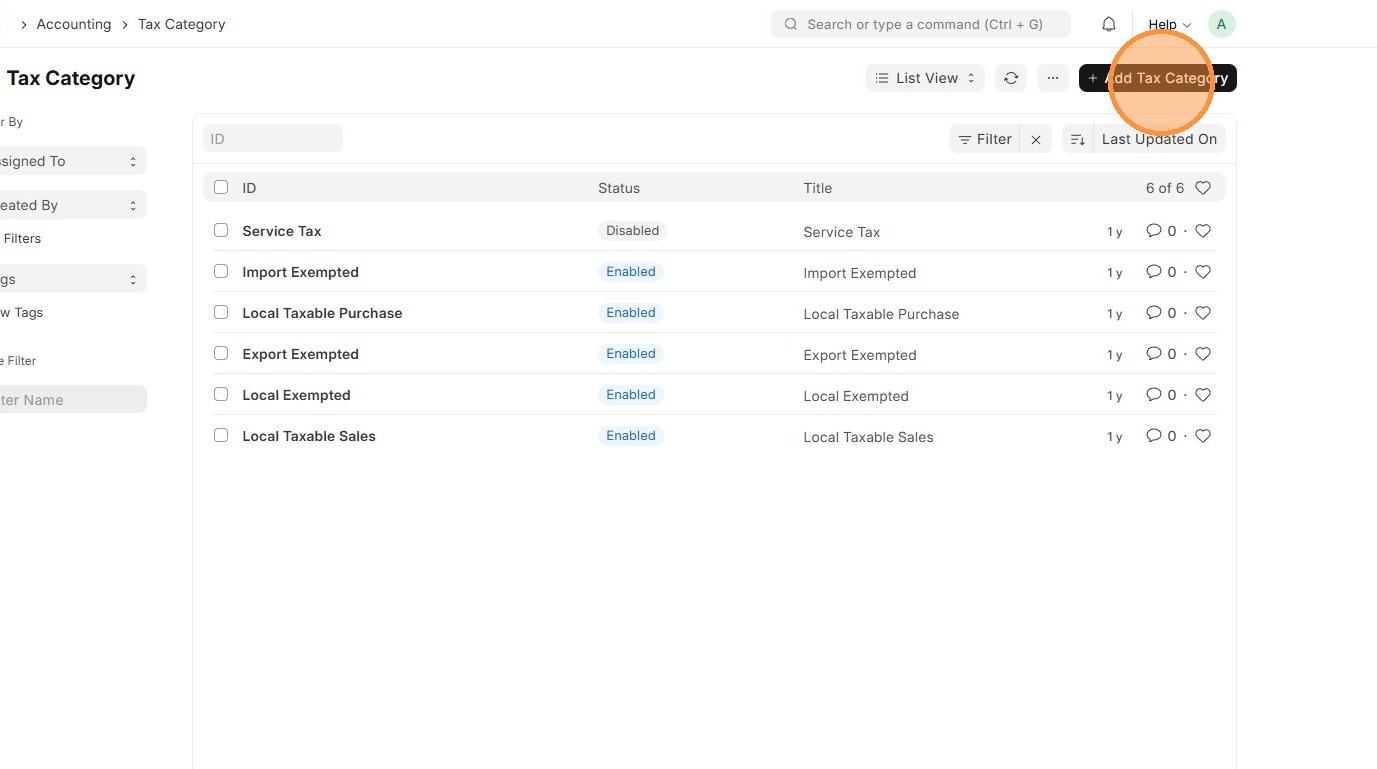
3. Click "Add Tax Category"
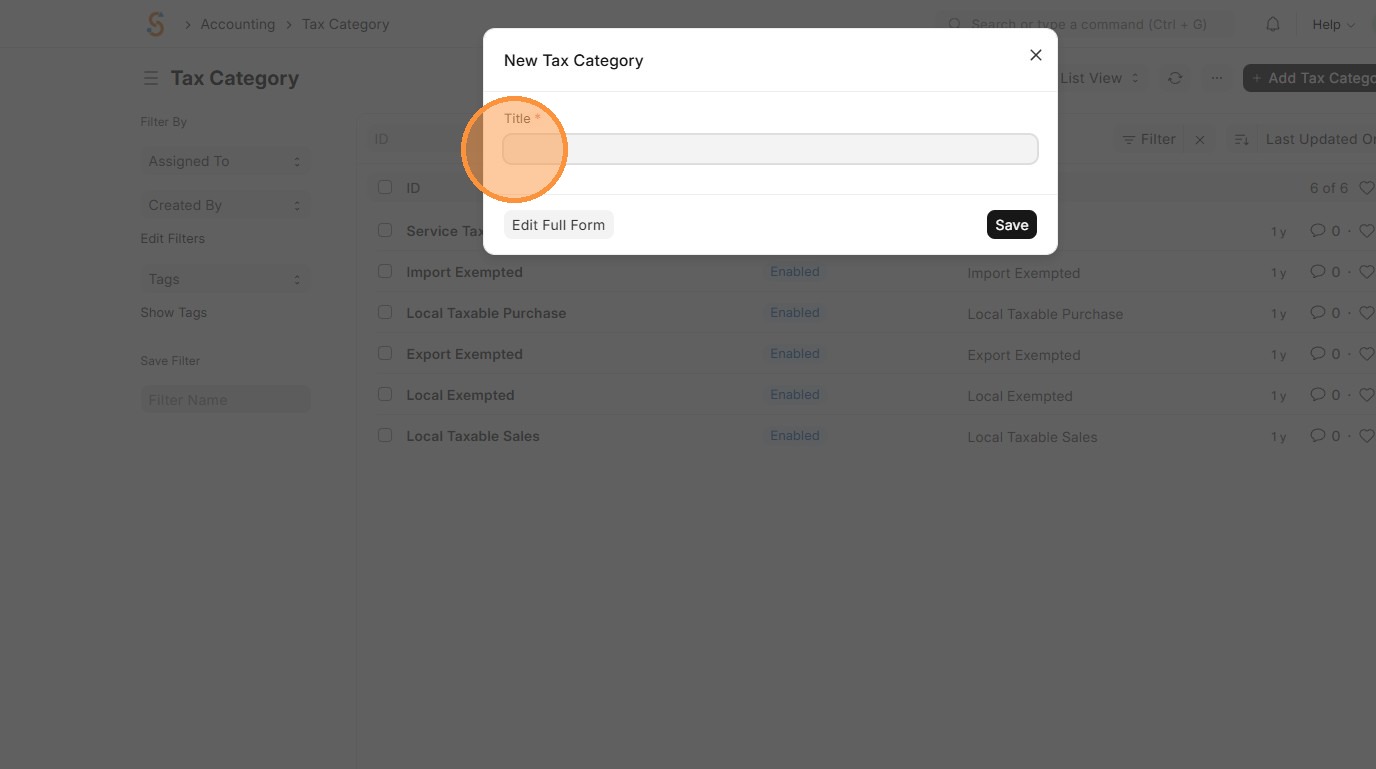
4. Enter Tax Category.
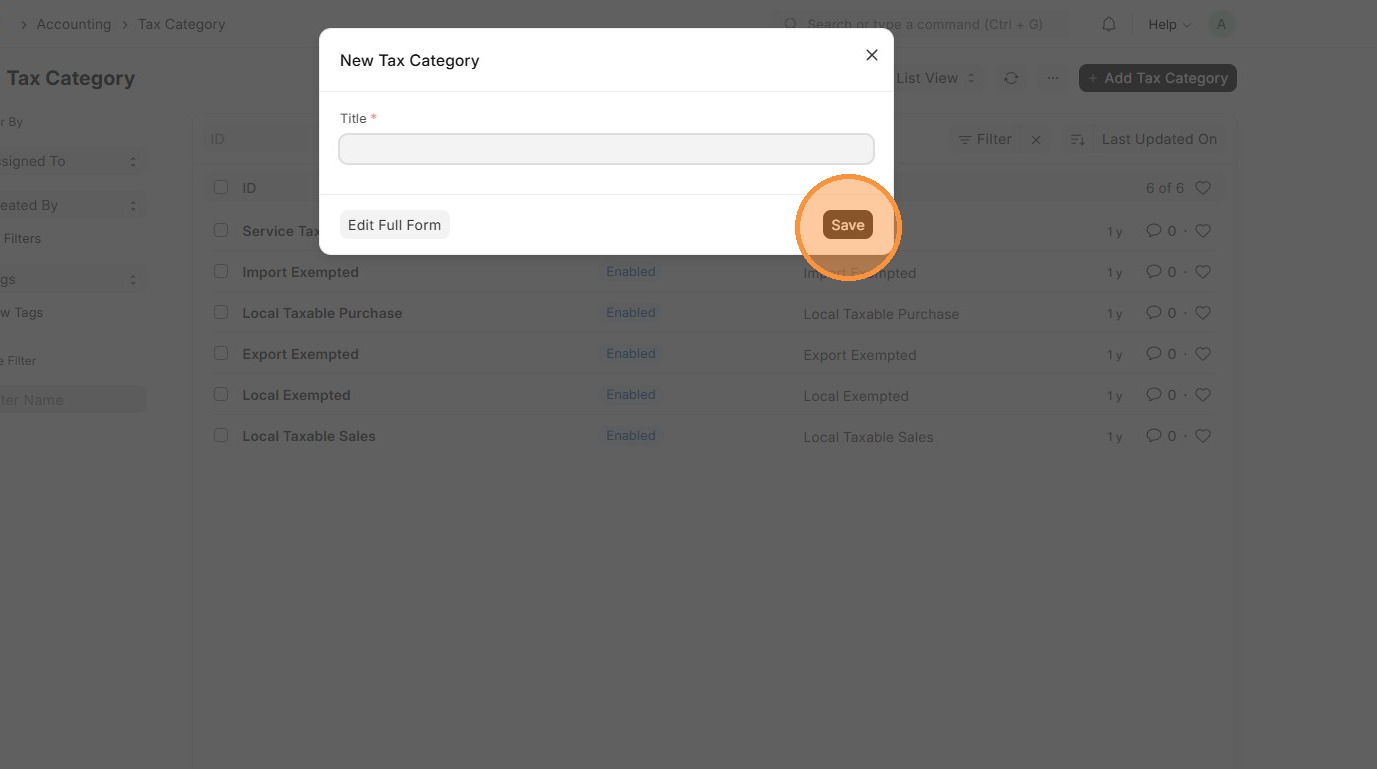
5. Click "Save"
Sales Taxes and Charges Template
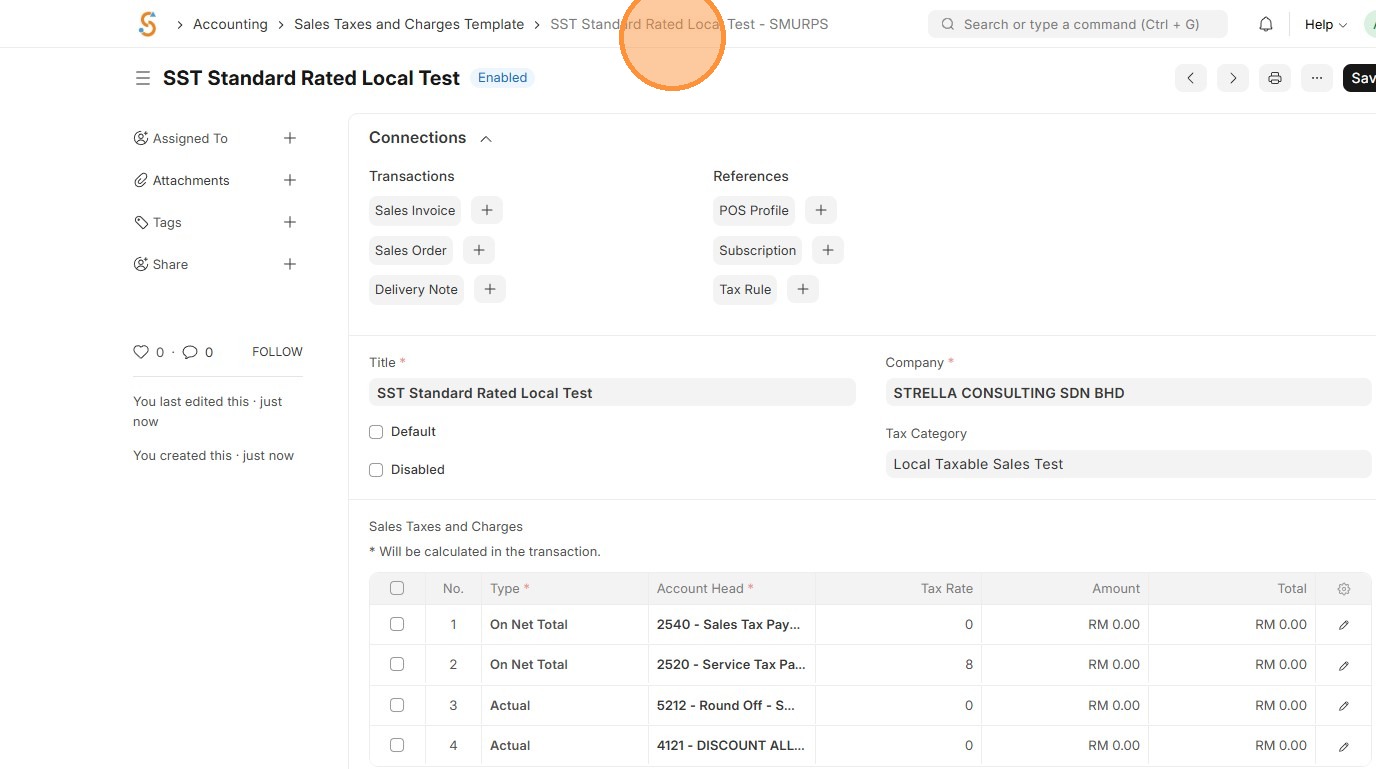
A Sales Taxes and Charges Template defines the taxes or extra charges that are applied automatically on a sales invoice. It ensures the right tax is added to each sale and posts it to the correct account for accurate accounting and reporting.
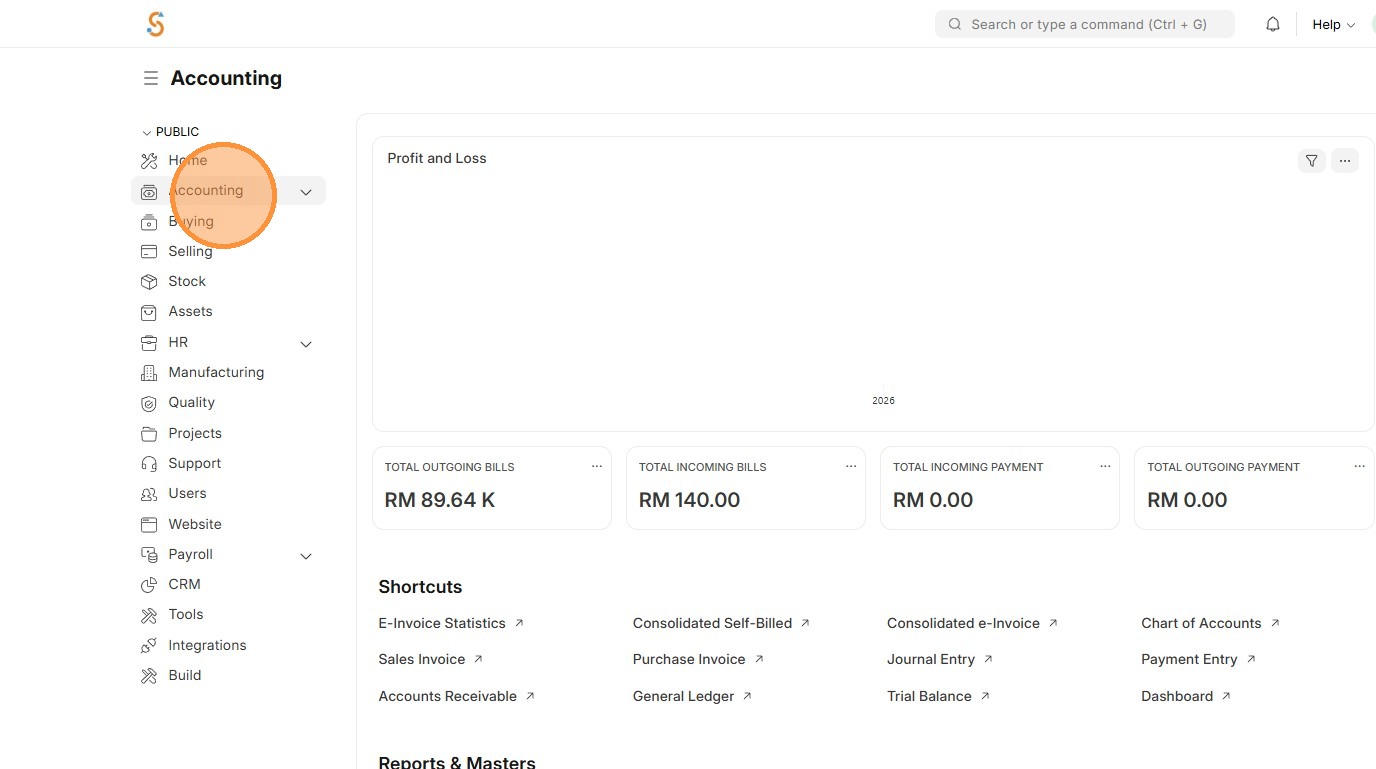
1. Click "Accounting"
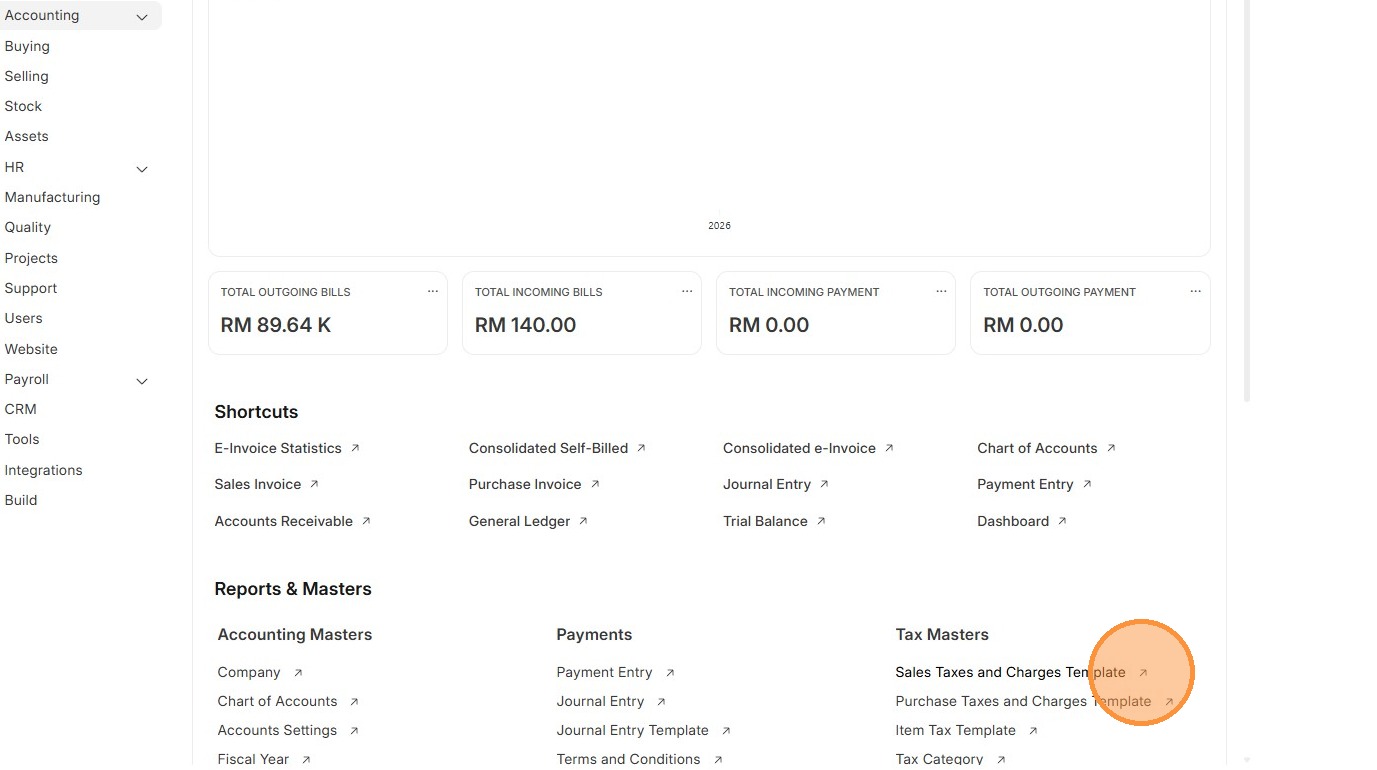
2. Click Sales Taxes and Charges Template.
3. Click "Add Sales Taxes and Charges Template"
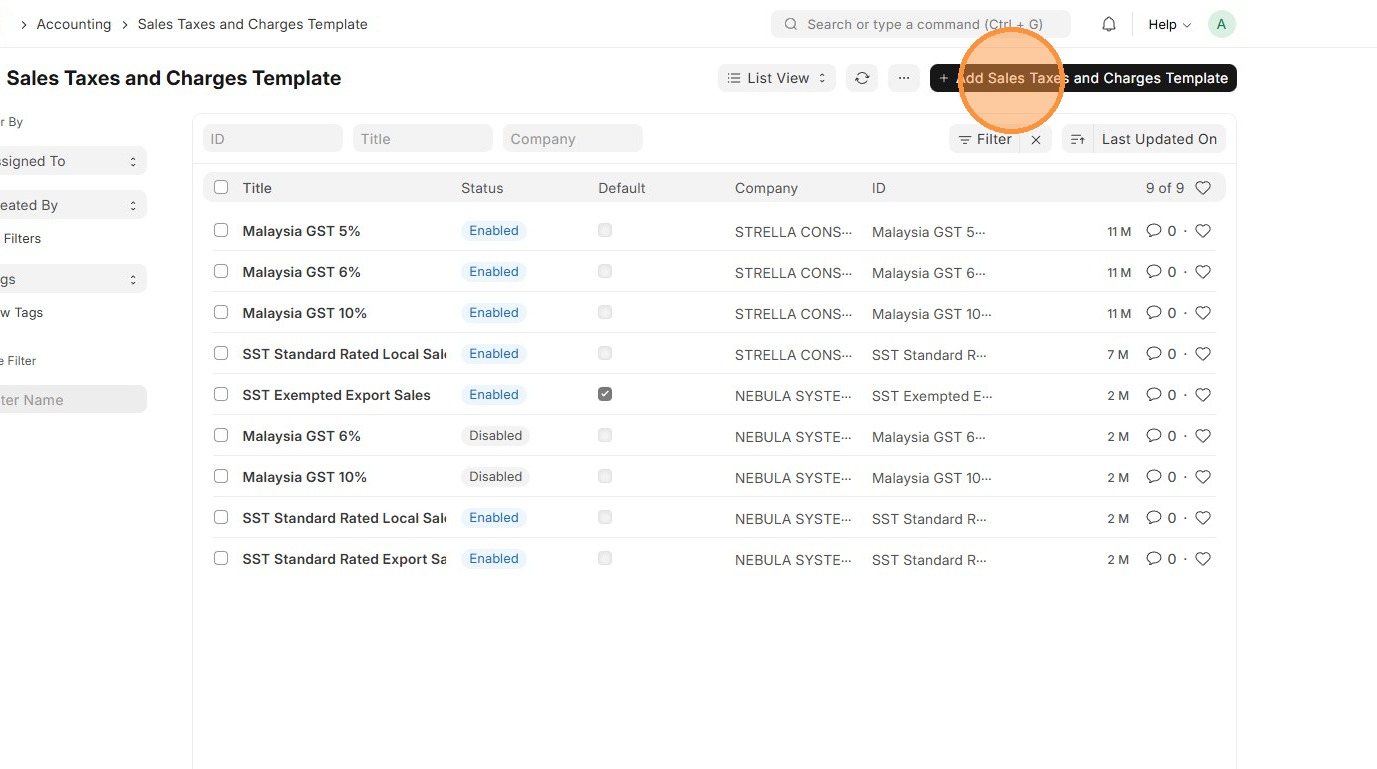
4. Enter Sales Taxes and Charges Template "Title"
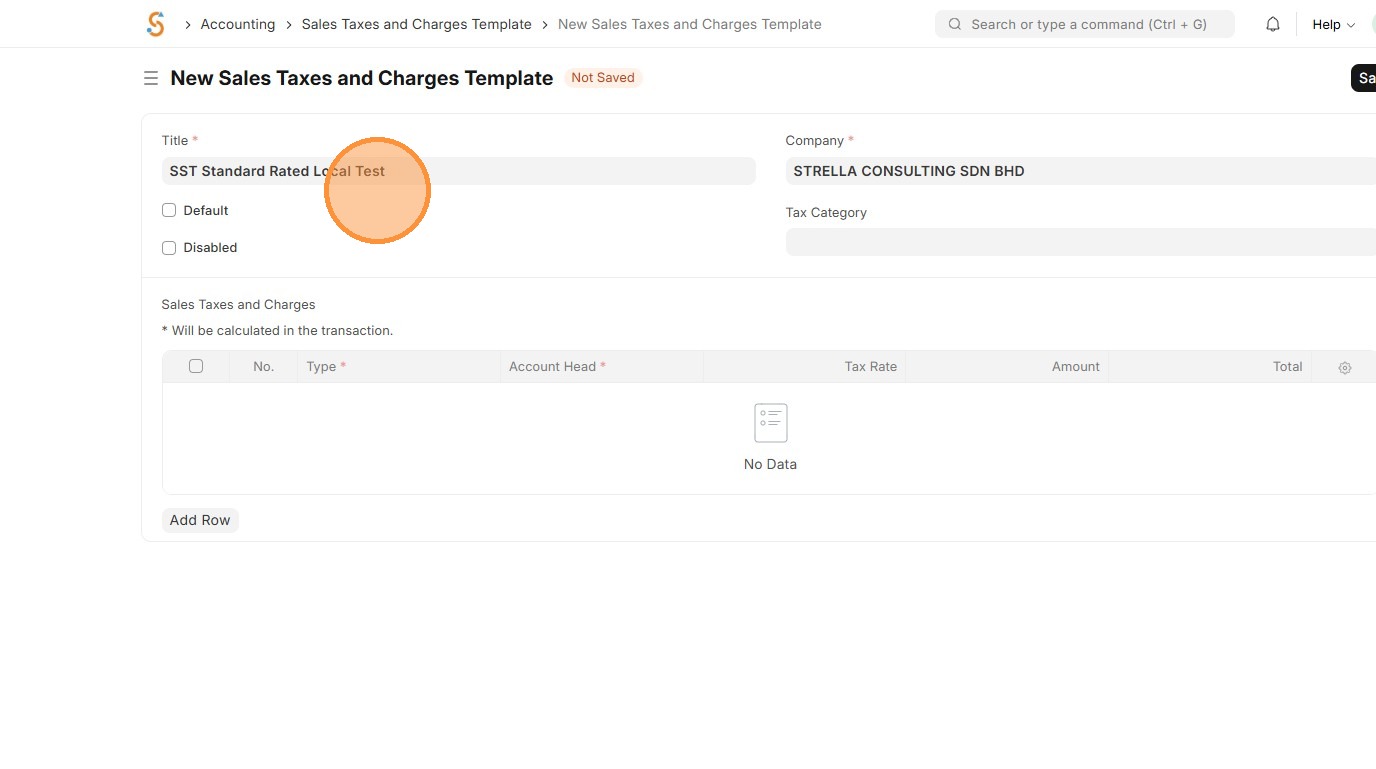
5. Select "Tax Category"
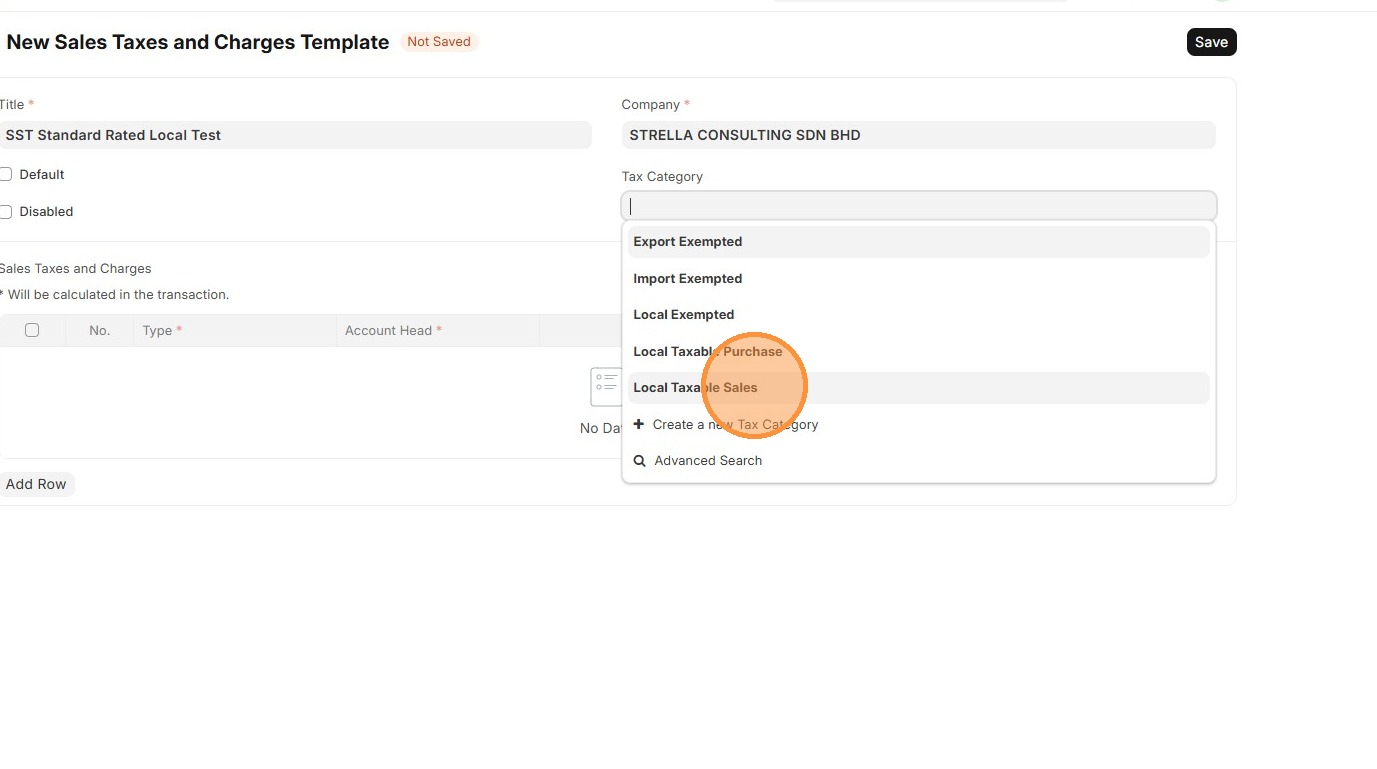
6. Click "Add Row"
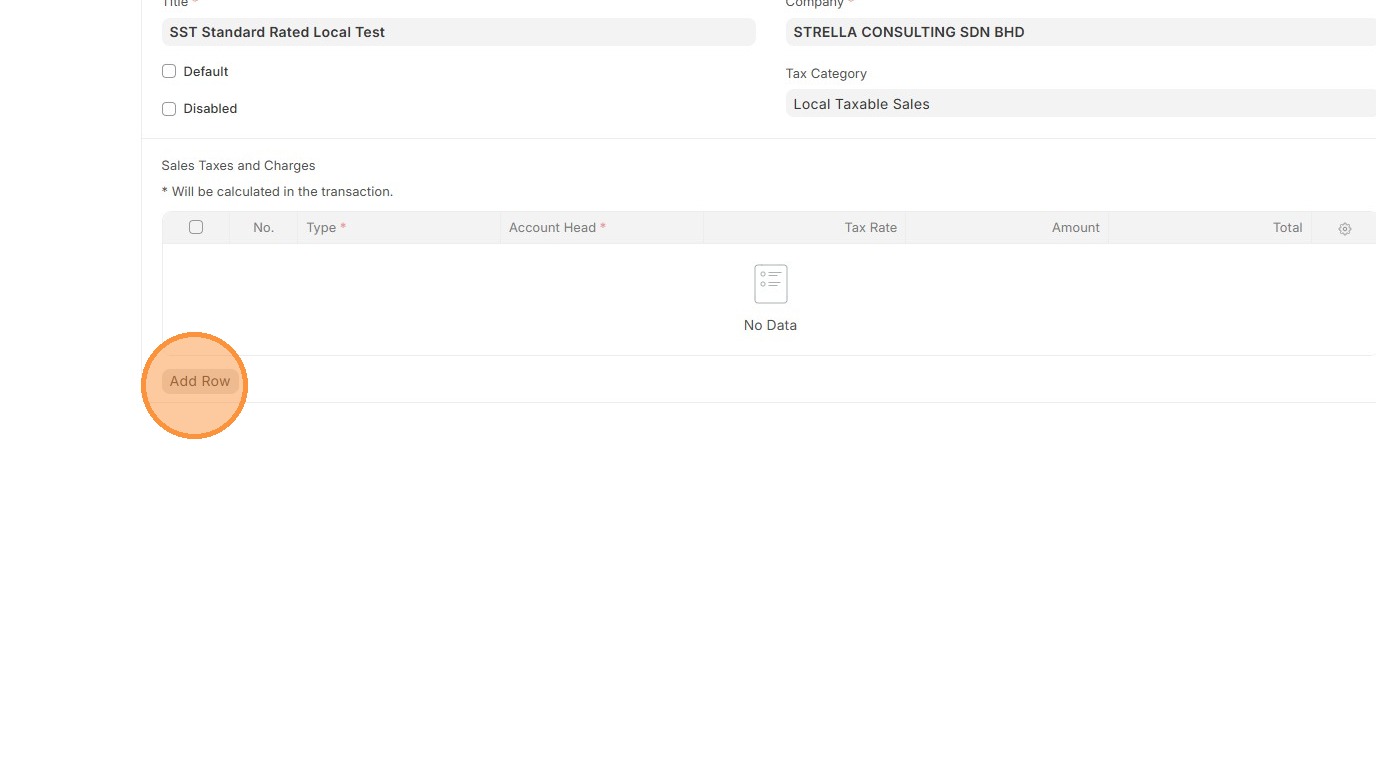
7. Select "Type".
- On Net Total - Tax on total of items
- On Previous Row Total - Tax on cumulative total up to another row
- Actual - Fixed amount instead of percentage
- On Item Quantity - Tax per unit quantity
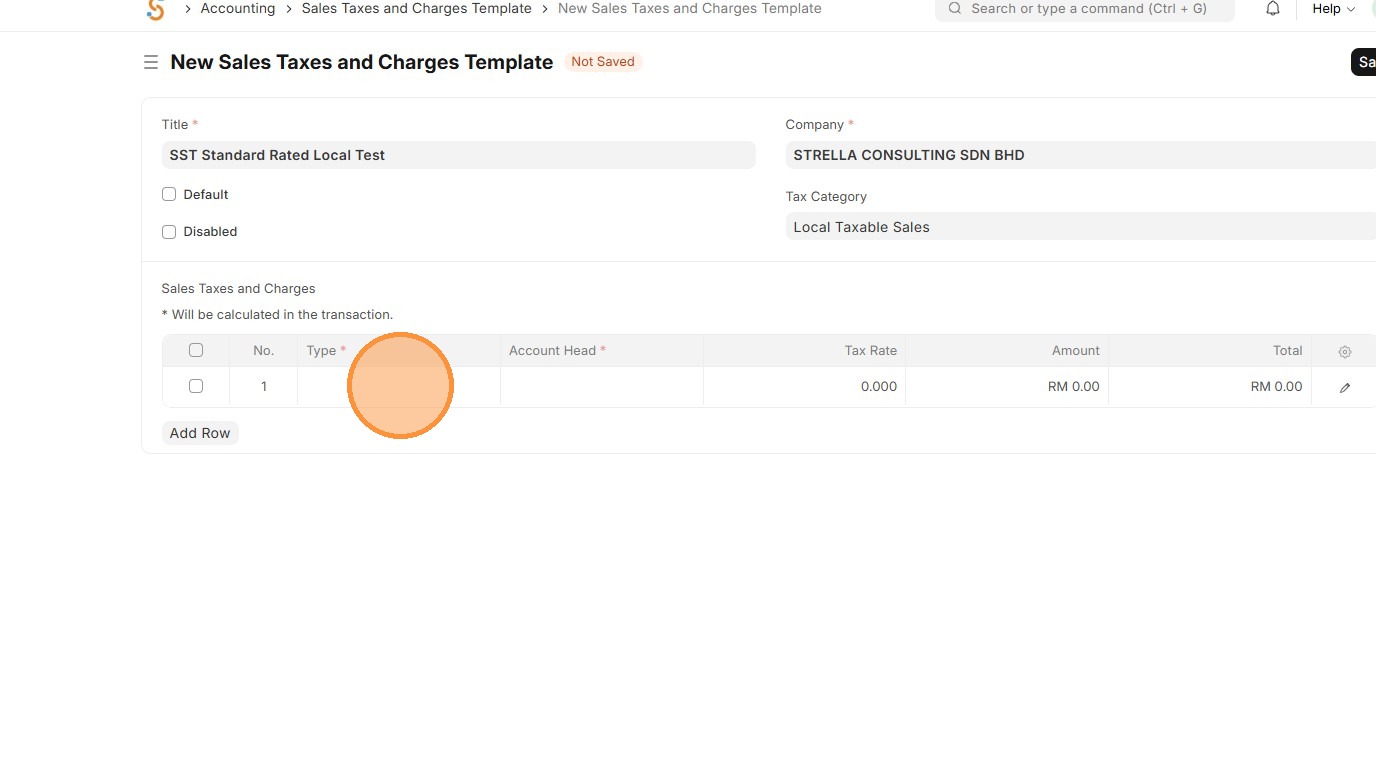
8. Select the appropriate "Account Head" that is linked to the payment Chart of Accounts.
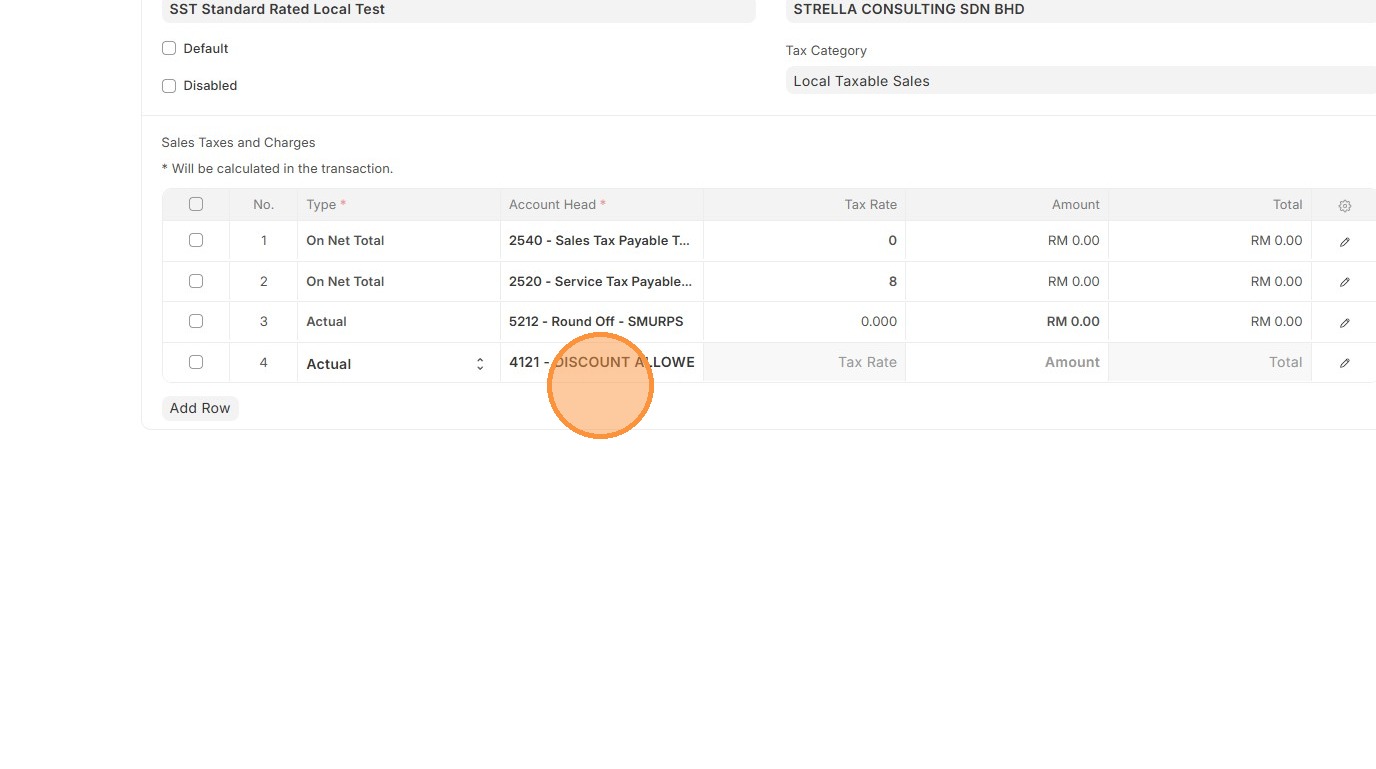
9. Verify that "Tax Rate" is fetched accordingly based on Item Tax Template.

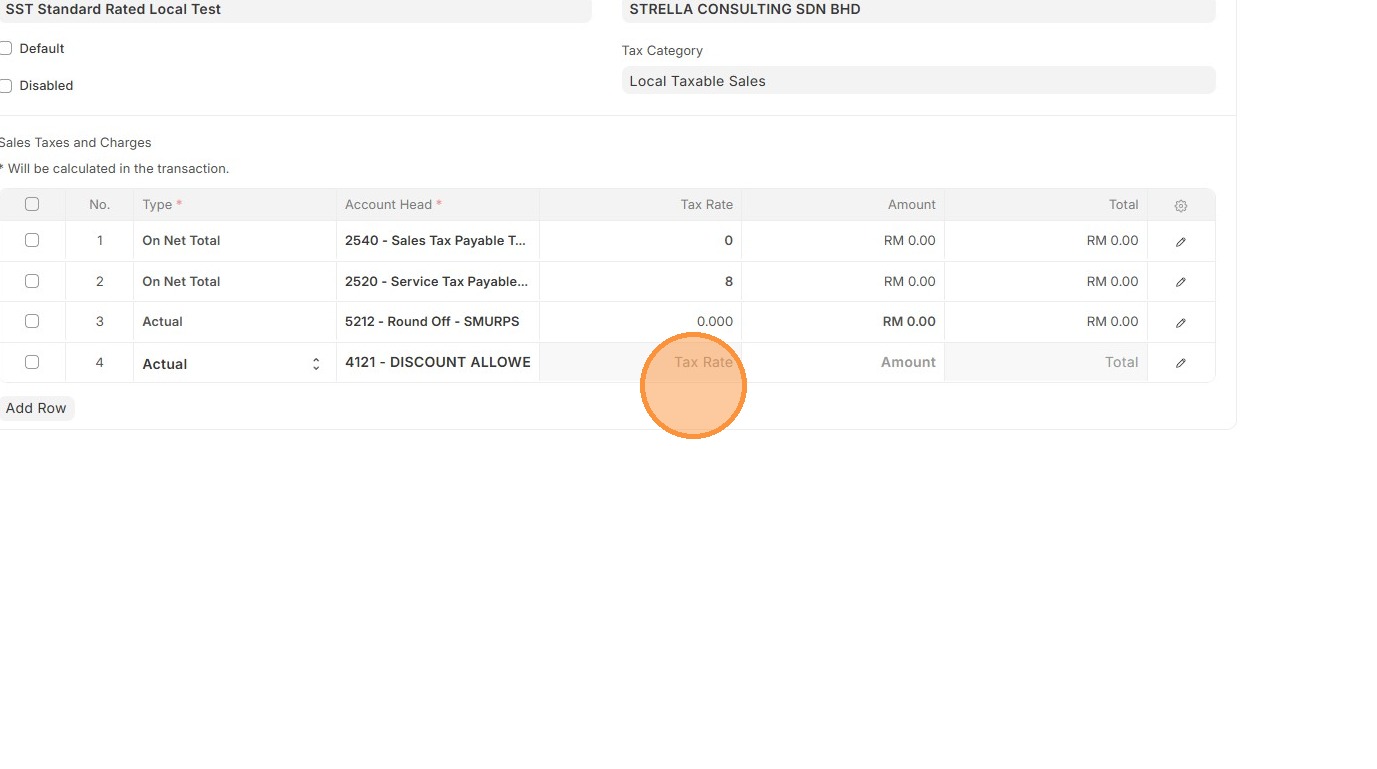
10. Click "Save"
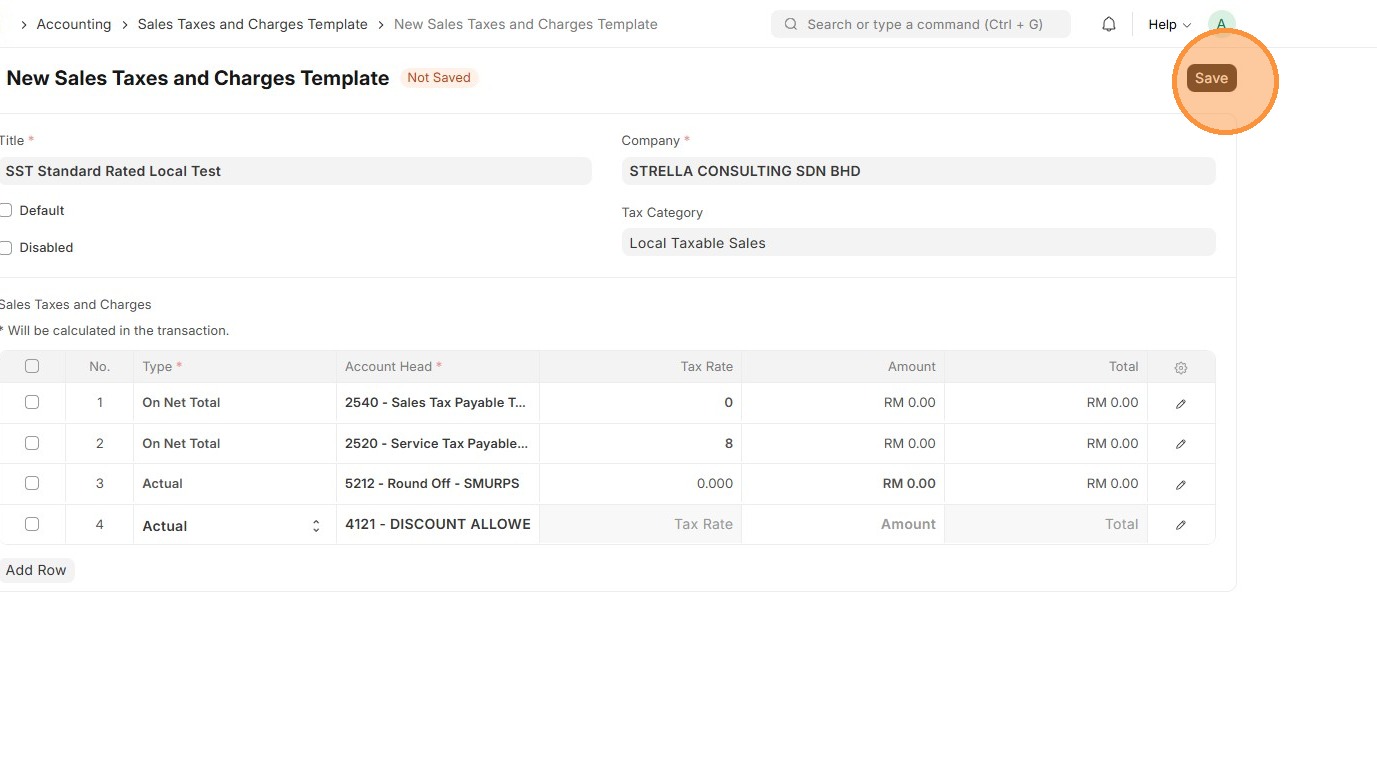
11. Verify that Sales Taxes and Charges Template ID is created correctly.
Purchase Taxes and Charges Template
A Purchase Taxes and Charges Template defines the taxes or extra charges that are applied automatically on purchase invoices. It ensures that the correct taxes are calculated, applied, and posted to the right accounts when buying from suppliers.
1. Click "Accounting"
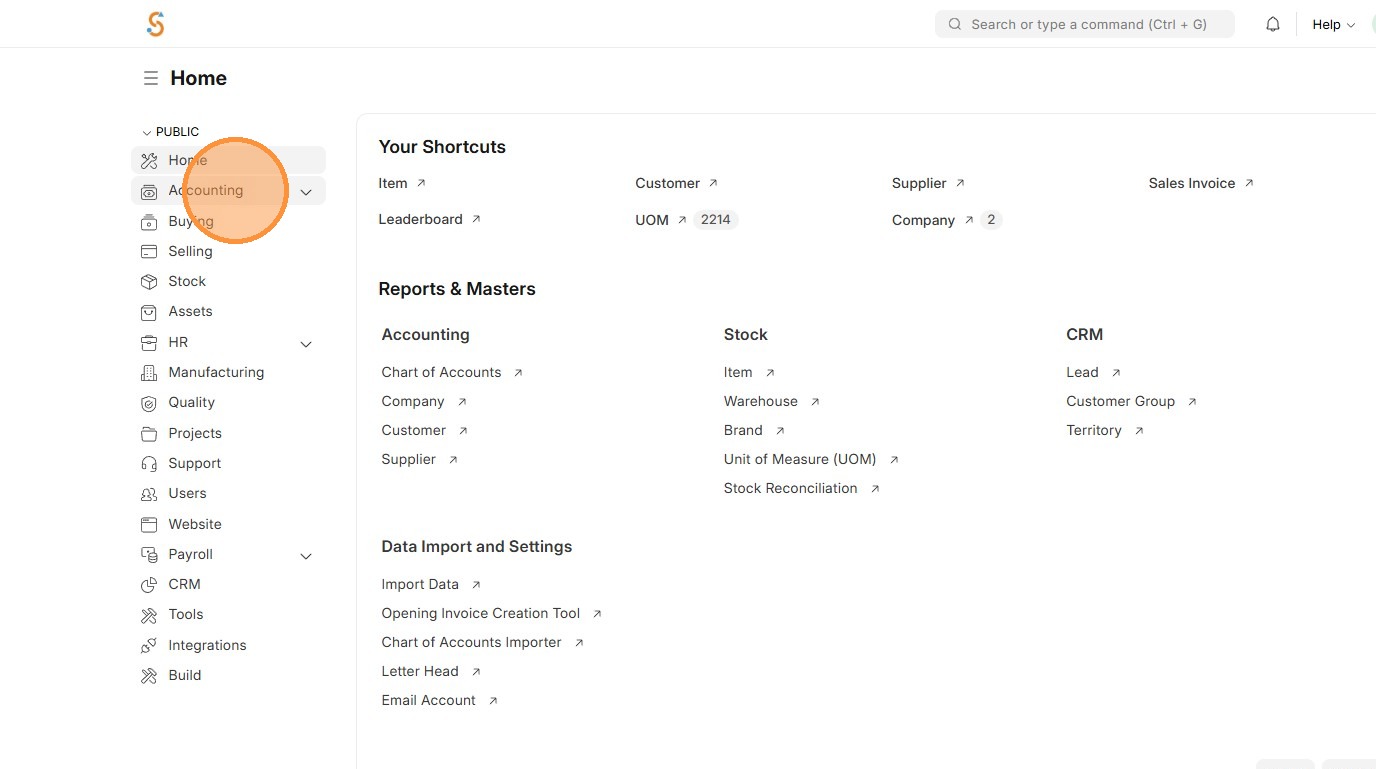
2. Click "Purchase Taxes and Charges Template"
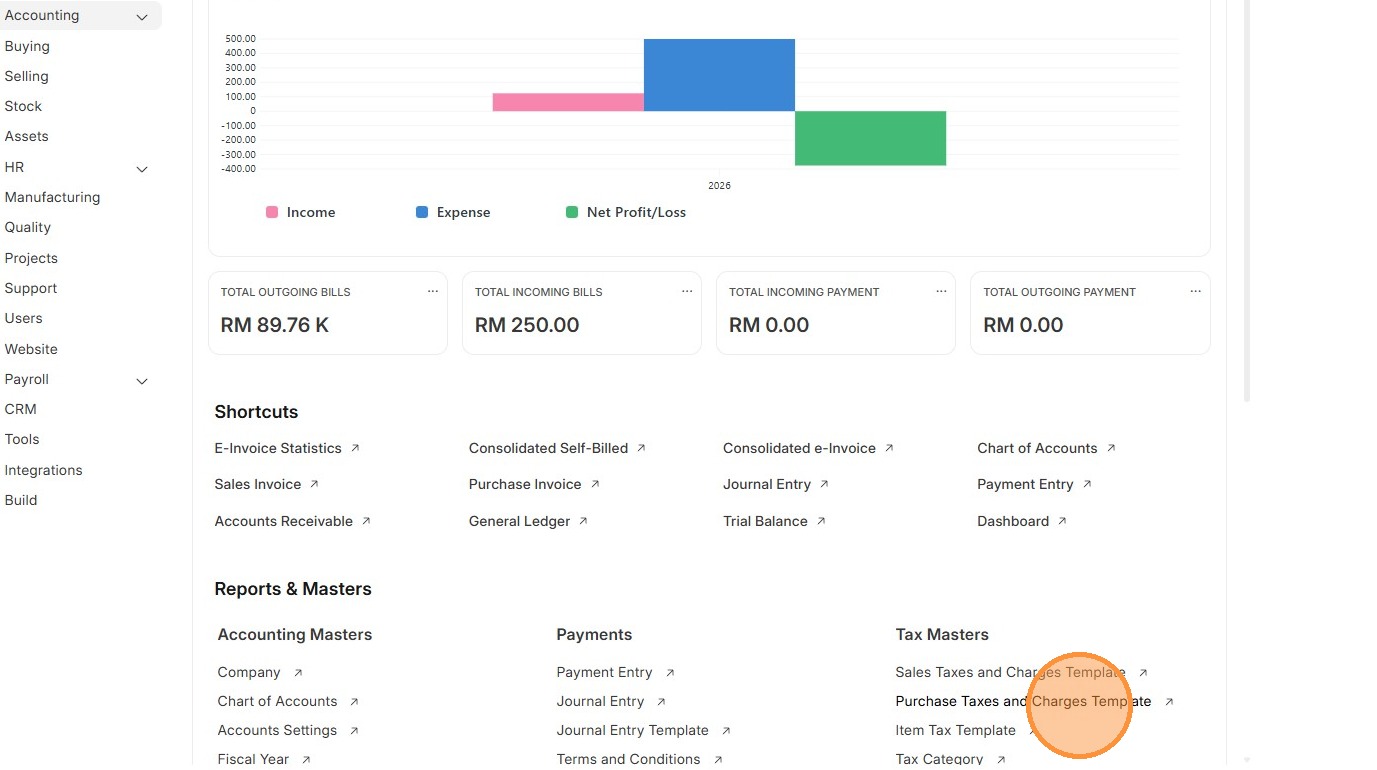
3. Click "Add Purchase Taxes and Charges Template"
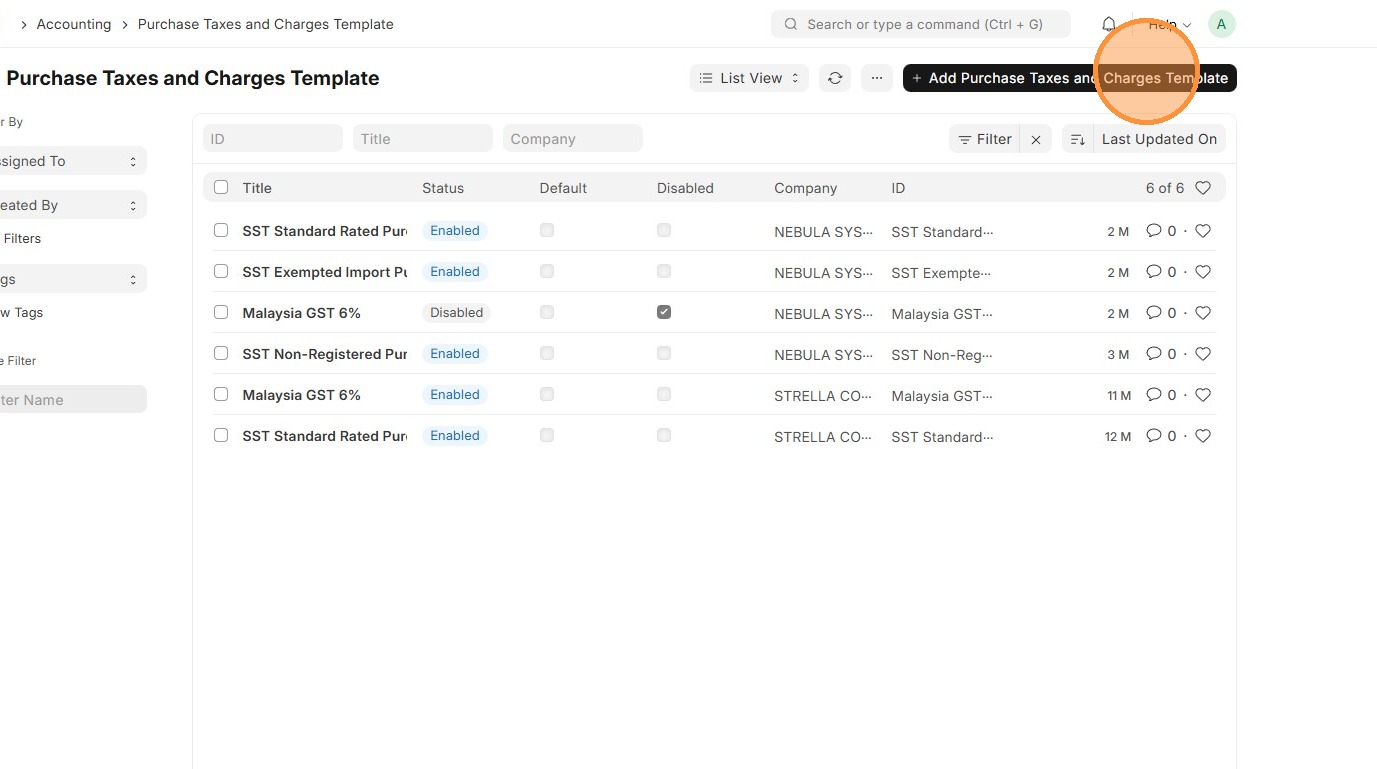
4. Enter "Title"
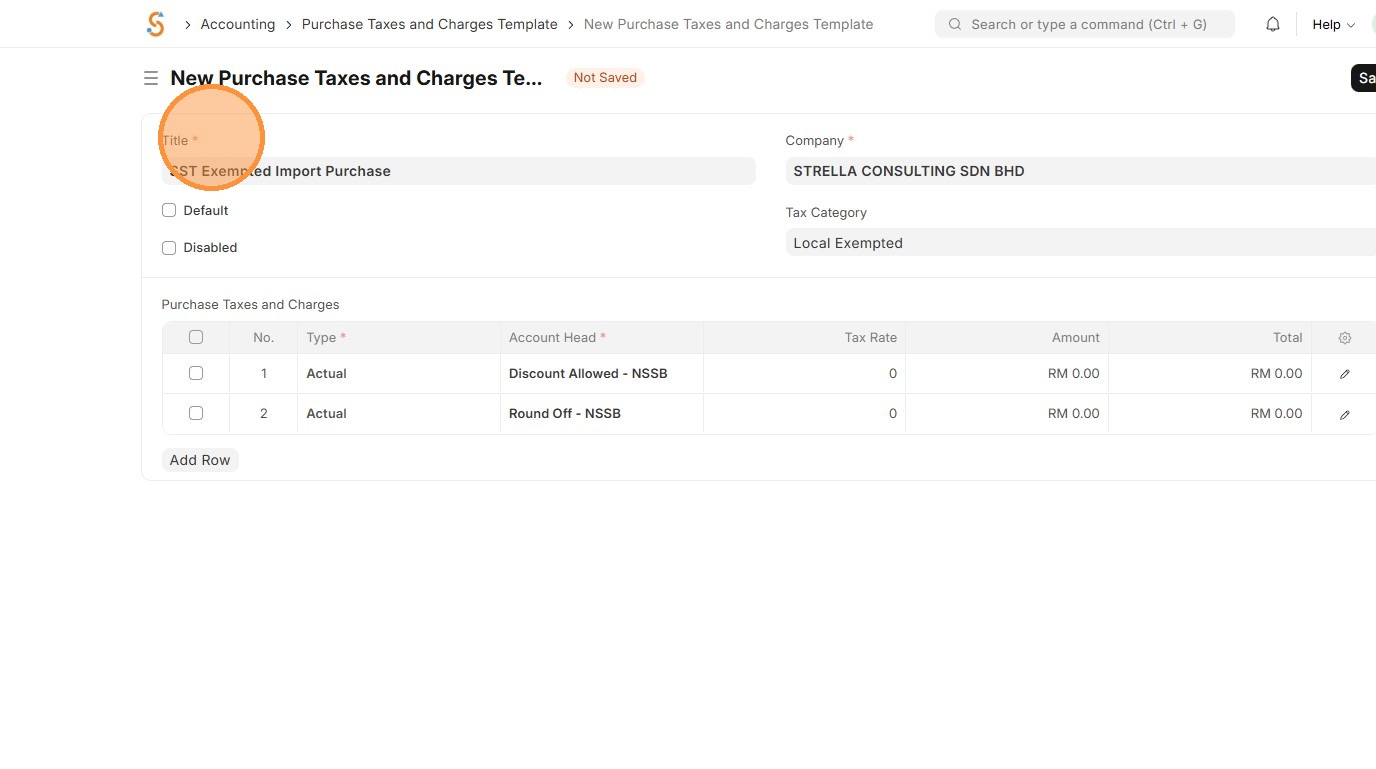
5. Select Tax Category.
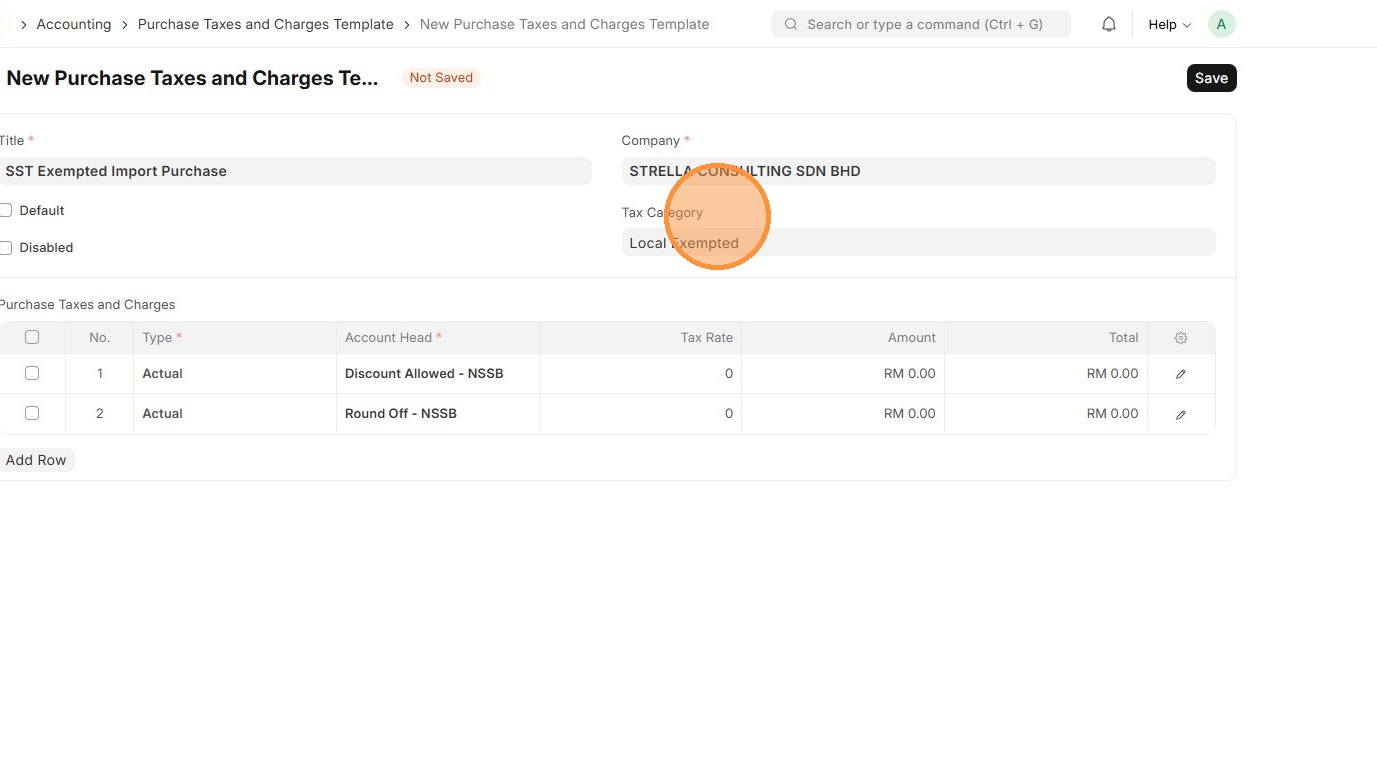
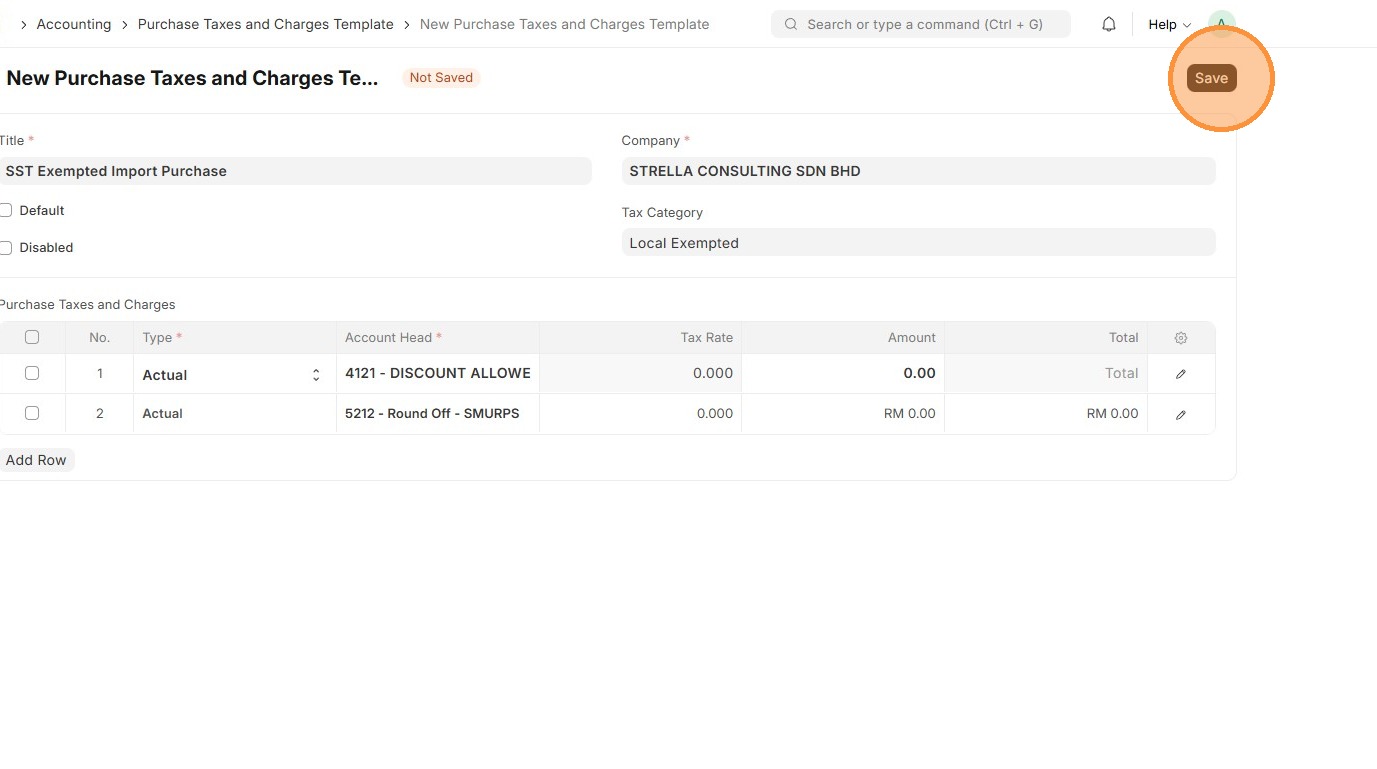
6. Select "Type" appropriate "Account Head" based on Chart of Accounts.
-
On Net Total - Tax on total of items
-
On Previous Row Total - Tax on cumulative total up to another row
-
Actual - Fixed amount instead of percentage
-
On Item Quantity - Tax per unit quantity
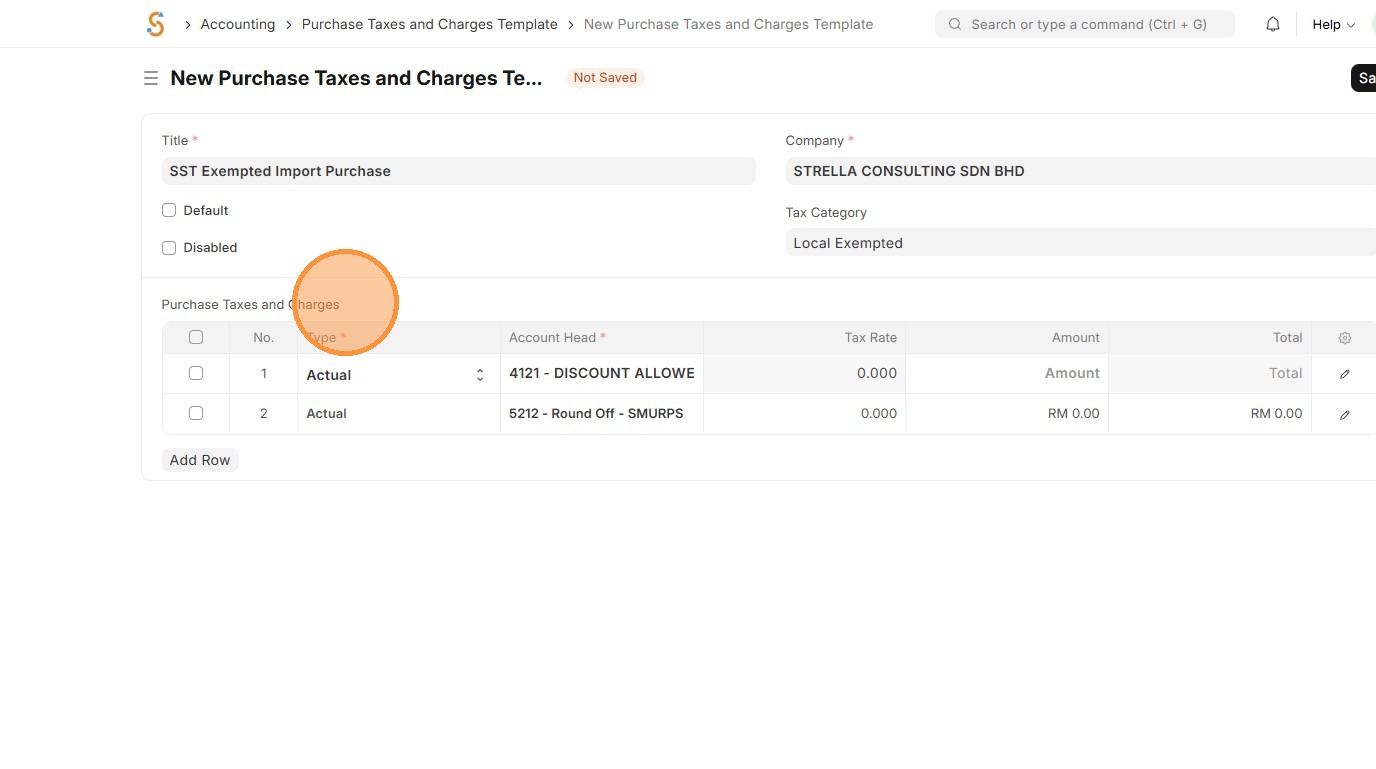
7. Click "Add Row"
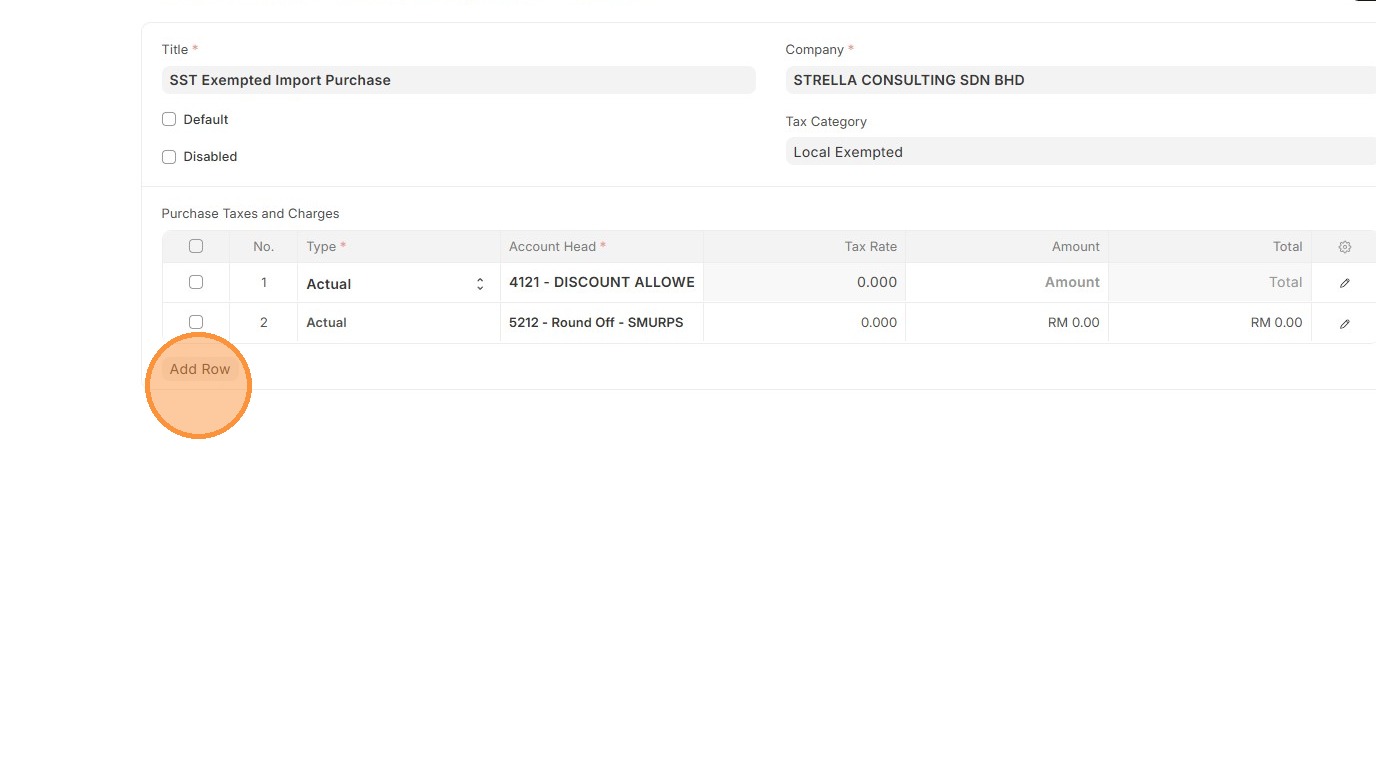
8. Click "Save"
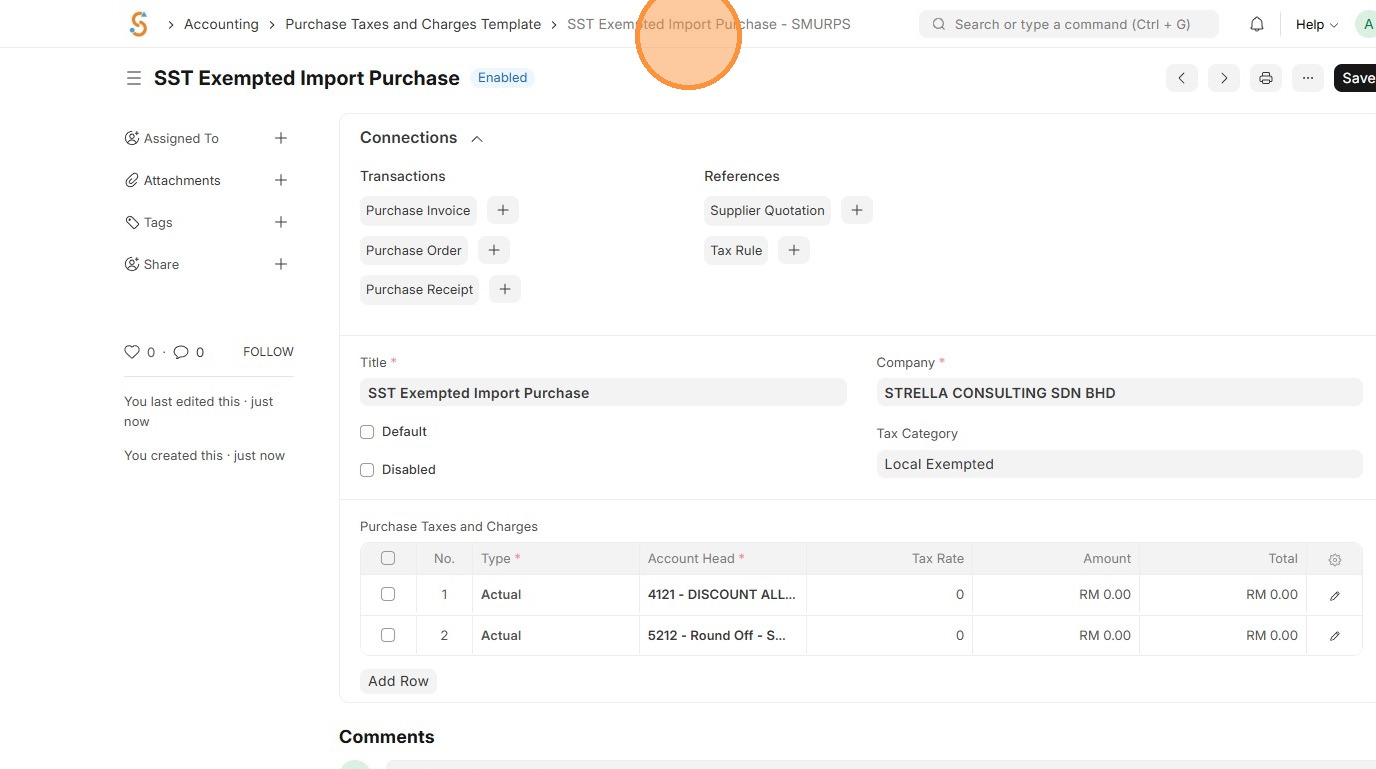
9. Verify that Purchase Taxes and Charges Template ID is created
Item Tax Template
An Item Tax Template defines the default tax for an item, so the correct tax is automatically applied whenever that item is sold or purchased. This reduces manual work and ensures taxes are applied consistently and correctly.
1. Click "Accounting"
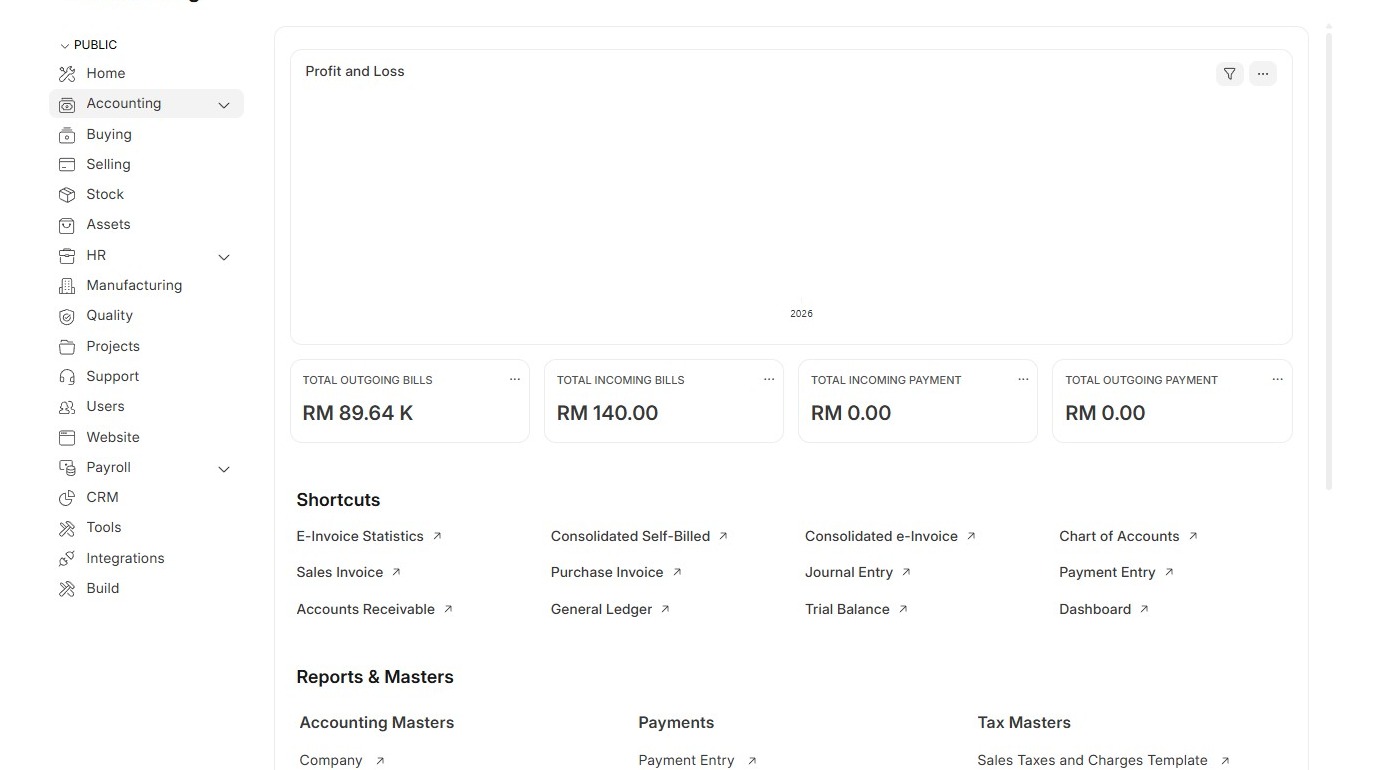
2. Click "Item Tax Template"
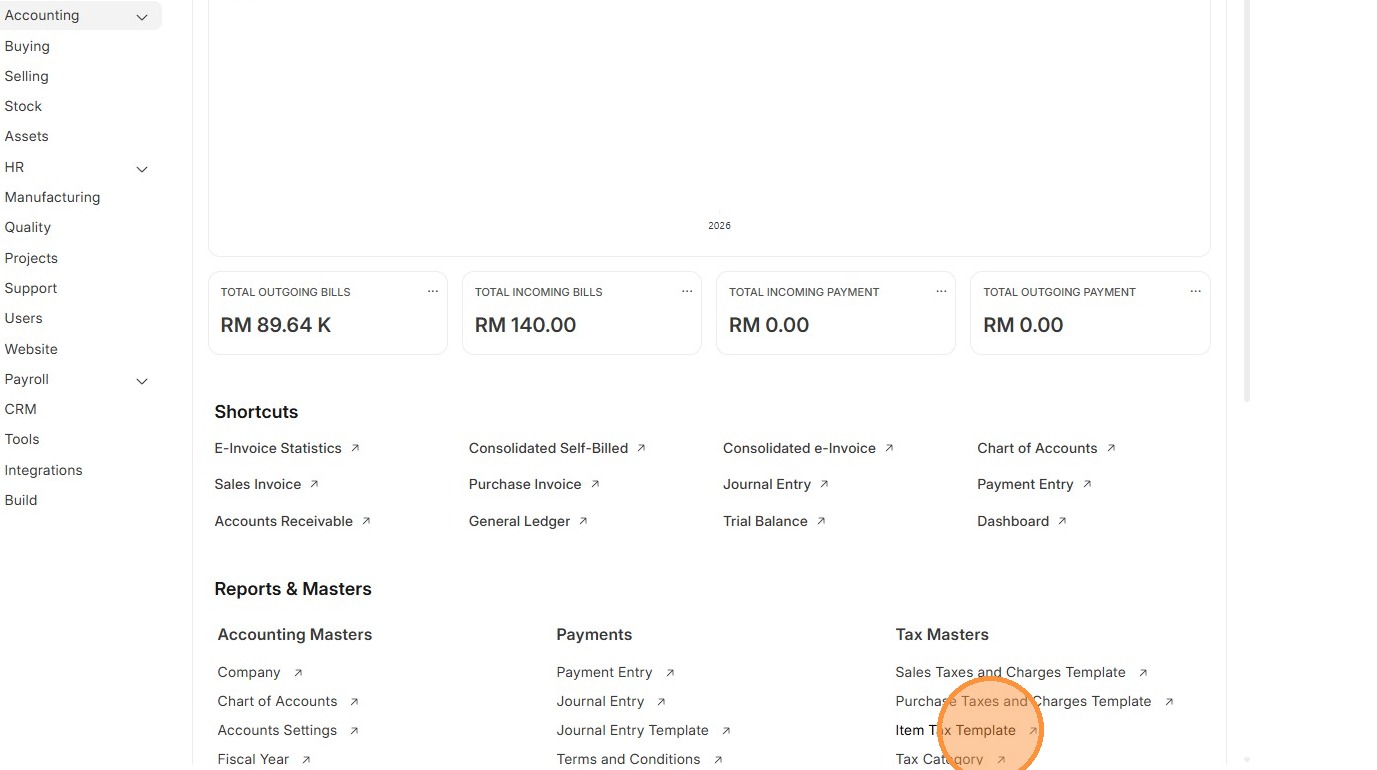
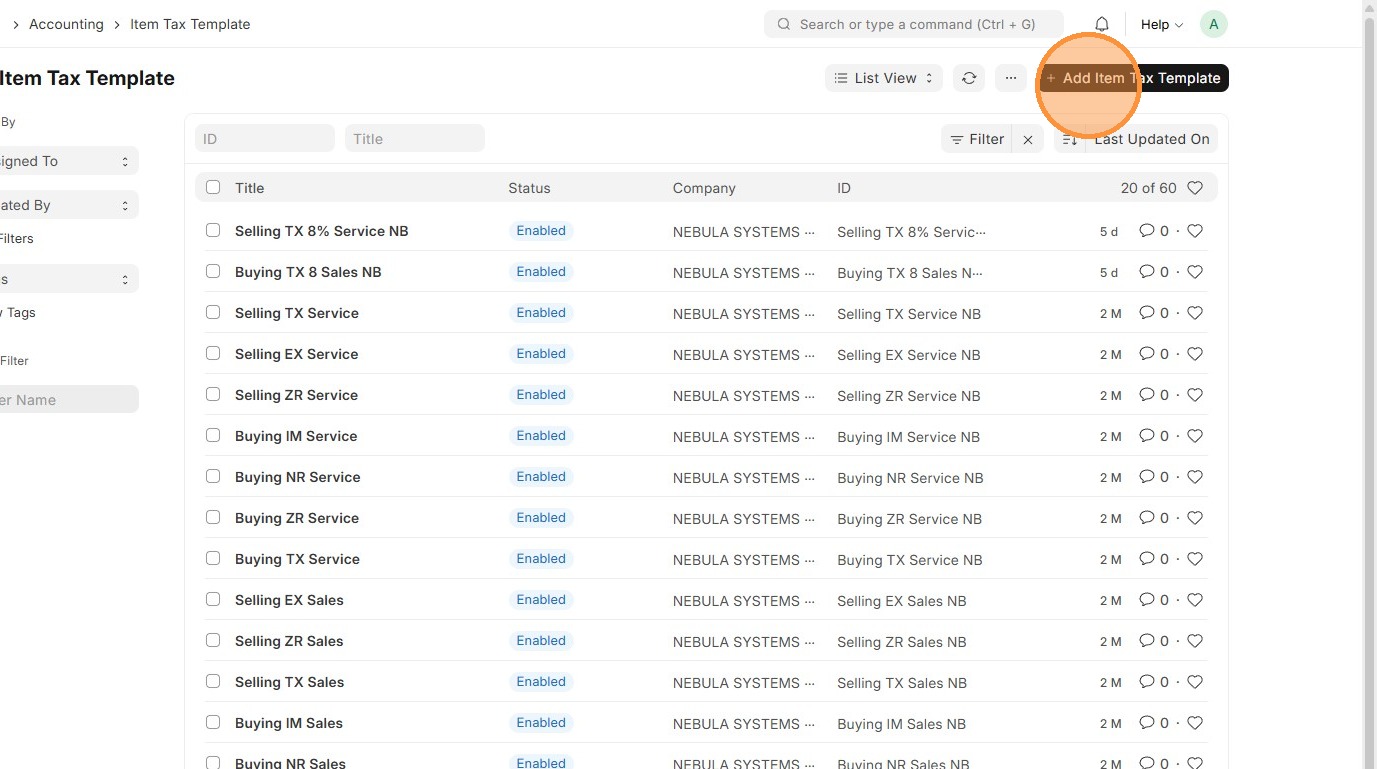
3. Click "Add Item Tax Template"
4. Enter Item Tax Template title.
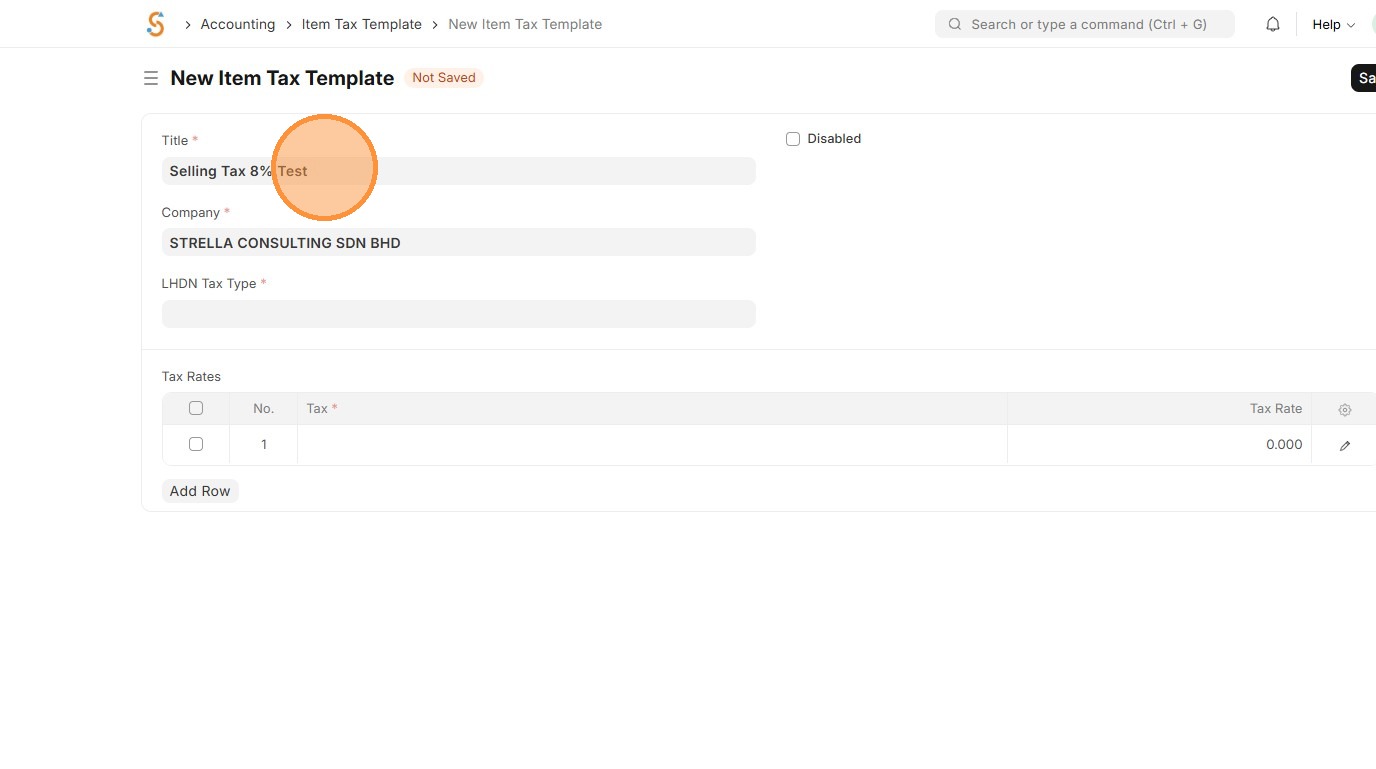
5. Select "LHDN Tax Type"
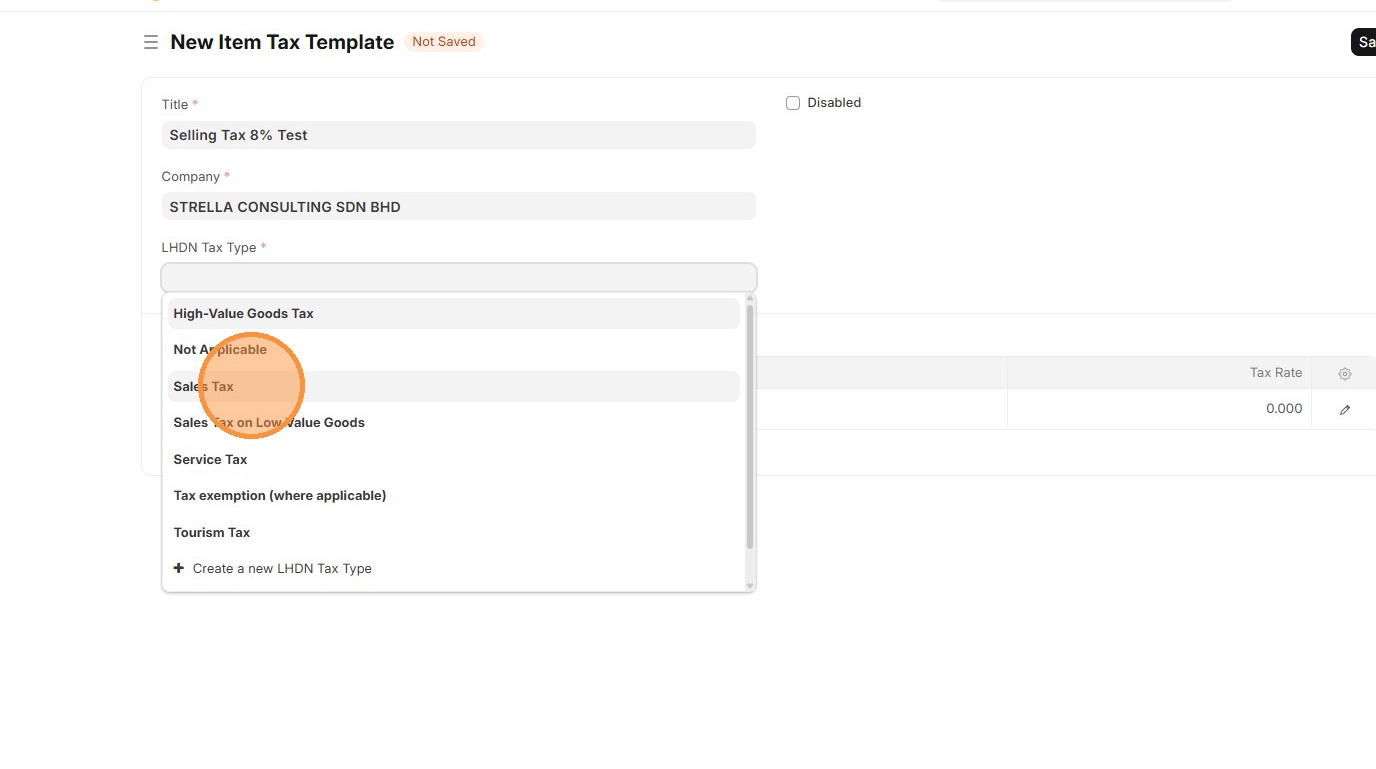
6. Verify that LHDN Tax Code is populated.
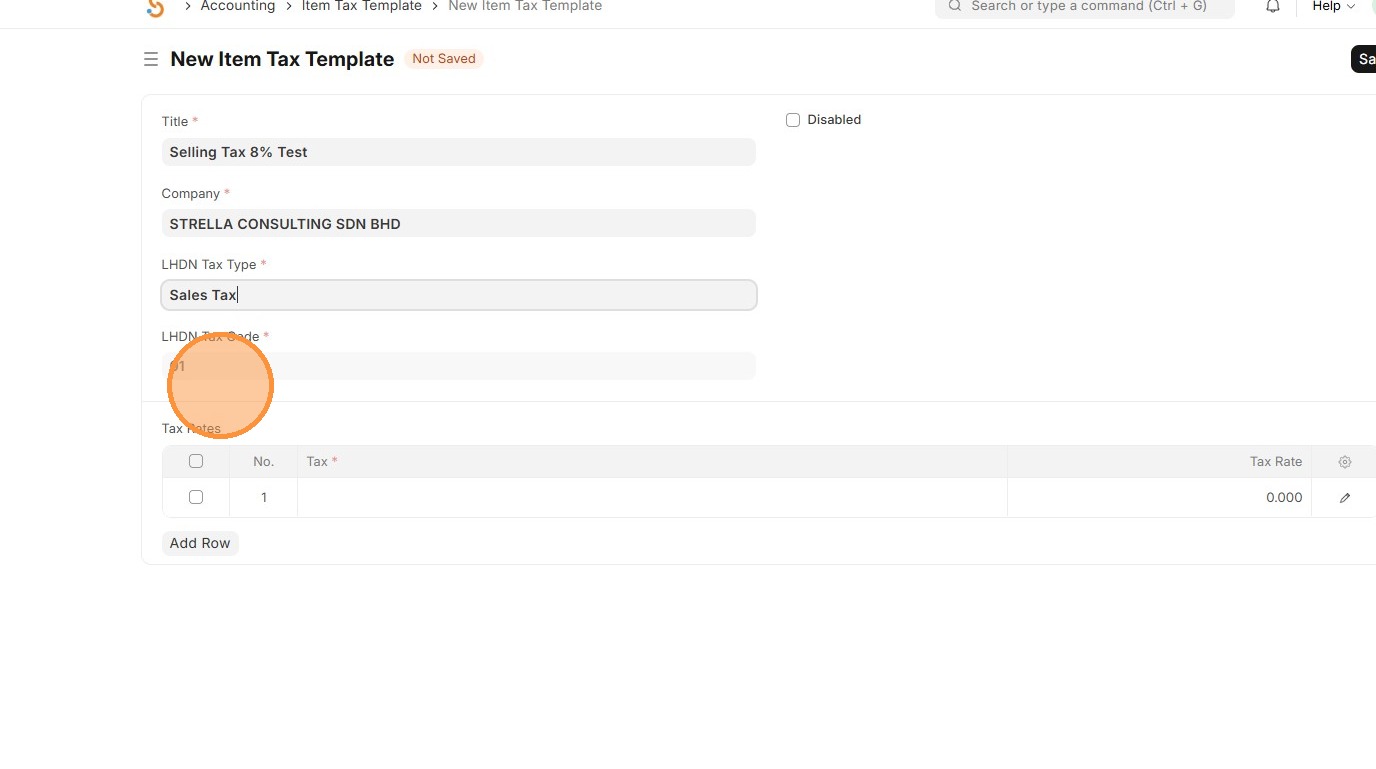
7. Select Chart of Accounts associated with Item Tax Template.
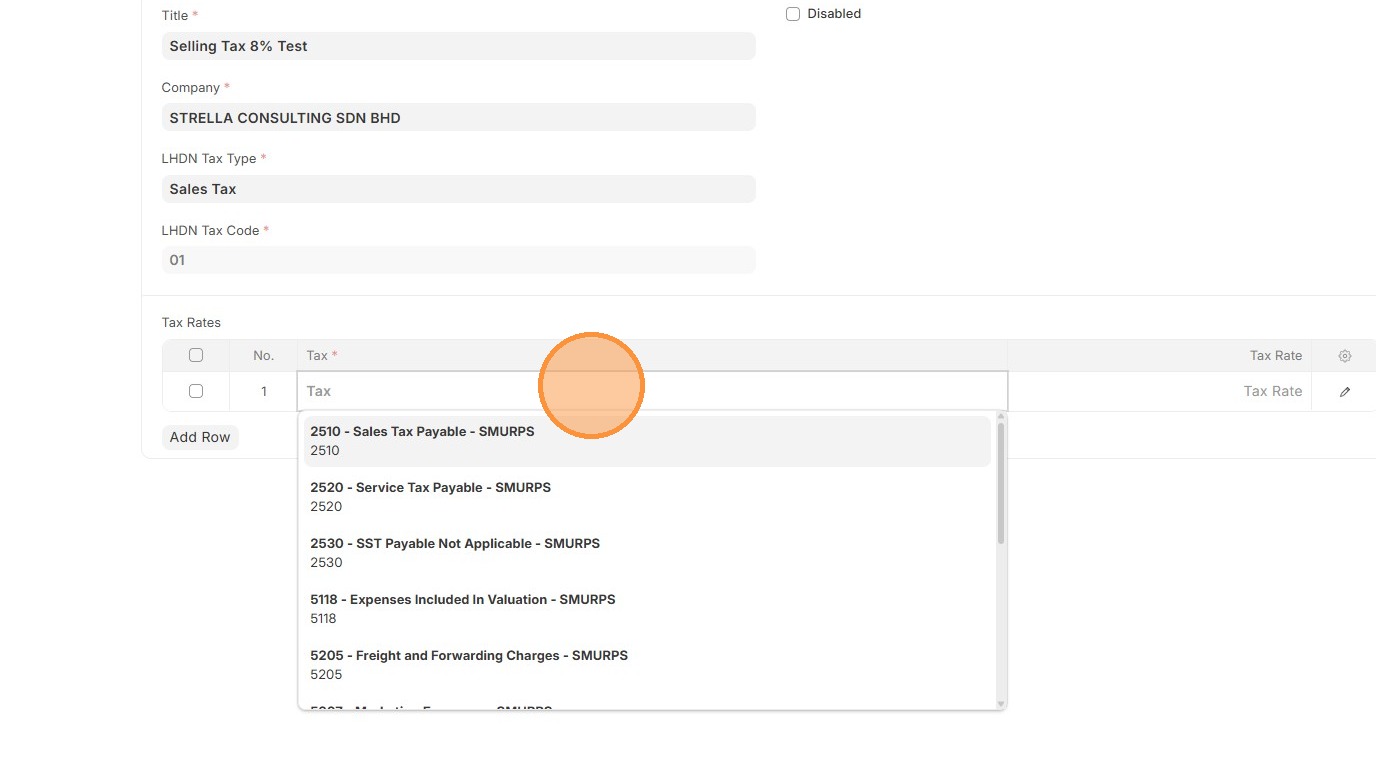
8. Enter Tax Rate in %
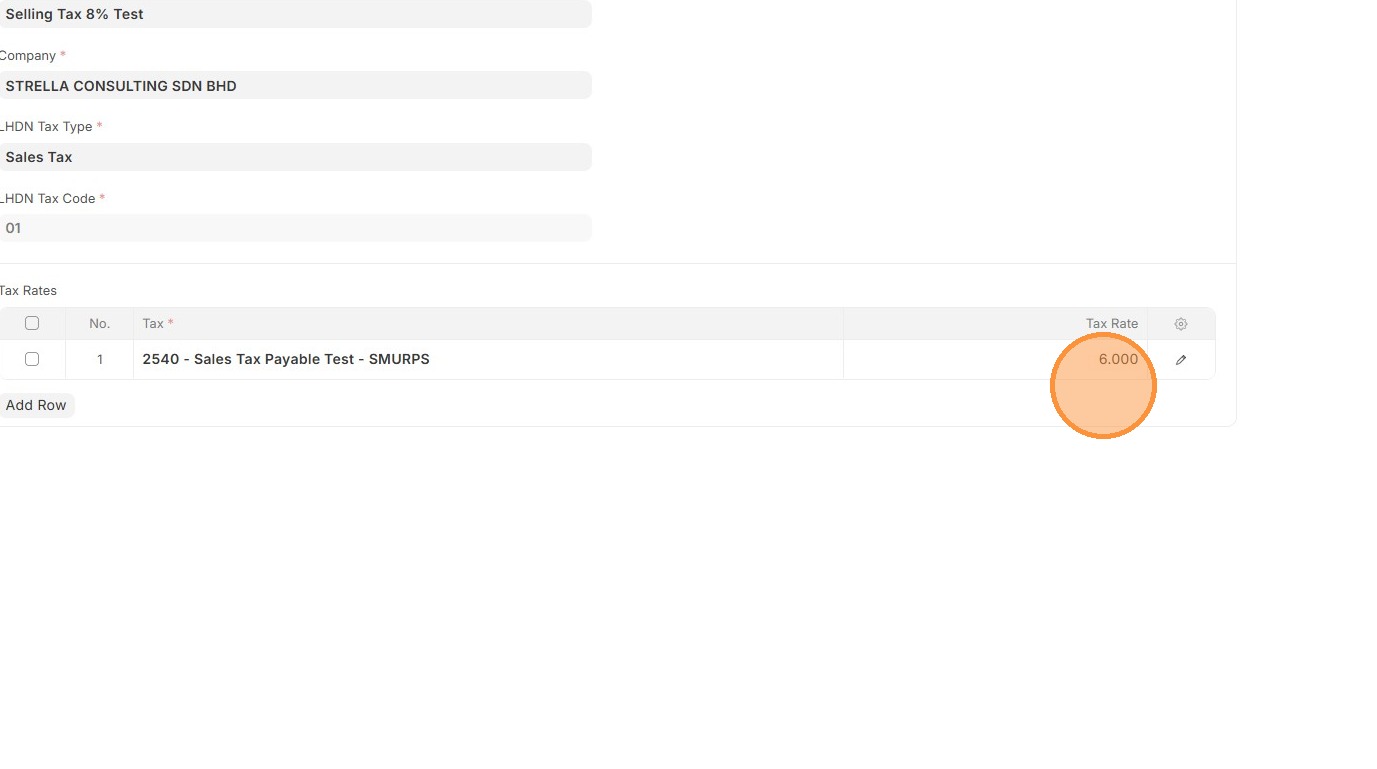
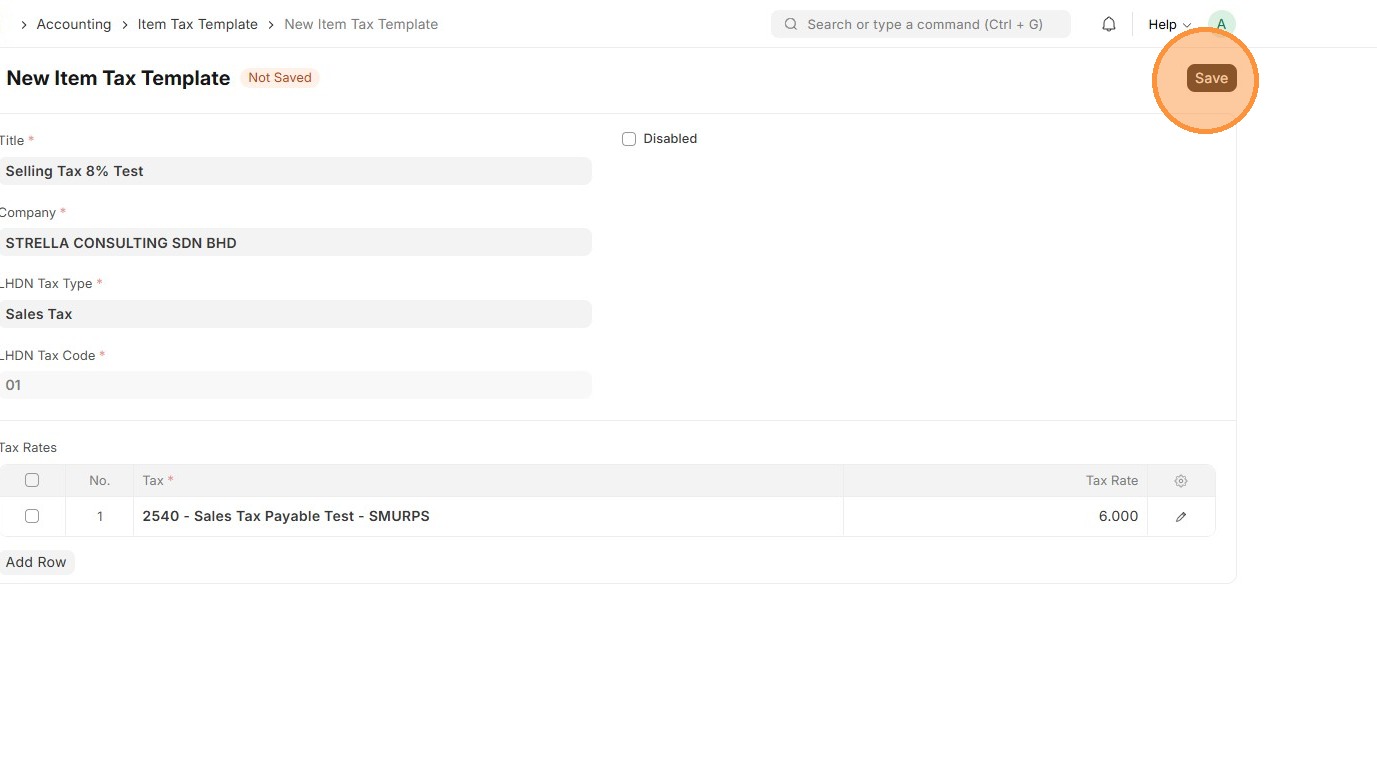
9. Click "Save"
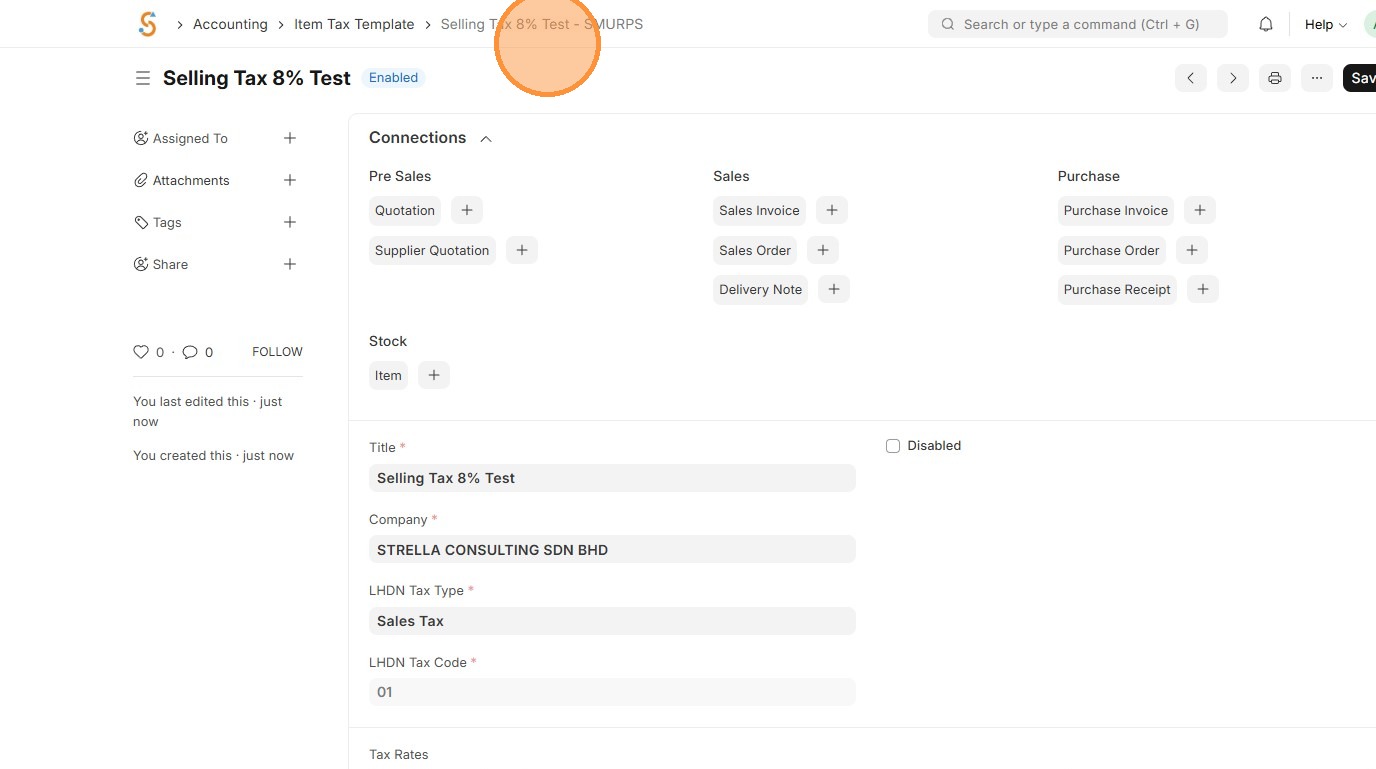
10. Verify that Item Tax Template ID is created.
Tax Rule
A Tax Rule tells the system when and how to apply a tax based on conditions like item, customer, supplier, or location. It ensures the right taxes are automatically applied only in the situations they should be, saving time and reducing errors.
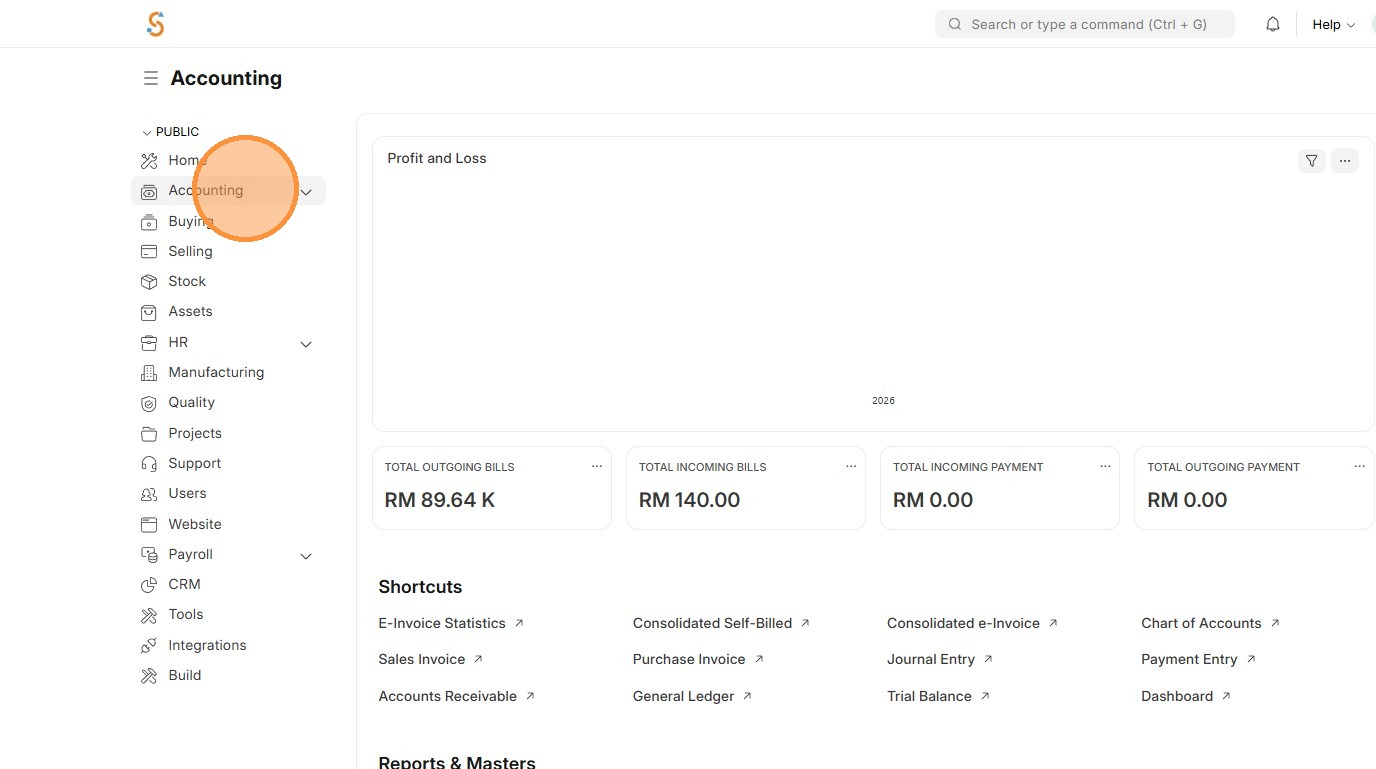
1. Click "Accounting"
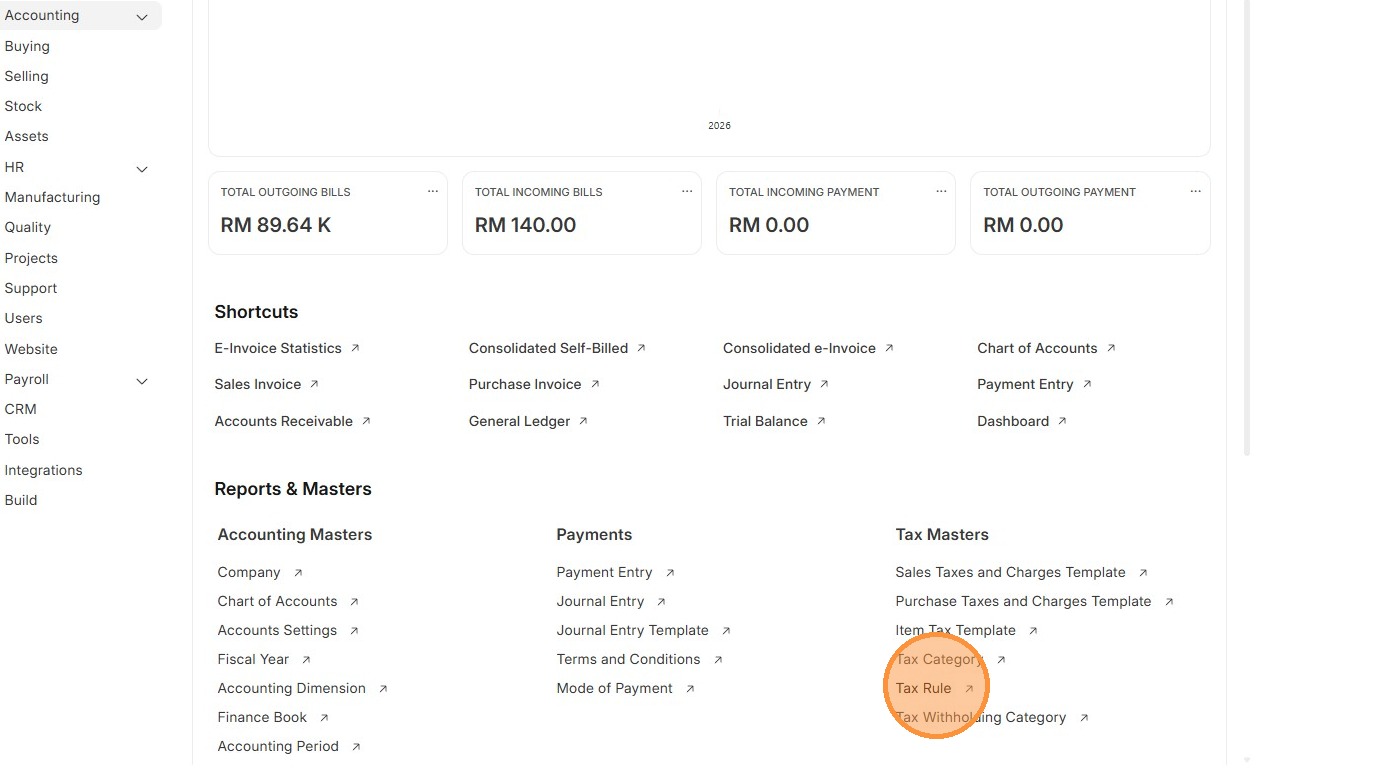
2. Click "Tax Rule"
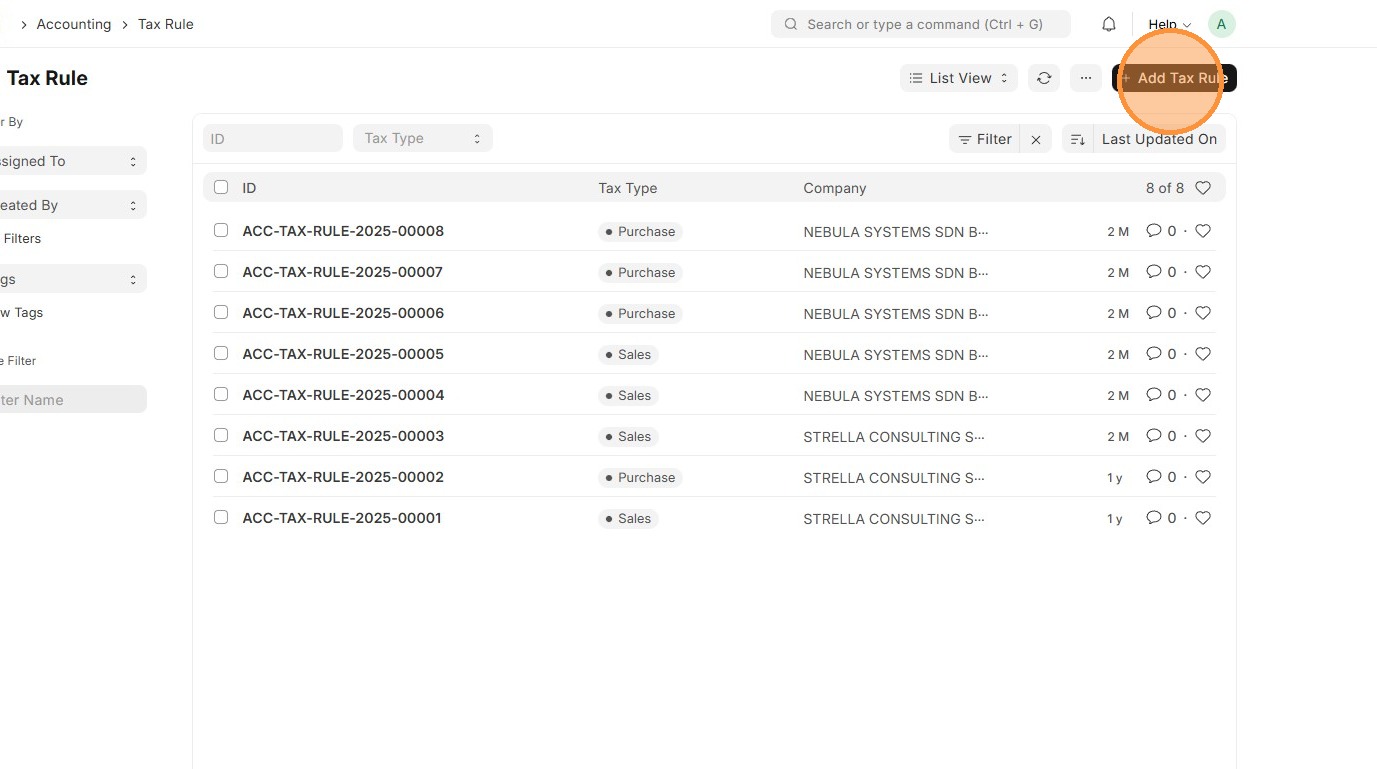
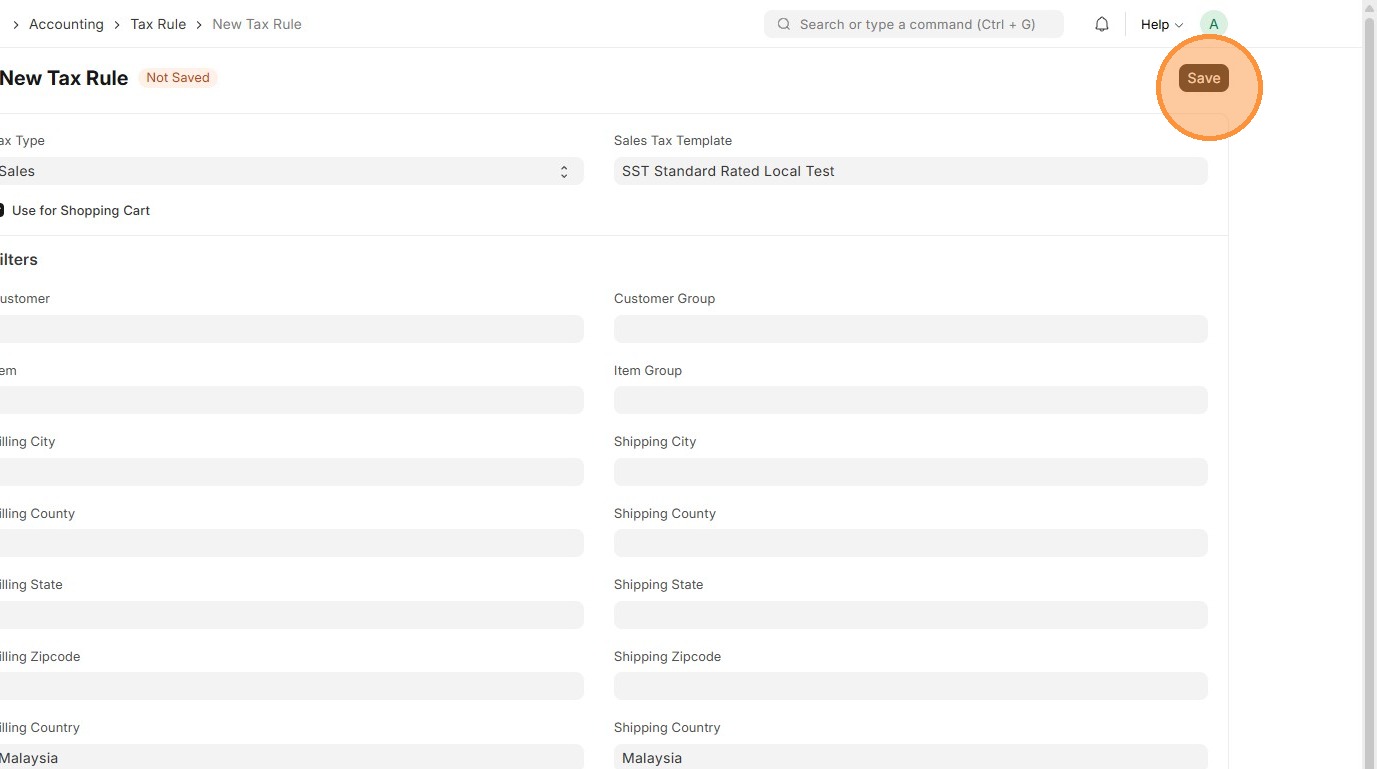
3. Click "Add Tax Rule"
4. Select "Tax Type"
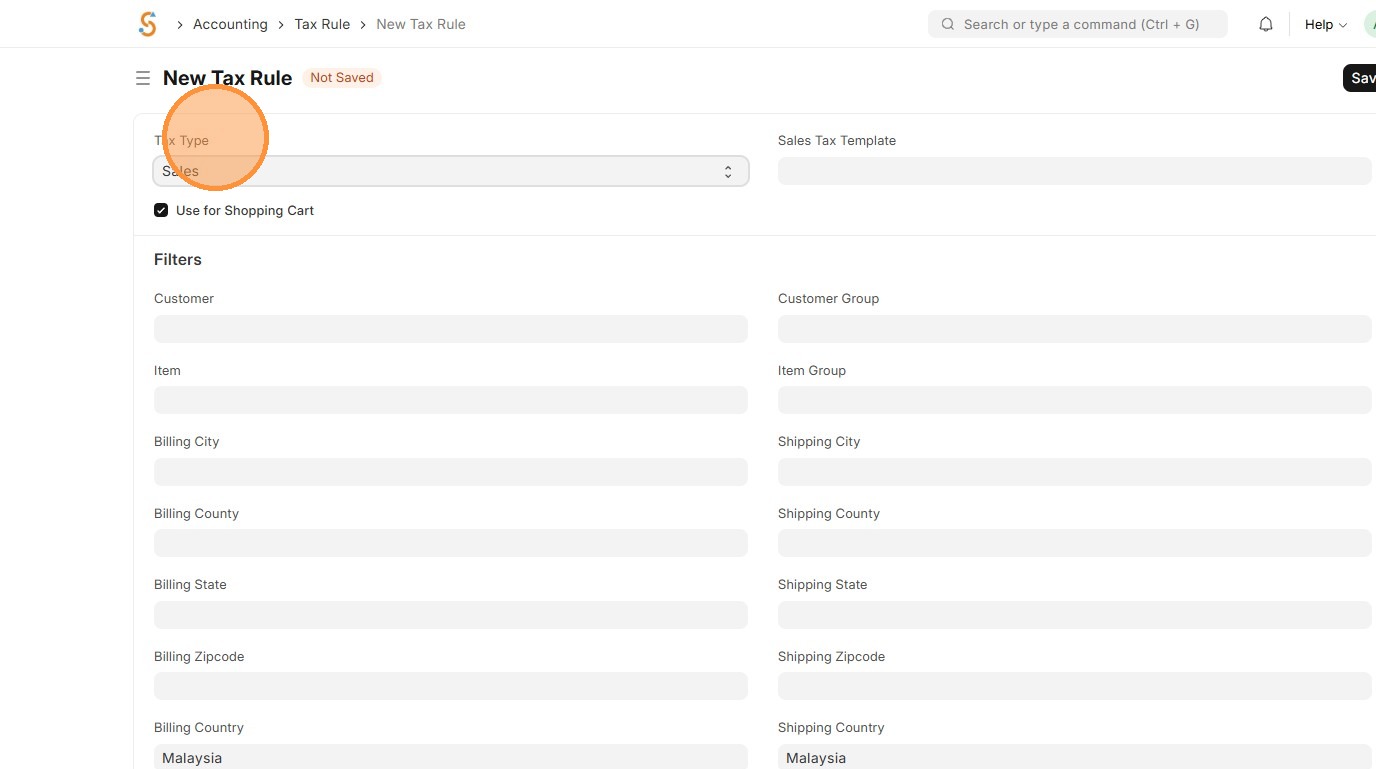
5. Select appropriate Sales Taxes and Charges
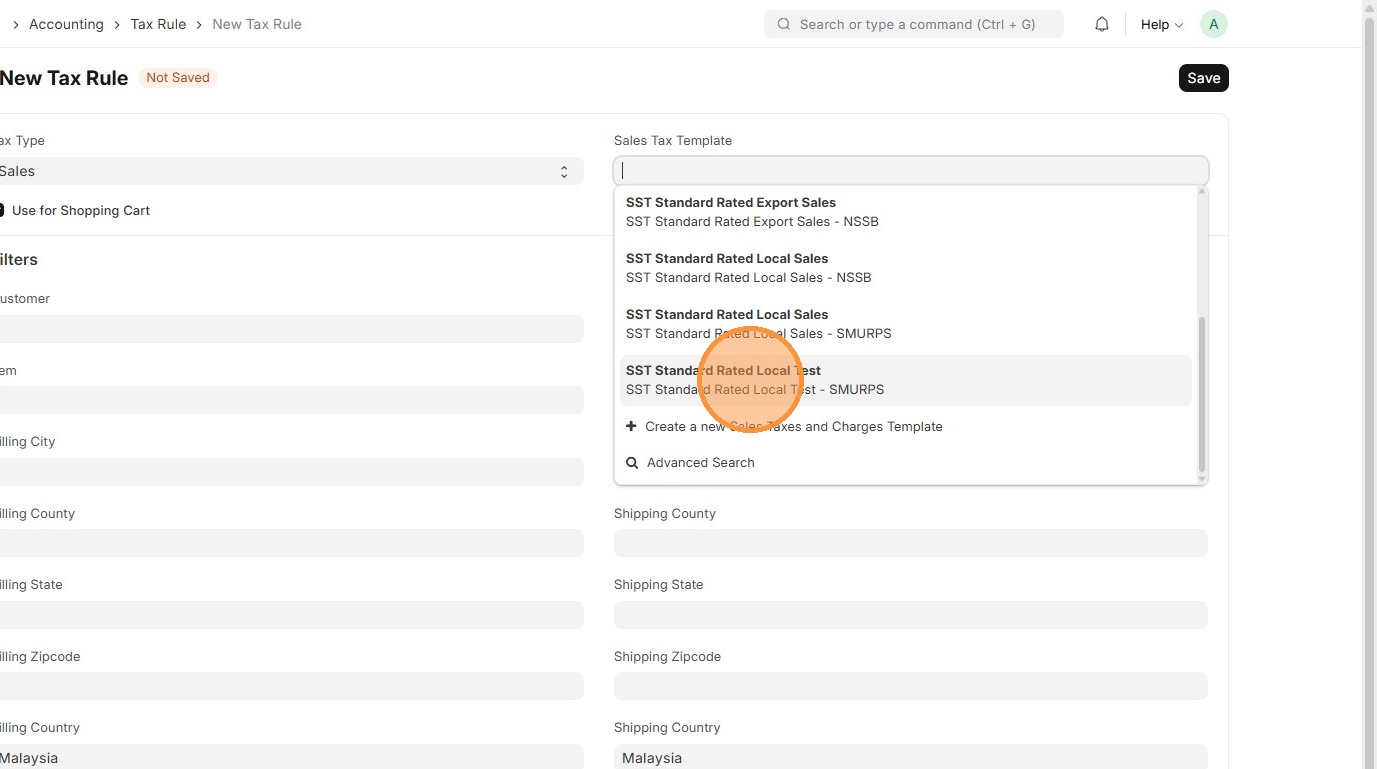
6. Update the ‘Filters’ that determine where the Sales Tax Template applies.
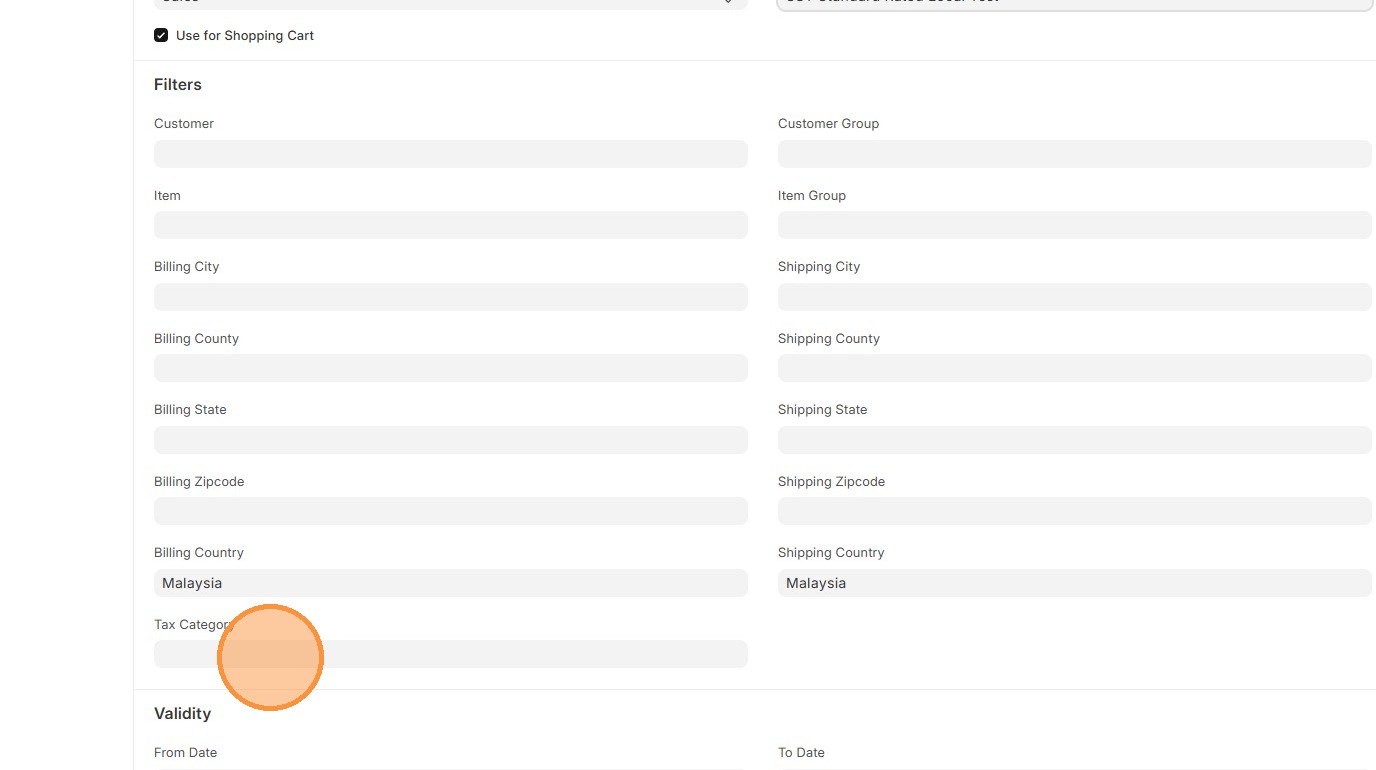
7. OPTIONAL: Click "From Date" if applicable
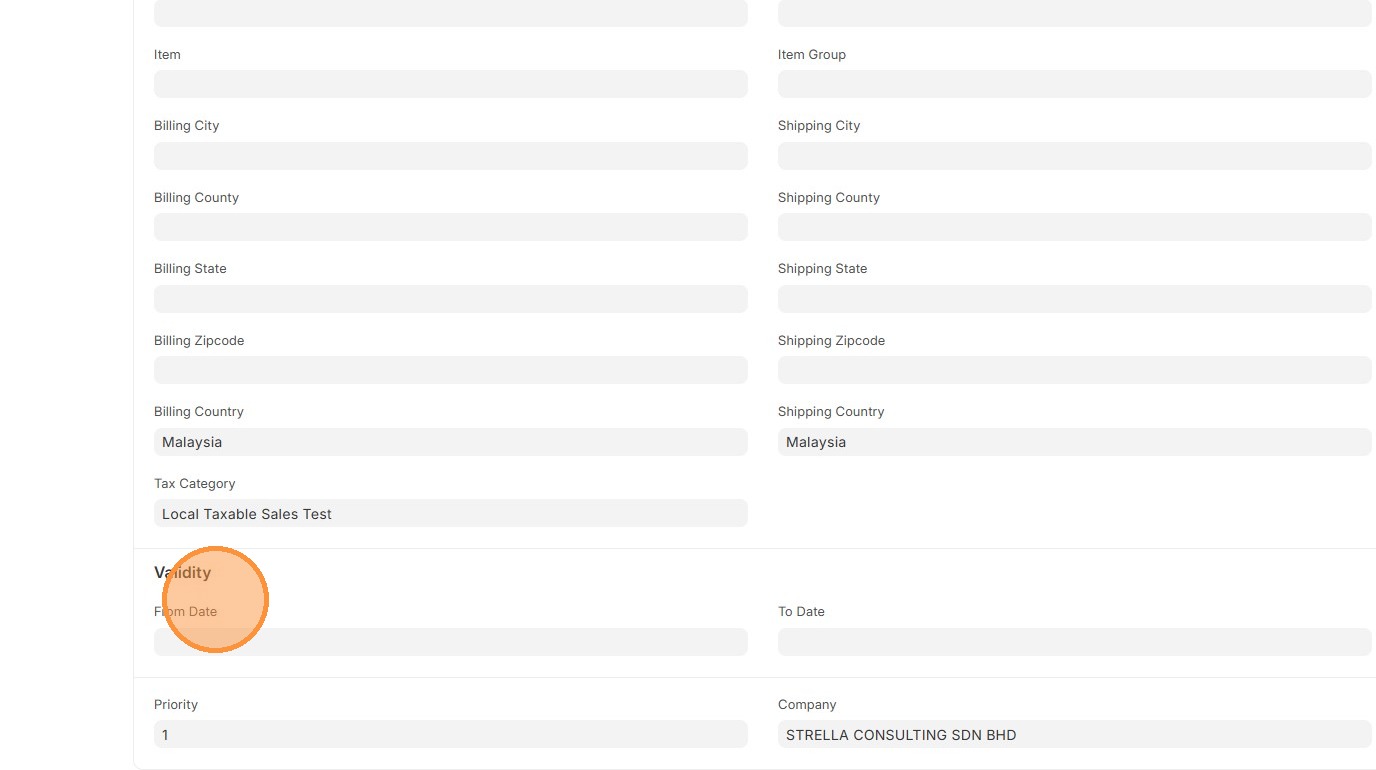
8. OPTIONAL: Click "To Date" if applicable
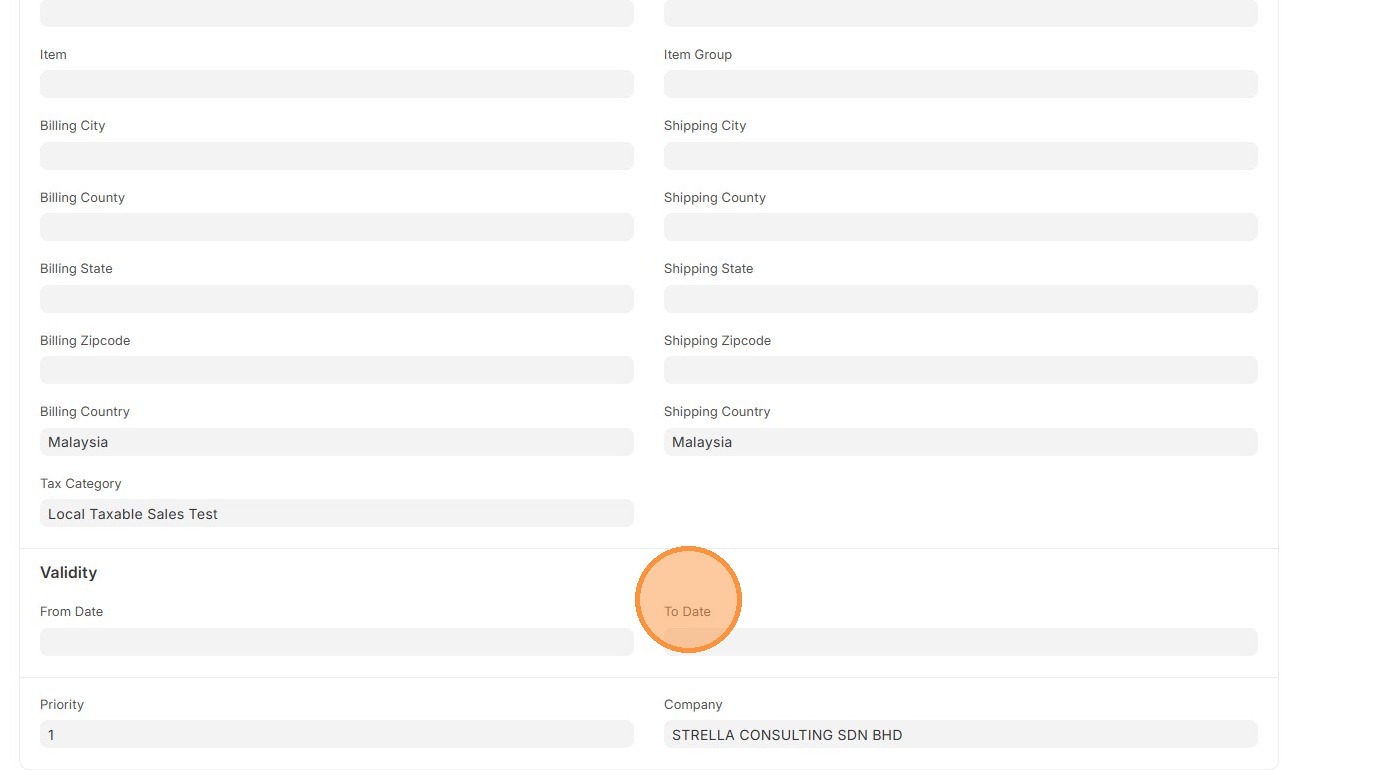
9. Click "Save"
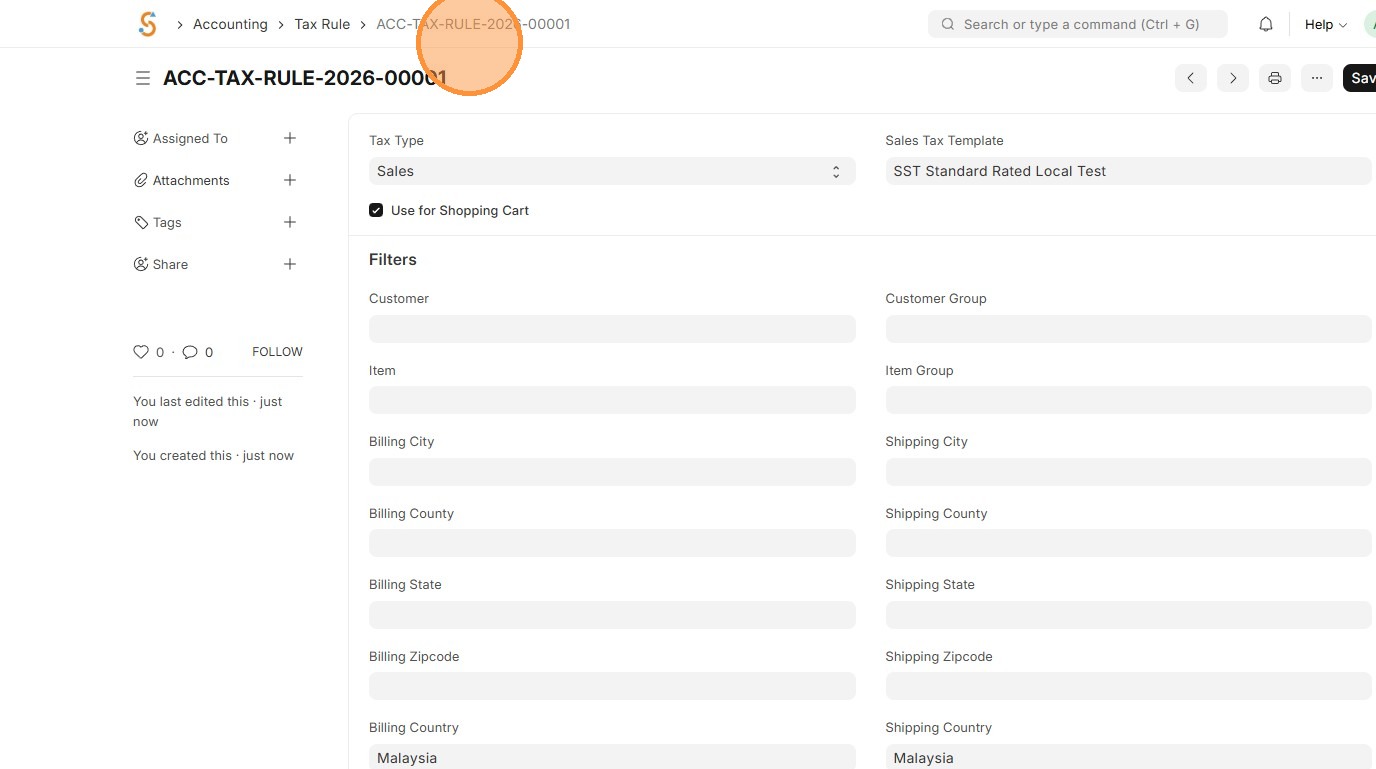
10. Verify that Tax Rule ID is created
Item Master Data
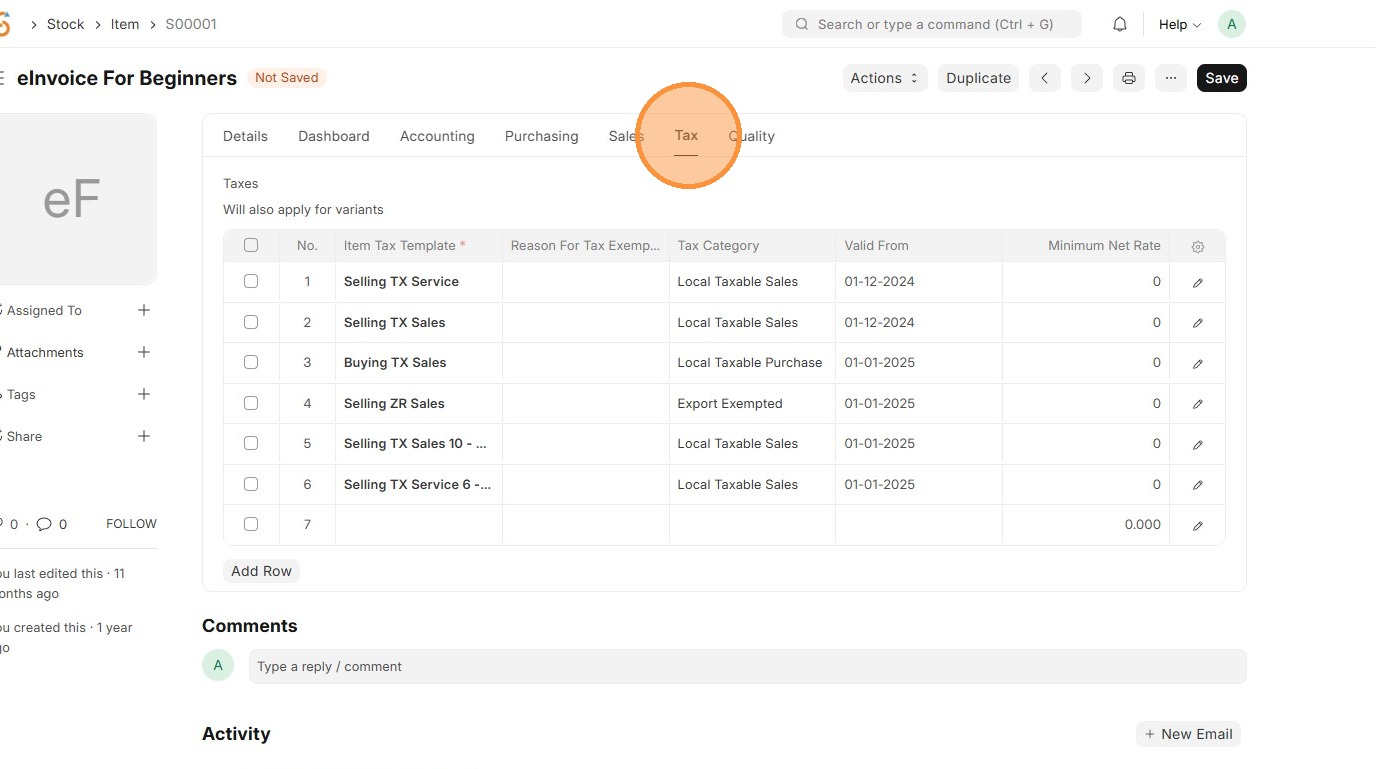
Users should update the Item Master Data with the correct Tax Category and Item Tax Template so system can automatically apply the right taxes on every sale or purchase..
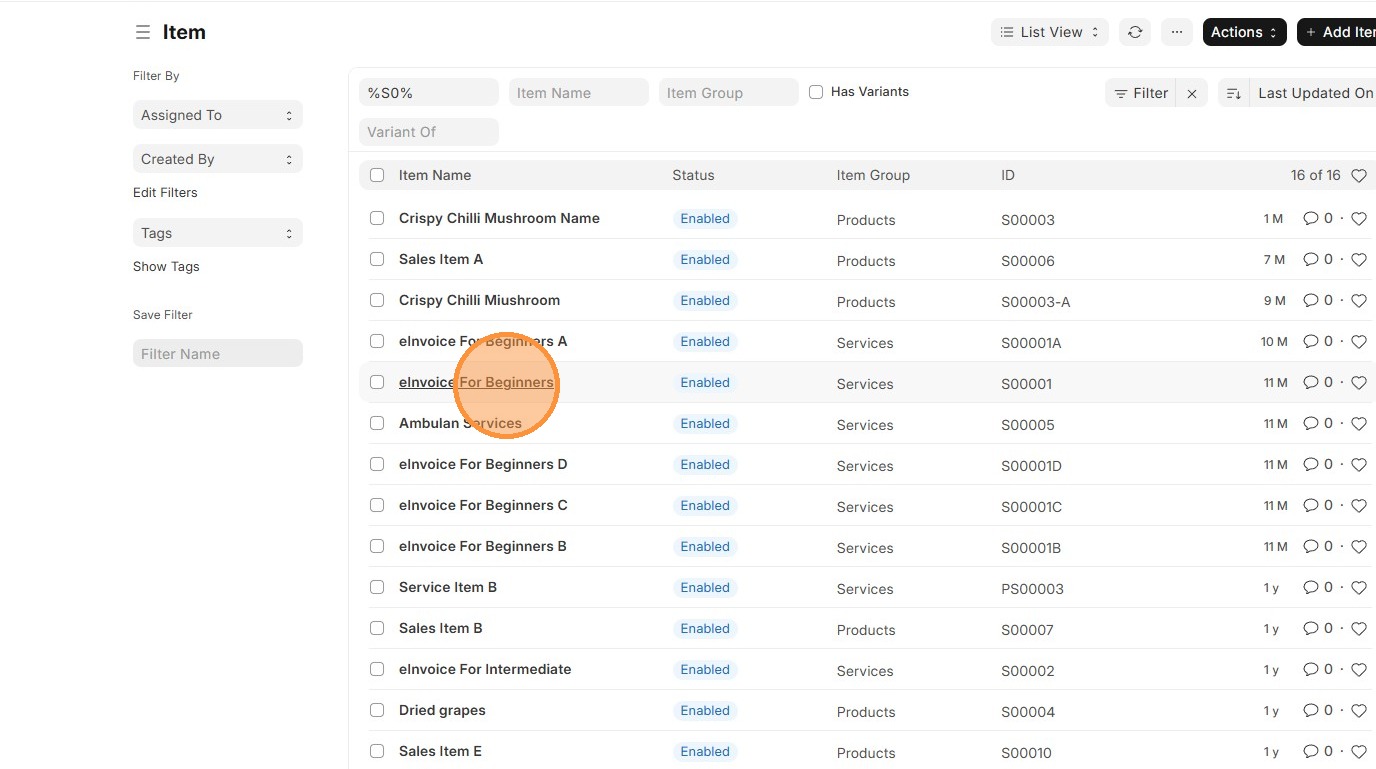
1. Click "Stock"
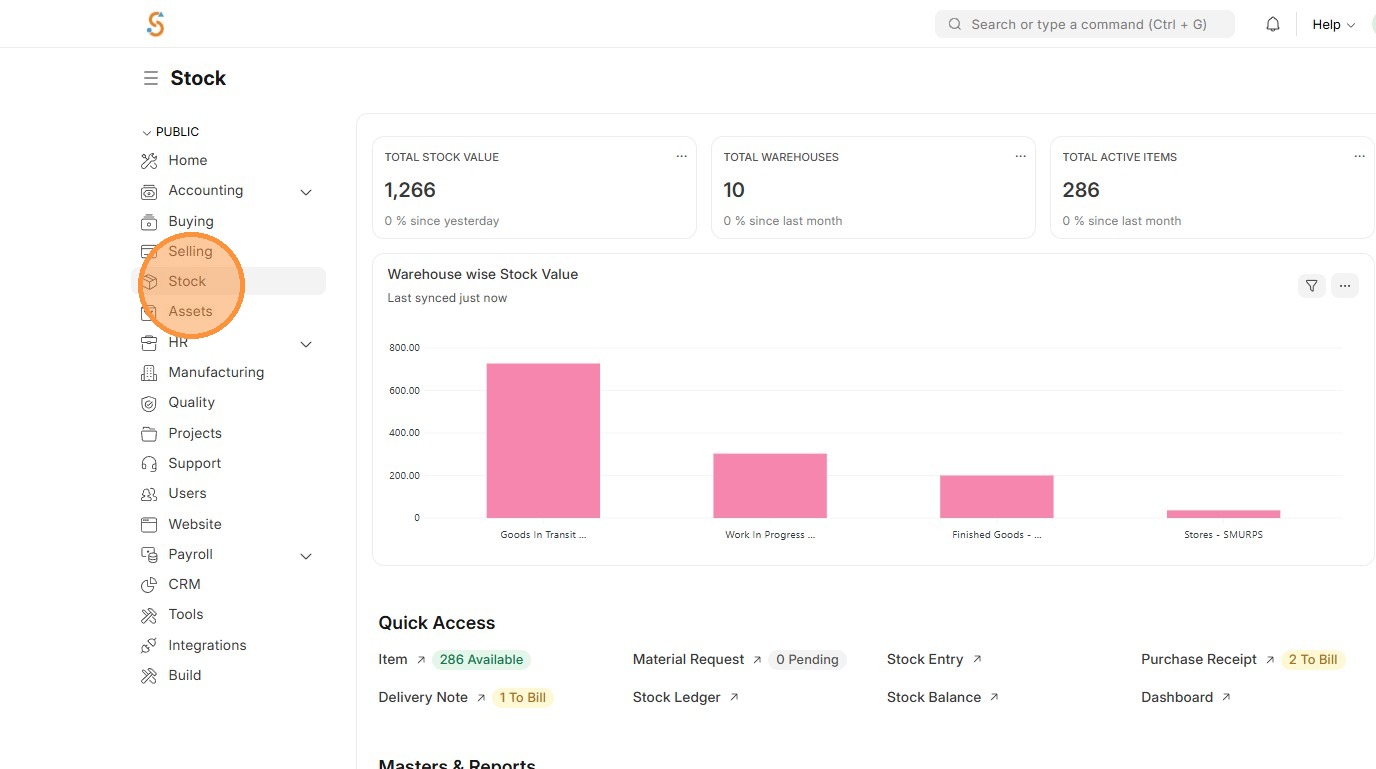
2. Click "Item"
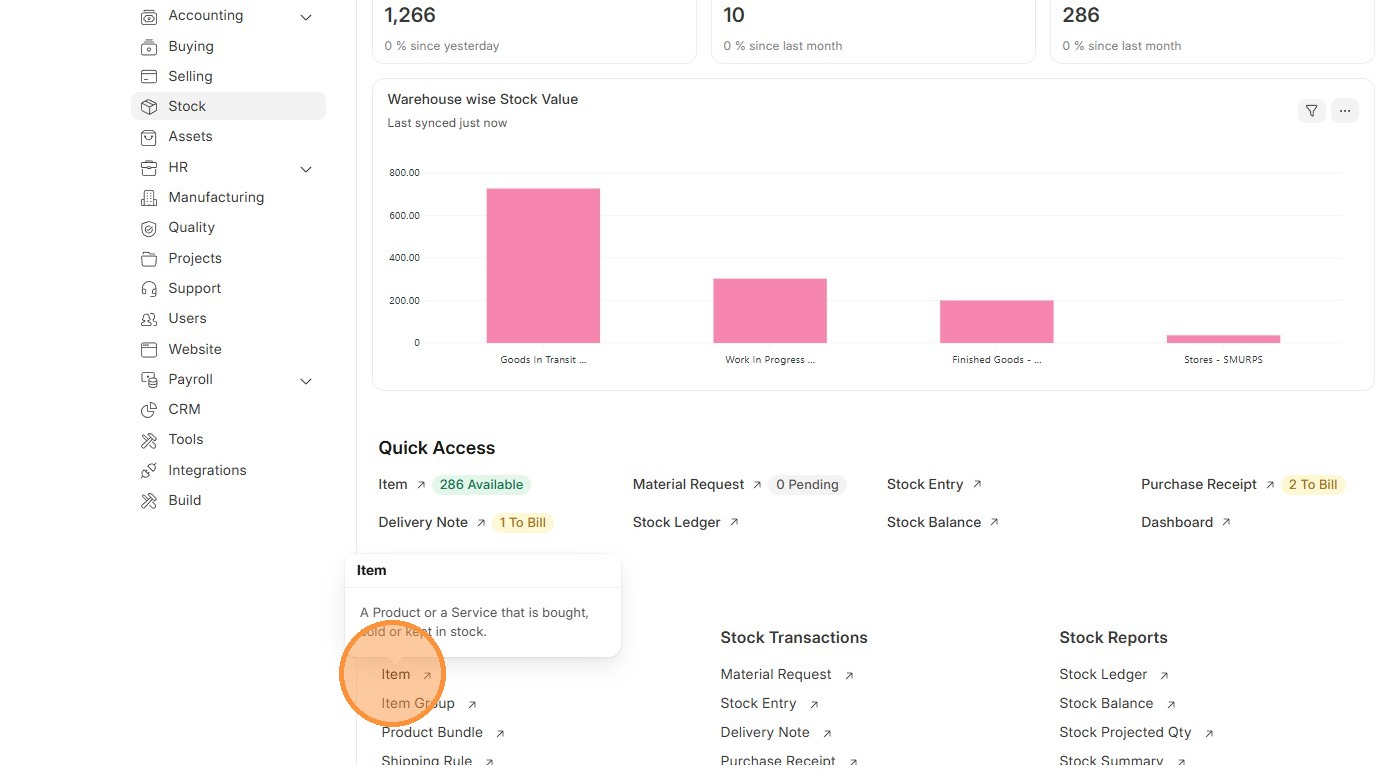
3. Select "Item"
4. Click "Tax" tab
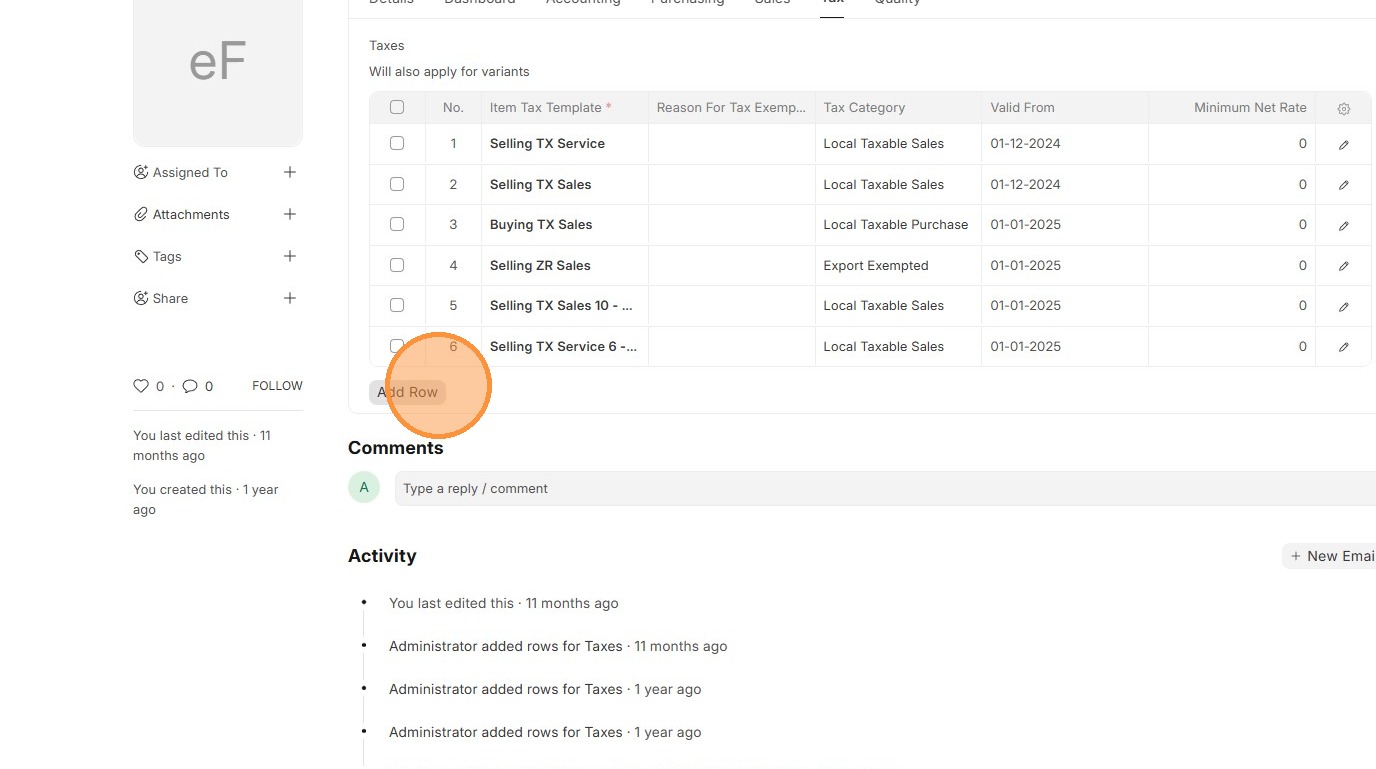
5. Click "Add Row"
6. Select the Item Tax Template.
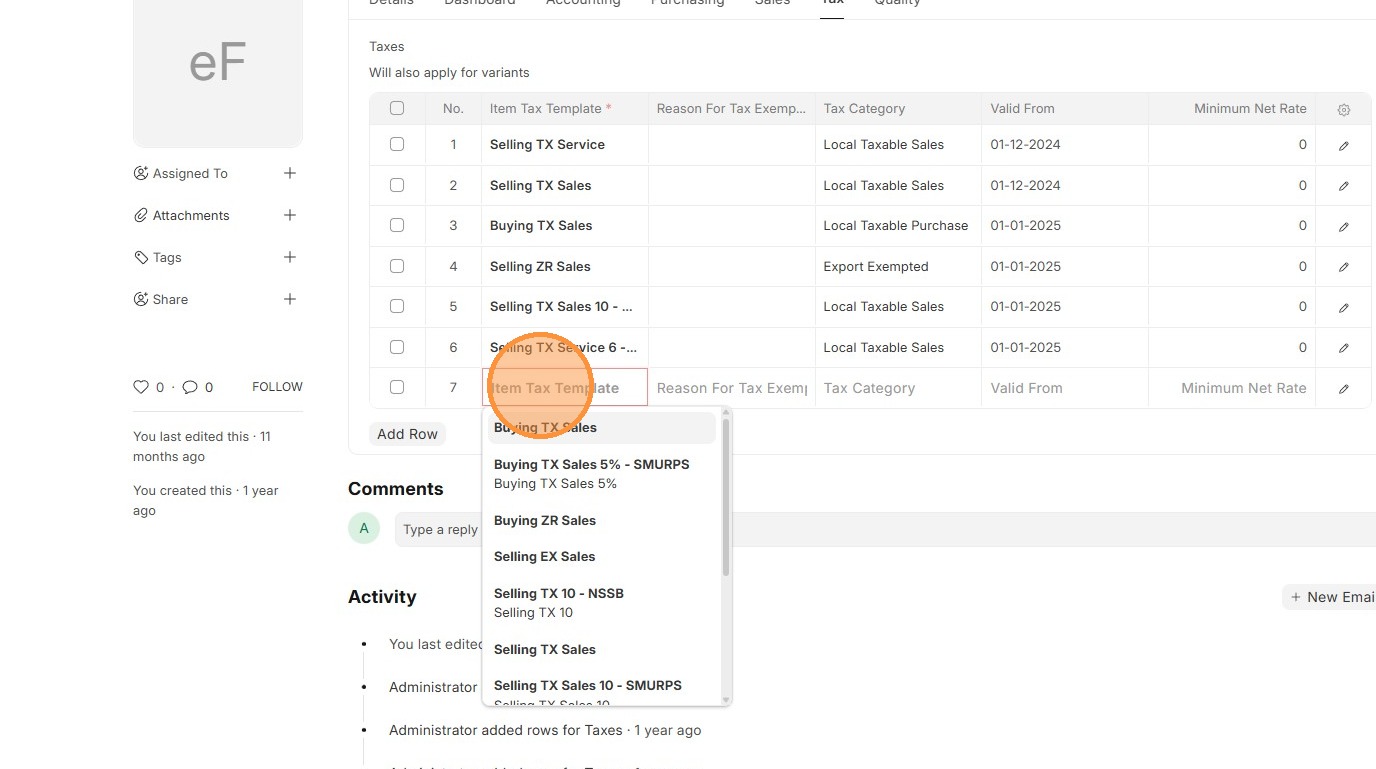
7. Select Tax Category that is associate with "Item Tax Template"
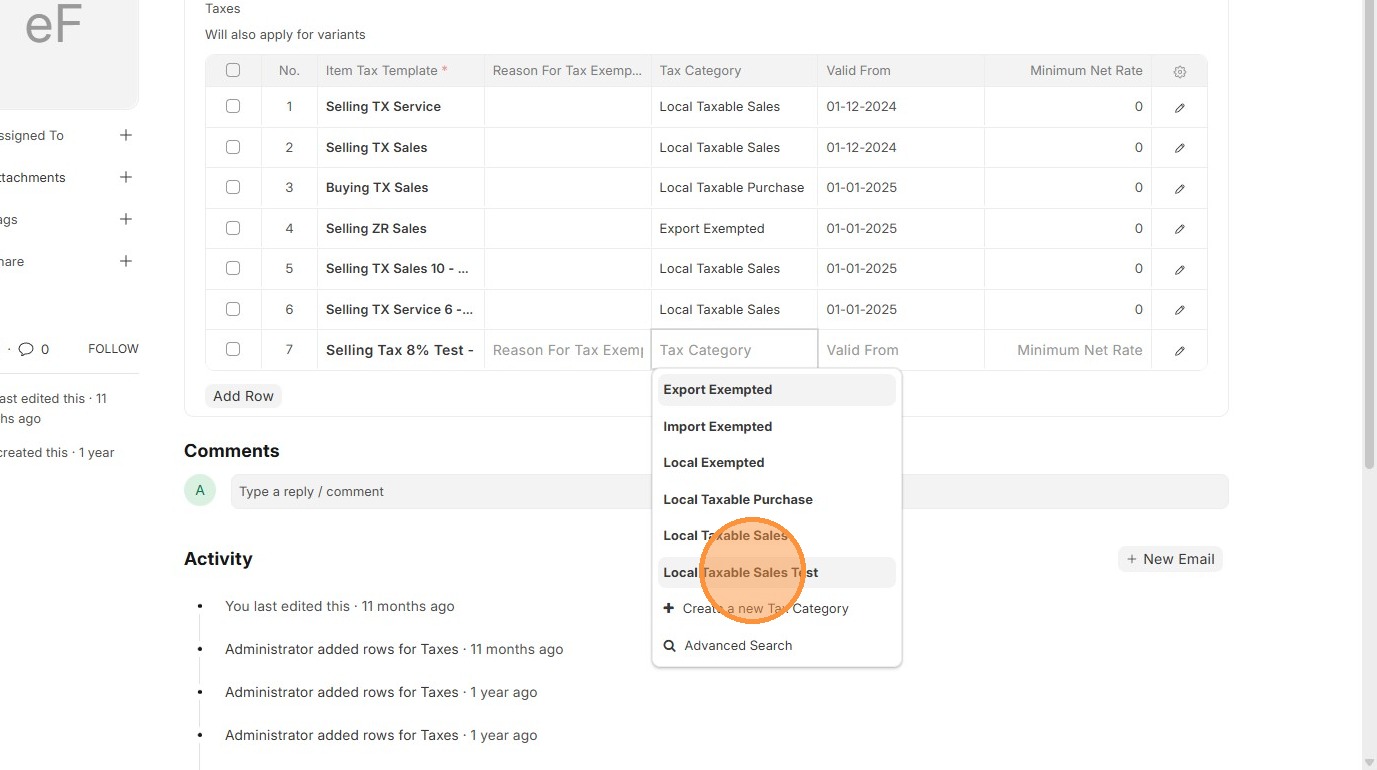
8. Set the "Valid From" field for system to implement the "Item Tax Template"
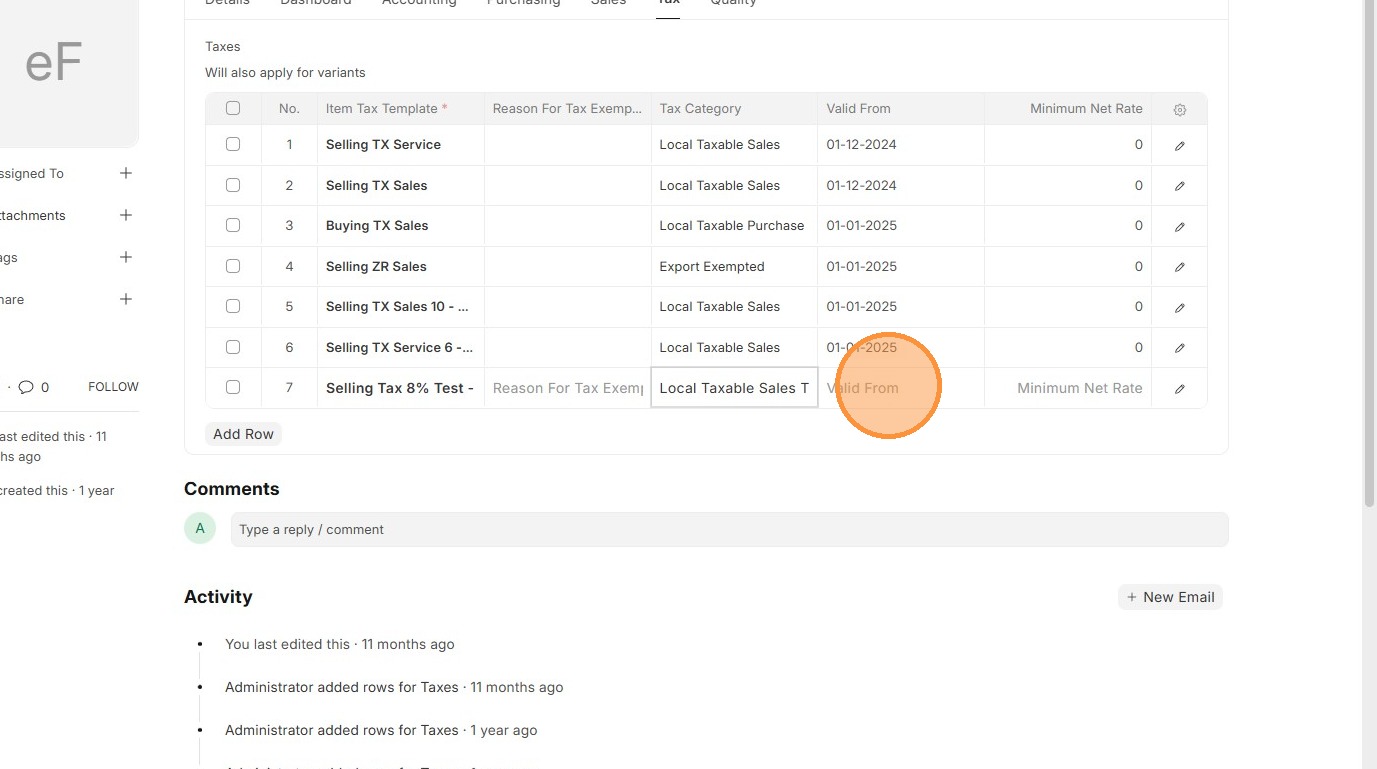
9. Click "Save"